


- OM System has revived the PEN, a compact, retro, rangefinder-style Micro Four Thirds camera. It is the first top-tier PEN in five years and the first PEN sold in North America in a decade. It is on preorder now and ships from late October 2026.
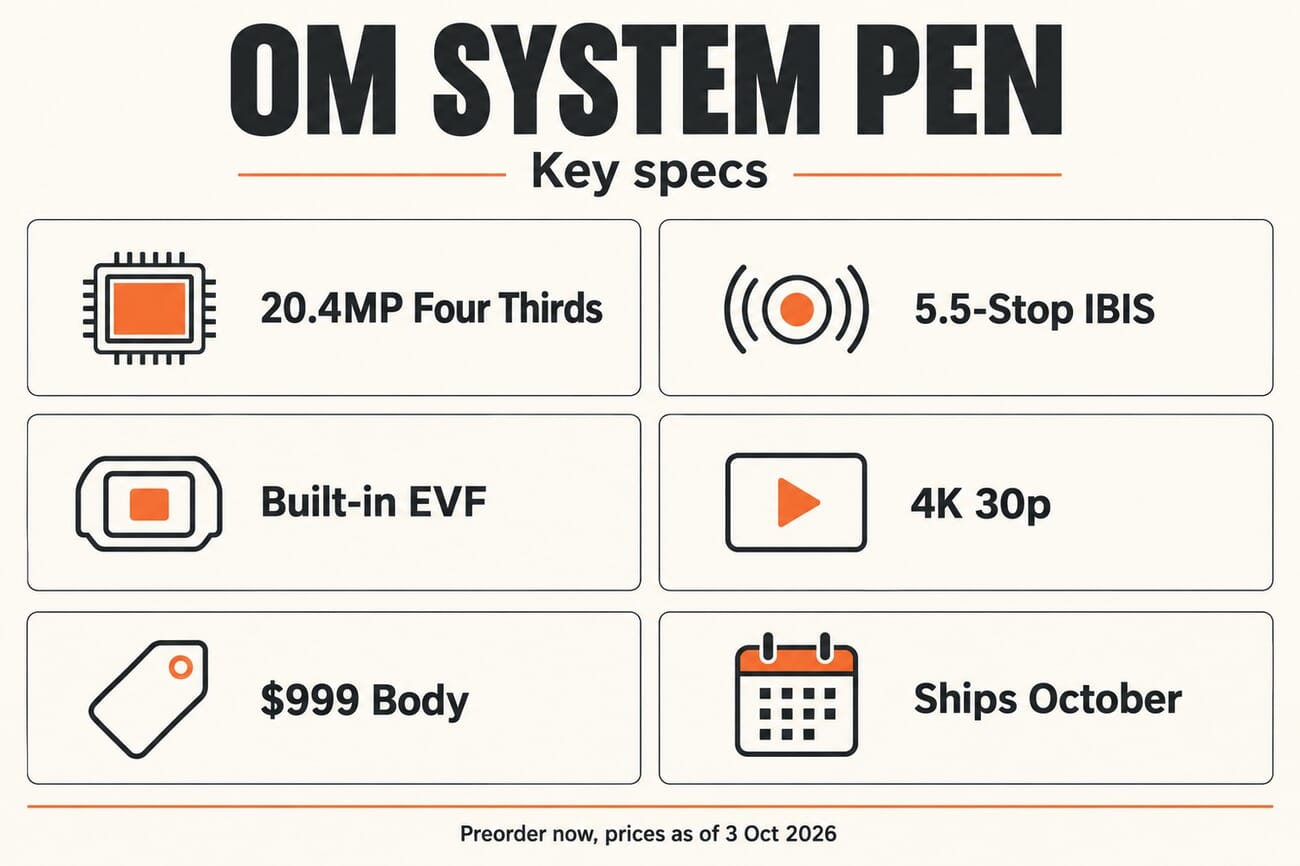
- It blends the affordable E-P7 with the enthusiast PEN-F: a 20.4MP Four Thirds sensor, 5.5-stop in-body stabilization, a built-in electronic viewfinder (only the second PEN ever to have one), and a fully articulating screen, in a 414g body with IPX1 splash sealing.
- The headline is the price. At $999.99 body-only, it undercuts the 2016 PEN-F’s $1,200 launch (roughly $1,700 in today’s money) and has essentially no direct rival: it is the only small, stabilized, rangefinder-style camera near this price.
- It is a throwback for better and worse. The styling, the color-mode dial, the IBIS and the compactness are genuinely appealing, but the video (4K/30 8-bit), USB 2.0 speed and UHS-I card slot are dated.
OM System just brought back one of the most beloved names in digital cameras. The OM System PEN, announced in September and now available to preorder, revives the compact, retro PEN line that Olympus built its modern reputation on, and it does something the brand has not done in ten years: it sells a PEN in North America again. For anyone who has watched camera prices climb relentlessly toward full-frame, this is a refreshing turn in the other direction, a small, stylish, stabilized camera that costs $999.99 and is clearly built to be carried, not admired on a shelf.
It is not a one-for-one remake of the much-loved 2016 PEN-F. Instead, OM System has blended the affordable E-P7 with a few of the PEN-F’s best ideas, landing on a camera that looks like a classic rangefinder, shoots like a modern Micro Four Thirds body, and prices like neither of its ancestors. Here is what it is, where it shines, where it shows its cost-cutting, and why the price makes it genuinely interesting.
What the PEN actually is
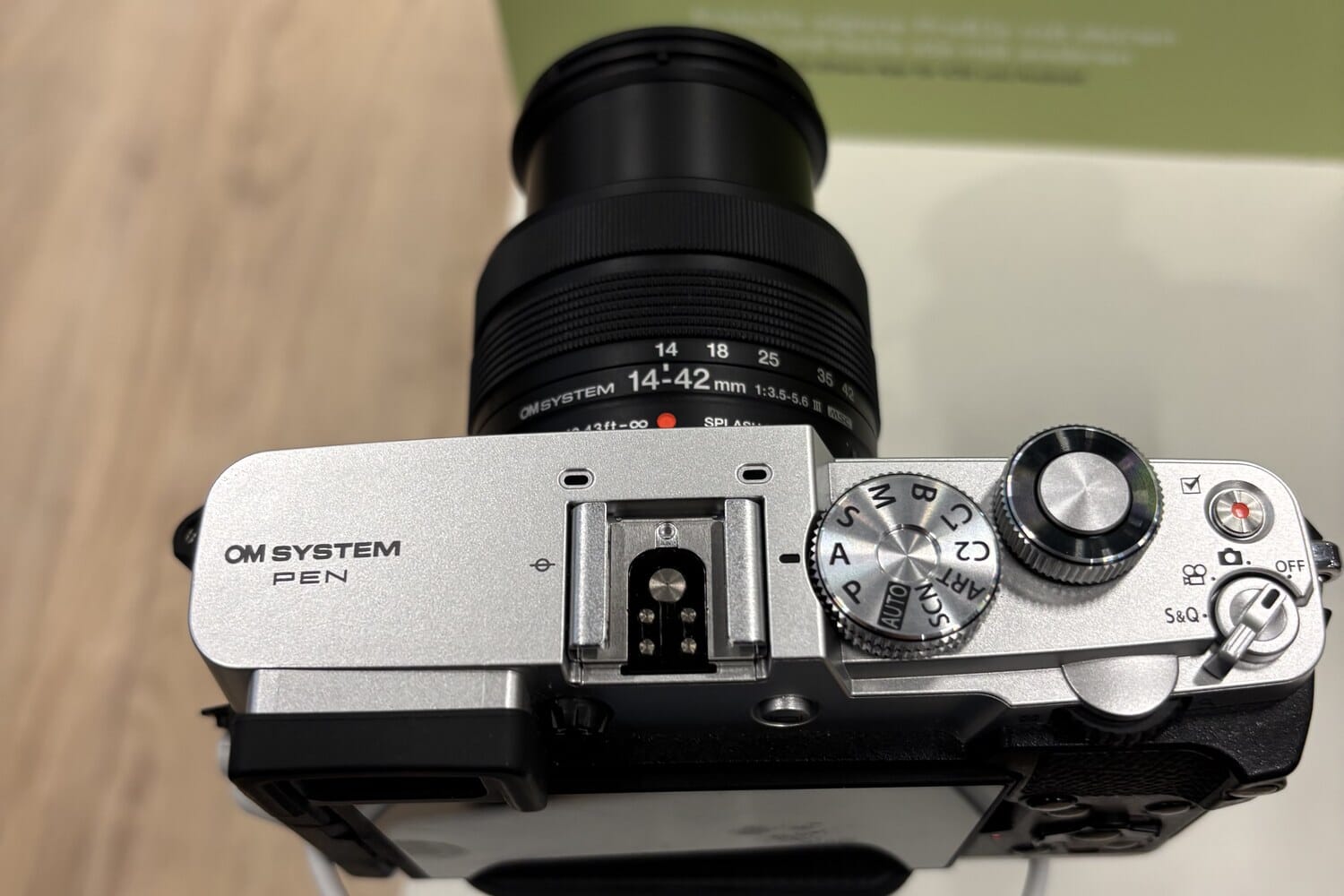
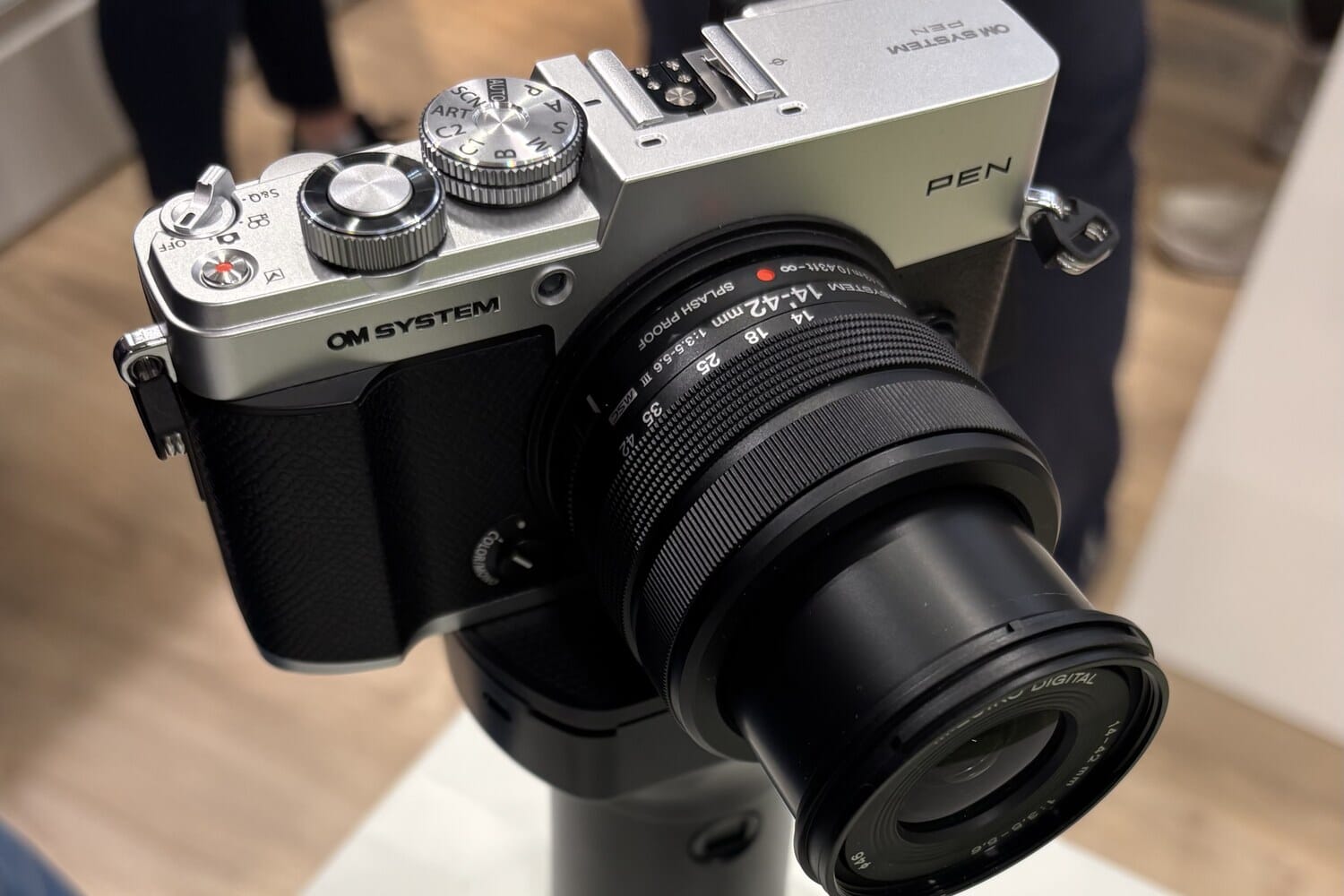
Think of the PEN as the mid-range E-P7 with a crucial upgrade borrowed from the enthusiast PEN-F: a built-in electronic viewfinder, tucked into the top corner of the body. That makes it only the second PEN ever to ship with a viewfinder, and it is the single feature that separates the PEN from the many lookalike compacts that force you to shoot at arm’s length. Around it sits a 20.4MP Four Thirds sensor, OM System’s 5.5-stop in-body stabilization, the ninth-generation TruePic processor, a 2.36-million-dot EVF, and a 3-inch fully articulating touchscreen. The body weighs just 414 grams and carries an IPX1 splash-proof rating, which is rare at this price.
The newer TruePic IX processor gives the PEN more current autofocus than either the PEN-F or the E-P7, including subject detection for people plus a dedicated Dogs & Cats mode. If you want the full picture of how Micro Four Thirds fits against the other systems, our guide to mirrorless lens mounts explains why the smaller sensor buys you smaller, cheaper lenses, which is a big part of the PEN’s travel appeal.
The retro styling is more than skin-deep
The PEN’s best party trick is inherited from the PEN-F: a front color-mode switch that gives quick access to eight color and monochrome profiles, each of which can be tweaked and saved. It is the kind of feature that encourages you to commit to a look in-camera rather than fixing everything later, and it is a big part of why the PEN line has always attracted shooters who care about the experience as much as the output. Paired with the twin customizable command dials and the rangefinder-style body, it makes the PEN feel like a camera designed for enjoyment, not just capture.
Where it’s modern, and where it’s a throwback
This is where honesty matters. The PEN is genuinely modern in the ways that affect stills shooters most: the in-body stabilization, the up-to-date autofocus, quick electronic-shutter bursts of up to around 30 fps, and a compact, weather-sealed body you will actually bring along. Its computational modes, including handheld high-res and live ND, are more sophisticated than most rivals at the price.
But the cost-cutting shows in a few places, and pretending otherwise would be a disservice. Video tops out at 4K/30 in 8-bit, which is dated in 2026. The single SD card slot still only supports slower UHS-I cards, the USB-C port runs at aging USB 2.0 speeds, and there is no headphone jack for audio monitoring. DPReview summed the camera up neatly as “somewhat throwback, for better and worse,” and that is the right frame: the PEN is a stills-first camera that leans into character, not a hybrid spec sheet.
The price is the real story
At $999.99 body-only (or $1,099.99 with the 14-42mm kit lens, and $1,299.99 as a twin-lens kit adding the 40-150mm), the PEN is priced well below where the PEN-F launched a decade ago. The 2016 PEN-F cost $1,200 at launch, which is roughly $1,700 in today’s money, so OM System is delivering a viewfinder-equipped, stabilized PEN for meaningfully less in real terms. More striking is the lack of competition. There is no other small, rangefinder-style camera with in-body stabilization at this price: Fujifilm’s nearest stylistic rival, the metal-bodied X-E5, costs $1,699, and the SLR-shaped alternatives like the Nikon Z50 II lack IBIS entirely.
That matters in context. While Canon pushes its cheapest full-frame body up to $1,899 with the R8 Mark II, OM System is running the opposite play: a smaller sensor, a smaller body, and a smaller price, betting that plenty of photographers would rather have charm and portability than a bigger sensor they rarely need. For travel, street and everyday shooting, that is a genuinely compelling pitch, and it is exactly the kind of camera people pick up at a trade-show stand and decide, on the spot, that they would actually buy.

Frequently Asked Questions
How much is the OM System PEN and when does it ship?
It is $999.99 body-only, $1,099.99 with the 14-42mm kit lens, and $1,299.99 as a twin-lens kit that adds the 40-150mm. It is on preorder now and ships from late October 2026.
Does the OM System PEN have a viewfinder and stabilization?
Yes to both. It has a built-in 2.36-million-dot electronic viewfinder, making it only the second PEN ever to include one, plus 5.5-stop in-body image stabilization. That combination at this price is the PEN’s main selling point.
Is it a good camera for video?
Video is its weakest area. It records 4K at up to 30p in 8-bit, with no headphone jack and a slower USB 2.0 interface. It is a stills-first camera; serious hybrid shooters will want something with 10-bit and higher frame rates.
How is it different from the old Olympus PEN-F?
The PEN uses lighter engineering-plastic construction rather than the PEN-F’s metal body, and simplifies the controls, but it adds newer autofocus and computational features and costs significantly less. It brings the PEN-F’s viewfinder and color-mode dial to a more affordable package.
The bottom line
The OM System PEN is not trying to win a spec-sheet war, and it will lose one on video and connectivity. What it offers instead is increasingly rare: a small, beautifully styled, stabilized camera with a viewfinder, a real lens ecosystem behind it, and a $999 price in a market sprinting toward $2,000 full-frame. For travel and everyday shooting, it is the kind of camera that makes you want to take more photos, and after a decade away from North America, its return is overdue. If you have been waiting for a compact that prioritizes charm and portability over raw resolution, this is the one to look at.
Primary Coverage
- OM System — PEN announcement and specifications – Official pricing, availability and feature set.
- DPReview — OM System PEN Review: somewhat throwback, for better and worse – Hands-on analysis, spec comparison and construction notes.
Image Sources
- OM System PEN product images (OM System), staged via Photoroom – Official product renders composited into scene.
- OM System PEN hands-on photographs — PhotoWorkout – Original photos taken by PhotoWorkout at the show.
- Specs infographic and Pinterest pin — PhotoWorkout – Original PhotoWorkout editorial graphics.