


- Fashion photography pioneers like Richard Avedon and Irving Penn transformed the genre from stiff catalog shots into emotionally charged storytelling.
- Helmut Newton, Guy Bourdin, and David LaChapelle prove that risk-taking and rule-breaking produce the most memorable images.
- Technical mastery matters – from Lindbergh’s minimal retouching to Nick Knight’s digital experimentation, each photographer teaches a specific skill you can apply to your own work.
- The list spans over 100 years of fashion photography – from Steichen’s 1920s Vogue work to Juergen Teller’s anti-glamour approach that defines modern editorial.
What Makes a Fashion Photographer Great?
Fashion photography sits at the intersection of art, commerce, and culture. The best fashion photographers don’t just make clothes look good – they shape how we see beauty, challenge social norms, and create images that outlast the garments they were hired to shoot.
This list covers 20 photographers who defined (and continue to define) the genre. For each one, we break down their signature style, their most influential work, and – most importantly – what you can learn from studying their approach.
Whether you’re interested in portrait lighting techniques, editorial storytelling, or building a distinctive visual style, there’s something here for every photographer.
The 20 Most Famous Fashion Photographers
1. Richard Avedon (1923-2004)
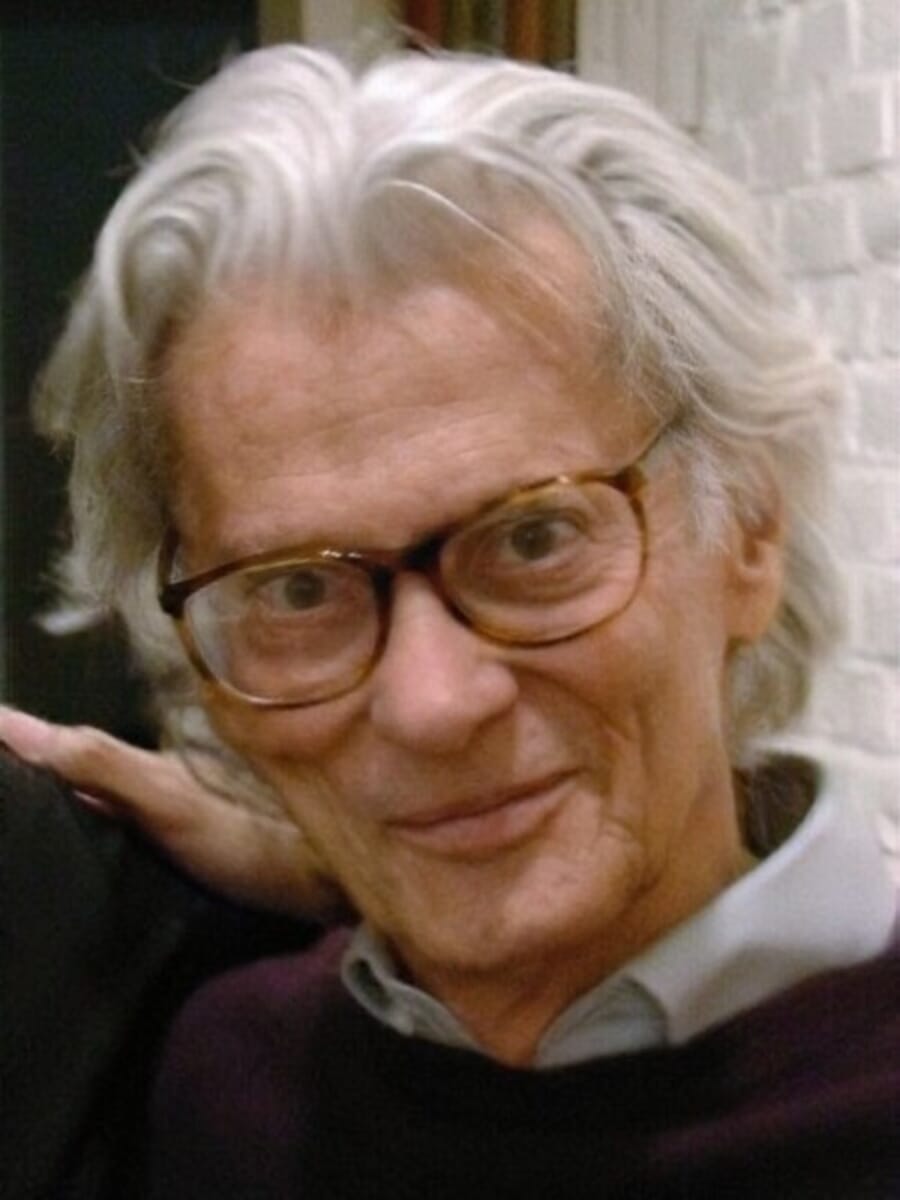
Richard Avedon fundamentally changed what fashion photography could be. Before Avedon, fashion photos were static – models stood stiffly in studios while photographers documented the clothing. Avedon brought movement, emotion, and narrative into the frame.
His most revolutionary contribution was taking fashion outdoors. His iconic 1955 image of model Dovima posing with elephants at the Cirque d’Hiver in Paris showed that fashion photography could be theatrical, dynamic, and emotionally complex. His work for Harper’s Bazaar and later Vogue featured models laughing, running, and engaging with the world rather than posing passively.
Avedon famously said, “My portraits are more about me than they are about the people I photograph.” His signature white-background portraits – stark, confrontational, stripped of any distraction – became some of the most recognizable images in photography history.
What you can learn: Don’t let your subject stand still. Avedon proved that capturing genuine emotion and movement creates far more compelling images than perfect poses. If you’re shooting portraits, try directing your subject to move, talk, or interact with their environment rather than holding a static position.
2. Helmut Newton (1920-2004)
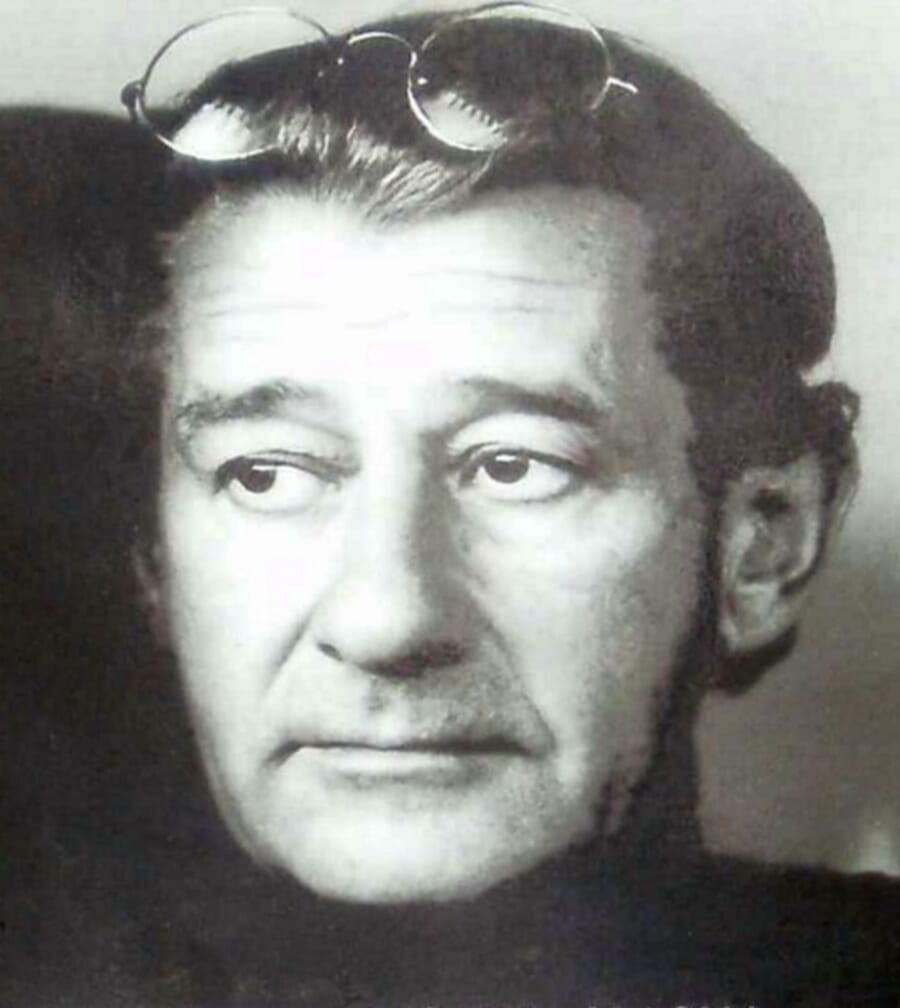
Helmut Newton’s fashion photography was provocative, confrontational, and impossible to ignore. Born in Berlin, Newton fled Nazi Germany and eventually settled in Australia before building an international career that would redefine the genre.
Newton’s images are defined by power dynamics and bold sexuality. His women aren’t passive or fragile – they’re commanding, dominant, and often intimidating. His 1975 image “Le Smoking” for Yves Saint Laurent, featuring a woman in a tailored men’s suit on a dark Parisian street, became one of the most referenced fashion photographs ever made.
His work appeared regularly in French Vogue, and his use of high-contrast lighting with deep shadows gave his images a cinematic, almost noir quality. Newton frequently shot in hotel rooms, penthouses, and on rooftops at night – settings that reinforced the atmosphere of danger and luxury in his work.
What you can learn: Location and atmosphere can be as important as the subject. Newton’s environmental choices reinforced his narrative. When planning a fashion shoot, think about what the setting communicates. A parking garage at night tells a very different story than a sunlit garden.
3. Irving Penn (1917-2009)
If Avedon brought energy and movement to fashion photography, Irving Penn brought precision, restraint, and compositional mastery. Penn’s work for Vogue spanning six decades set the standard for how fashion photography could be both commercially successful and artistically significant.
Penn was obsessed with simplicity. He stripped away everything unnecessary – often shooting against plain gray or white backgrounds, or using a corner made from two angled flats that forced his subjects into tight, intimate compositions. This “corner portrait” technique became one of his most recognizable innovations.
Beyond fashion, Penn created extraordinary still-life work – frozen food, cigarette butts, skulls – applying the same rigorous composition principles to mundane objects that he used for couture. His 1950 Vogue cover was the first in the magazine’s history to feature a still life rather than a model.
What you can learn: Simplicity is powerful. Before adding more props, more lights, or more complexity to your images, ask yourself what you can remove. Penn proved that a plain background and careful arrangement can produce images more striking than the most elaborate set design.
4. Annie Leibovitz (born 1949)
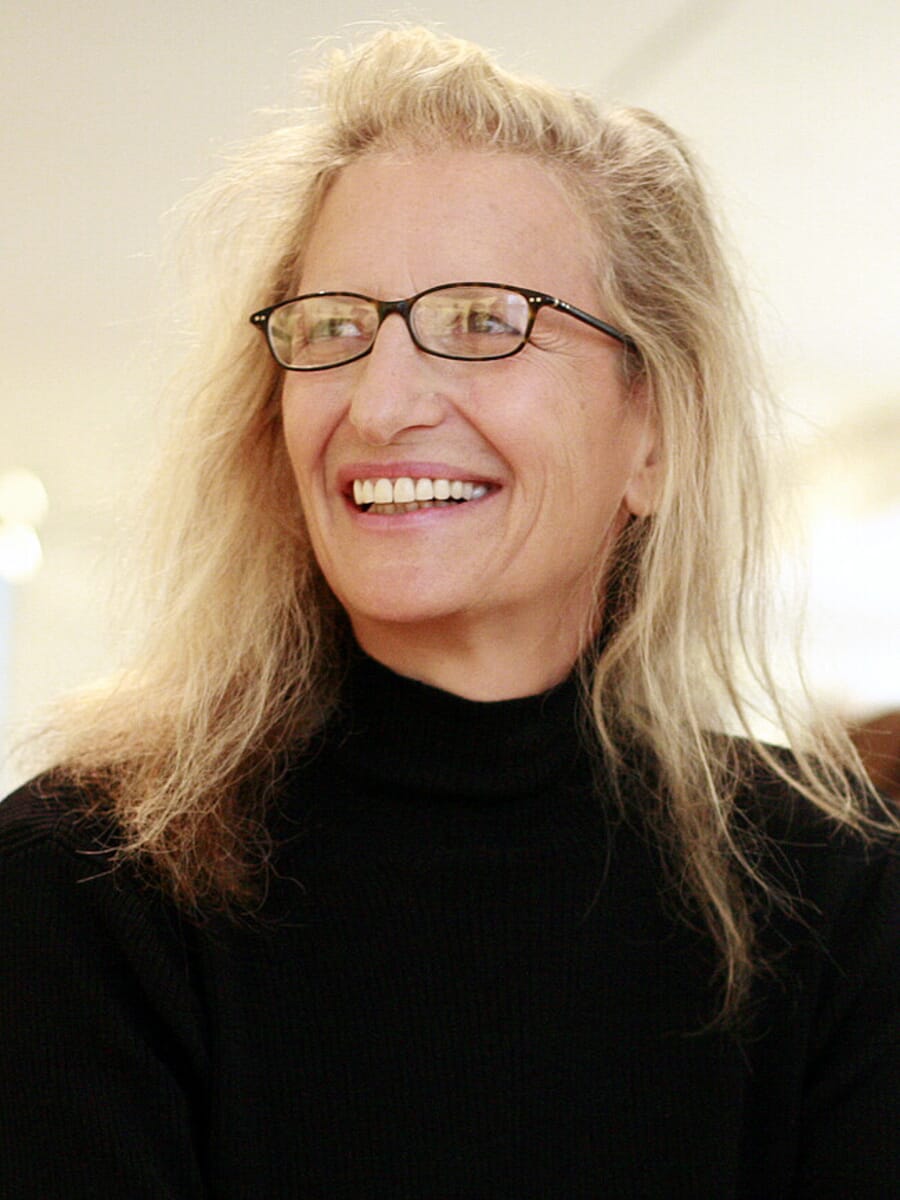
Annie Leibovitz is arguably the most famous living portrait photographer in the world. Her career arc – from Rolling Stone staff photographer to chief photographer at Vanity Fair and frequent Vogue collaborator – represents one of the most successful trajectories in photography history.
What sets Leibovitz apart is her ability to create theatrical, conceptual portraits that reveal something essential about her subjects. Her images don’t just document people – they construct entire worlds around them. Her 1991 Vanity Fair cover of a pregnant, nude Demi Moore shattered taboos. Her elaborate Disney “Dream Portraits” series transformed celebrities into fairy-tale characters with Hollywood-level production.
Leibovitz’s fashion work combines dramatic lighting setups with ambitious set designs and genuine collaboration with her subjects. She spends considerable time talking with people before picking up a camera, believing that understanding the person leads to better photographs.
What you can learn: Invest time in pre-production and concept development. Leibovitz’s most iconic images weren’t spontaneous – they were meticulously planned. Sketch your ideas, scout locations, and have a clear vision before you start shooting. The concept matters as much as the execution.
5. Edward Steichen (1879-1973)
Edward Steichen is often called the father of modern fashion photography – and the title is well deserved. In the 1920s, when fashion “photography” was essentially catalog illustration, Steichen introduced artistic lighting, dramatic composition, and a painterly sensibility that elevated the genre into fine art.
After being recommended by publisher Lucien Vogel to designer Paul Poiret, Steichen photographed Poiret’s gowns with a sophistication that stunned the fashion world. Those images – with their careful attention to fabric, form, and shadow – became the template for fashion photography as we know it. They earned him the position of chief photographer at both Vogue and Vanity Fair.
Steichen photographed the era’s biggest stars – Greta Garbo, Marlene Dietrich, Gloria Swanson – with a mastery of light that came from his fine art background. His 1928 portrait of Swanson, partially obscured behind a lace veil, remains one of the most reproduced photographs in history.
What you can learn: Let the clothing speak. Steichen treated fashion garments as sculptural objects, using light to reveal texture, drape, and movement. When shooting fashion, pay attention to how light interacts with different fabrics – silk catches highlights differently than wool, and understanding these qualities makes your images more compelling.
6. Peter Lindbergh (1944-2019)
Peter Lindbergh almost single-handedly launched the supermodel era. His January 1990 British Vogue cover featuring Naomi Campbell, Linda Evangelista, Tatjana Patitz, Christy Turlington, and Cindy Crawford in simple white shirts is considered the photograph that created the concept of the supermodel.
Lindbergh’s approach was radical in its simplicity. He shot primarily in black and white, refused to retouch skin, and focused on capturing authentic personality rather than manufactured perfection. In an industry obsessed with digital manipulation, Lindbergh championed natural beauty with an almost stubborn consistency.
His editorial storytelling was influenced by cinema – particularly German expressionist films and the gritty realism of Wim Wenders. Lindbergh shot for Vogue, Vanity Fair, Rolling Stone, and The New Yorker, bringing a documentary-style authenticity to high fashion that felt genuinely revolutionary. In 2017, he was chosen by the Duchess of Sussex to photograph her for British Vogue – precisely because of his commitment to unretouched imagery.
What you can learn: Restraint can be more powerful than excess. Lindbergh’s refusal to retouch reminds us that authenticity resonates. If you’re doing portrait or fashion work, try delivering a set of images with minimal post-processing. The imperfections often make the photographs more honest and more compelling.
7. Guy Bourdin (1928-1991)
Guy Bourdin created some of the most visually arresting fashion images ever published – and he did it primarily through advertising. His work for Charles Jourdan shoes throughout the 1970s and 1980s is legendary: surreal, darkly humorous compositions where the product was often secondary to an unsettling narrative.
Bourdin was a protege of Man Ray, and that surrealist influence permeated everything he shot. A pair of shoes might appear next to a chalk outline of a body. A model’s legs might dangle from a car in a way that suggested violence. His images for French Vogue were elaborate, color-saturated productions that looked nothing like conventional fashion photography.
What made Bourdin unique was his insistence on narrative ambiguity. His images tell stories, but they never resolve – the viewer is left unsettled, curious, drawn back to look again. This is exactly what makes his commercial work so effective decades later. You remember the image long after you’ve forgotten which shoe brand paid for it.
What you can learn: Don’t be afraid to make the viewer uncomfortable. Bourdin proved that fashion photography doesn’t need to be aspirational or beautiful in a conventional sense. An image that provokes a strong reaction – even discomfort – is far more memorable than one that’s merely pretty. Try adding narrative tension to your compositions.
8. Tim Walker (born 1970)
Tim Walker’s fashion photographs look like they fell out of a fairy tale. His work is defined by elaborate, fantastical set designs – giant butterflies, oversized dollhouses, models floating through clouds of tulle in fantastical landscapes. Walker creates entire worlds for each editorial, blurring the line between fashion photography and fine art installation.
After assisting Richard Avedon in New York, Walker returned to the UK and developed a style that was completely his own. His regular contributions to British Vogue, W, and Love magazine are instantly recognizable – dreamlike, romantic, and unabashedly theatrical.
Walker’s 2019 exhibition at the Victoria and Albert Museum, Wonderful Things, showcased his ability to draw inspiration from the museum’s own collections – transforming historical artifacts into elaborate fashion narratives. His work is a masterclass in how imagination and visual storytelling can elevate fashion photography beyond the commercial.
What you can learn: Think bigger with your sets and concepts. You don’t need Walker’s budget – even simple DIY set pieces (handmade props, painted backdrops, unusual locations) can transform a standard fashion shoot into something memorable. The key is having a clear creative vision before you start building.
9. Nick Knight (born 1958)
Nick Knight is fashion photography’s great technological innovator. While many photographers cling to traditional methods, Knight has consistently pushed the medium forward – embracing digital manipulation, 3D scanning, drone photography, and AI-assisted imaging long before they became mainstream.
His work for Alexander McQueen, Yohji Yamamoto, and Christian Dior is deliberately challenging. Knight’s images frequently distort the human body, dissolve forms into abstract shapes, or use extreme post-processing to create something closer to digital painting than traditional photography.
In 2000, Knight founded SHOWstudio, an online platform dedicated to fashion film and live-streaming runway shows – years before anyone else was thinking about fashion’s digital future. His commitment to challenging conventional beauty standards is also notable: he has championed models with disabilities, diverse body types, and unconventional appearances throughout his career.
What you can learn: Don’t treat post-processing as a fix for bad images – treat it as a creative tool. Knight shows that thoughtful digital manipulation can be just as artistically valid as in-camera technique. Experiment with photo editing techniques that push beyond basic adjustments.
10. David LaChapelle (born 1963)
David LaChapelle makes fashion photography look like a fever dream – in the best possible way. His images are hyper-saturated, surreal, and deliberately over-the-top, blending pop art, religious iconography, and celebrity culture into compositions that feel both excessive and precisely controlled.
Discovered by Andy Warhol, who gave him his first professional assignment at Interview Magazine, LaChapelle went on to shoot for every major publication – Vogue, Vanity Fair, GQ, Rolling Stone. His portraits of celebrities (Tupac, Lady Gaga, David Bowie, Naomi Campbell) are among the most widely reproduced images in pop culture.
What sets LaChapelle apart is his ability to use color as a narrative tool. Every element in his compositions is deliberate – the clashing pinks and greens, the glossy surfaces, the theatrical lighting. His work proves that maximalism, when executed with intention, can be just as powerful as minimalism.
What you can learn: Color is not decoration – it’s communication. Study LaChapelle’s palettes and notice how specific color choices create mood and meaning. In your own fashion work, try planning a color story before you shoot – coordinating wardrobe, set design, and lighting gels to create a unified visual impact.
11. Man Ray (1890-1976)
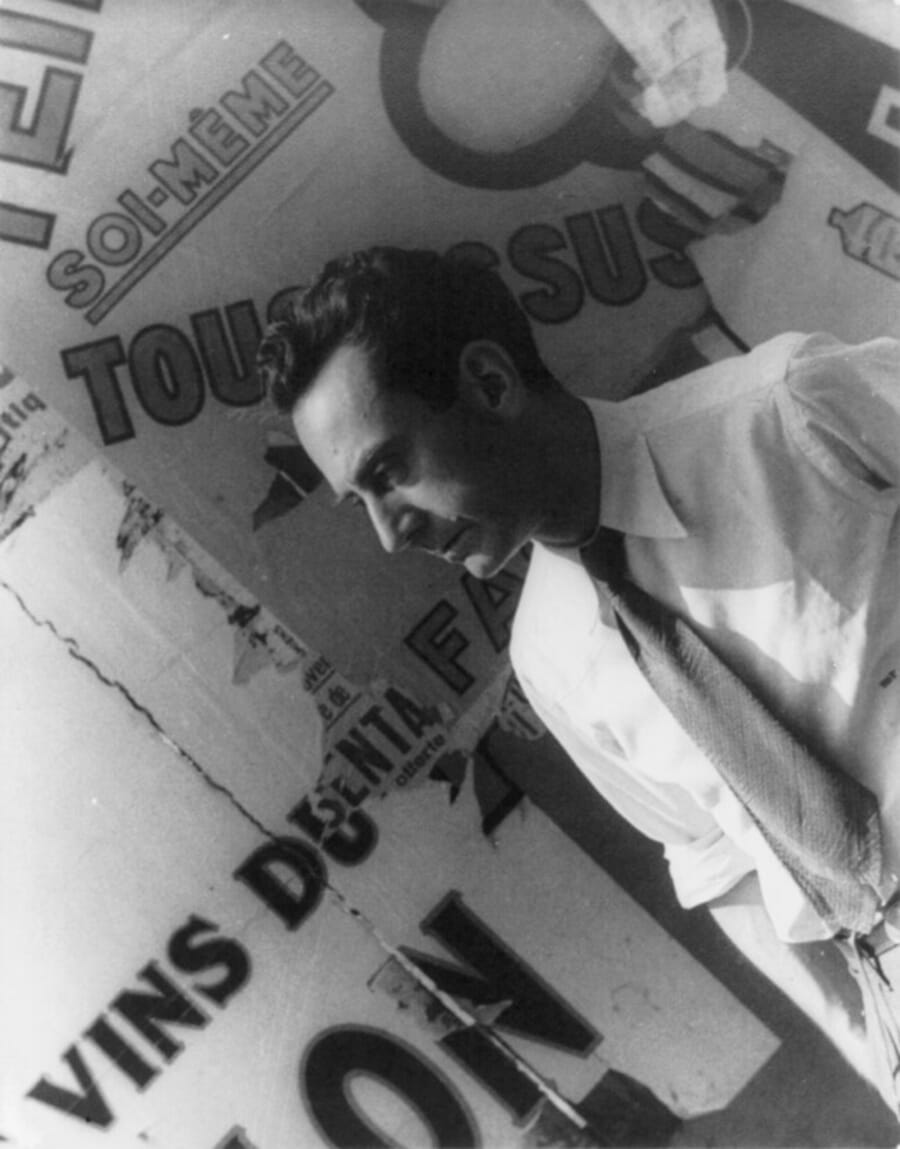
Man Ray wasn’t a fashion photographer in any traditional sense – he was a Dadaist and Surrealist artist who happened to revolutionize fashion imagery along the way. His experimental techniques, including solarization and the “rayograph” (photograms made without a camera), introduced an avant-garde visual language that fashion houses like Chanel, Schiaparelli, and Lanvin eagerly adopted.
Working in Paris in the 1920s and 1930s, Man Ray brought the aesthetics of the Surrealist movement directly into commercial fashion work. His portraits and fashion images for Vogue and Vanity Fair incorporated double exposures, unusual angles, and darkroom experimentation that no one else was attempting.
His influence on subsequent fashion photographers is enormous. Guy Bourdin studied under him directly. George Hoyningen-Huene was inspired by his approach to light. The entire tradition of “art fashion photography” – treating editorial work as a vehicle for artistic expression – traces back to Man Ray’s refusal to separate commerce from creativity.
What you can learn: Cross-pollinate between art forms. Man Ray brought painting and sculpture concepts into photography. Look for inspiration outside photography – in film, architecture, illustration, or sculpture – and bring those ideas into your fashion work. The most original images come from unexpected influences.
12. Cecil Beaton (1904-1980)
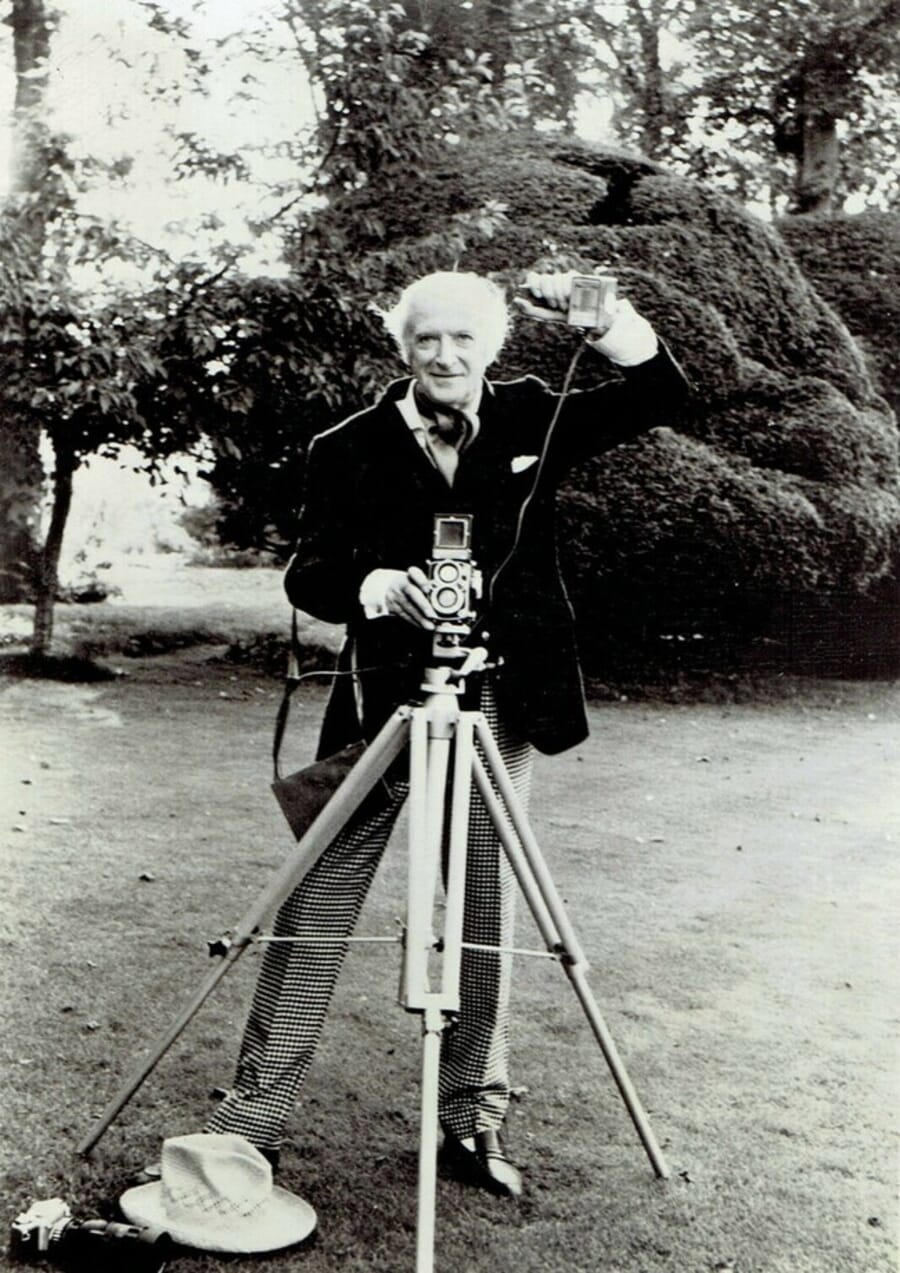
Cecil Beaton was the ultimate society photographer, whose eye for glamour, set design, and theatricality made him Vogue’s go-to photographer for three decades. His work documented the intersection of fashion, high society, and royalty with unmatched elegance.
Beaton’s fashion photographs were elaborately staged. He painted his own backdrops, designed sets with mirrors, tinfoil, and cellophane, and treated each shoot as a theatrical production. His 1926 solo exhibition in London so impressed Vogue that they immediately signed him as a photographer – a position he held until the 1950s.
Beyond fashion, Beaton served as the official court photographer for the British Royal Family and won Academy Awards for costume and set design on Gigi and My Fair Lady. His fashion work influenced generations of photographers who understood that a great fashion photograph is as much about the studio environment as it is about the clothing and the model.
What you can learn: The background is not an afterthought – it’s part of the photograph. Beaton’s hand-painted sets and clever use of reflective surfaces show that creative set design doesn’t require a huge budget. Experiment with backdrops, props, and unusual materials to create environments that complement your subject.
13. Steven Meisel (born 1954)
Steven Meisel may be the most powerful fashion photographer you’ve never seen a portrait of. Famously reclusive, Meisel has shot every single cover of Italian Vogue since 1988 – an unprecedented monopoly that speaks to his extraordinary influence in the industry.
Meisel’s genius lies in his chameleon-like ability to reinvent his style for every project. One editorial might reference 1950s Hollywood glamour; the next might be raw, documentary-style reportage. His 1992 photographs for Madonna’s Sex book generated international controversy, while his socially conscious editorials have addressed issues from oil spills to plastic surgery culture.
He is also one of fashion’s greatest star-makers. Linda Evangelista, Naomi Campbell, and Christy Turlington all credit Meisel with launching their careers. His ability to see potential in unknown models and transform them into icons is unmatched.
What you can learn: Versatility is a superpower. Meisel proves that having a “signature style” doesn’t mean doing the same thing repeatedly. Challenge yourself to work in different genres, with different lighting setups, and in different moods. The ability to adapt your approach to each project makes you a more complete photographer.
14. Lee Miller (1907-1977)
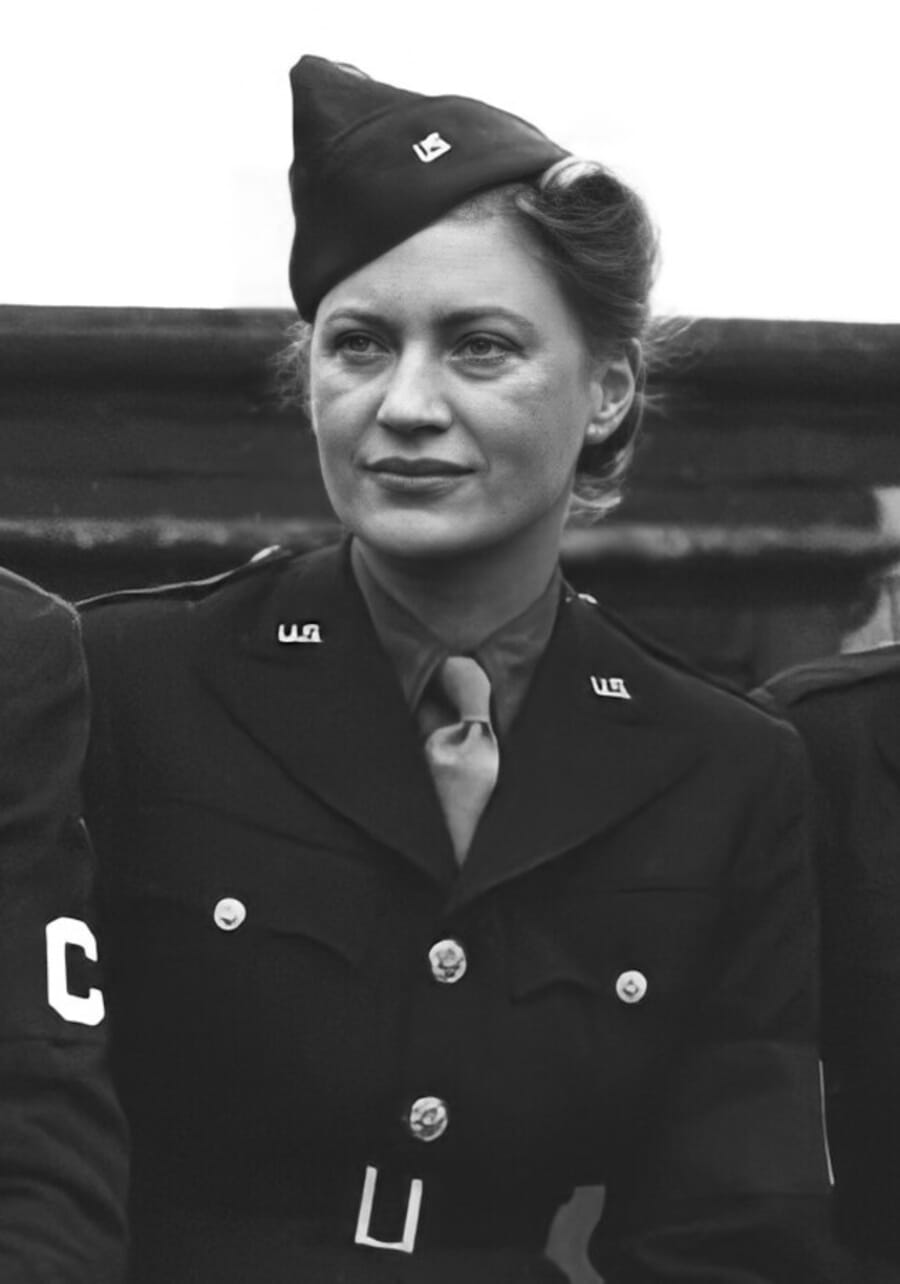
Lee Miller’s career defies easy categorization. She was a Vogue model in the 1920s, a Surrealist artist and collaborator of Man Ray in the 1930s, a war correspondent photographing the liberation of Dachau and Buchenwald in the 1940s, and a fashion photographer throughout. No one else in this list lived a life remotely as dramatic.
Miller’s fashion photography is distinguished by her insider’s understanding of modeling. Having been on both sides of the camera, she understood how to direct models in ways that felt natural and psychologically authentic. Her Surrealist training with Man Ray – including co-developing the solarization technique – gave her fashion work an artistic edge that pure commercial photographers lacked.
As a war correspondent for British Vogue, Miller photographed the effects of war on women’s lives and fashion – documenting how women dressed, worked, and survived under impossible conditions. This perspective informed all her work: fashion wasn’t frivolous to Miller, it was a form of resilience and identity.
What you can learn: Your life experience enriches your photography. Miller’s diverse career – model, artist, war correspondent – gave her a depth that purely studio-trained photographers couldn’t match. Pursue experiences outside photography. The more you understand about the world, the more meaningful your images become.
15. David Bailey (born 1938)
David Bailey didn’t just photograph the 1960s – he helped create them. As a working-class East Londoner who broke into the elite world of fashion photography, Bailey’s raw, energetic, high-contrast style captured the spirit of Swinging London and revolutionized British fashion photography.
Bailey’s partnership with model Jean Shrimpton produced some of the era’s most iconic images. His ability to capture spontaneity and personality – rather than posed perfection – reflected the social revolution happening around him. The Beatles, Mick Jagger, Andy Warhol, and the Kray twins all sat for Bailey, making him as much a chronicler of an era as a fashion photographer.
Technically, Bailey is known for his bold use of black and white with extreme contrast – deep blacks, blown-out whites, and very little gray in between. This graphic quality gave his images an immediacy and punch that perfectly suited the rebellious energy of the decade. His approach to shadow and contrast continues to influence editorial photographers today.
What you can learn: High contrast creates drama. Bailey’s black-and-white work shows how pushing contrast – either in camera or in post-processing – can transform a straightforward portrait into something graphic and powerful. Try shooting a set with deliberate, extreme contrast to see how it changes the mood of your images.
16. Herb Ritts (1952-2002)
Herb Ritts brought a distinctly Californian sensibility to fashion photography – all sun-drenched skin, sculpted bodies, and classical Greek-inspired compositions. His images of supermodels like Cindy Crawford, Naomi Campbell, and Christy Turlington, along with celebrities like Madonna and Richard Gere, defined 1980s and 1990s glamour.
Ritts shot almost exclusively with natural light, often in outdoor desert locations around Los Angeles. His understanding of how sunlight sculpts the human form was extraordinary. The resulting images have an almost sculptural quality – bodies become studies in light and shadow, reminiscent of classical marble statues.
His famous photograph of Cindy Crawford pumping gas in a swimsuit (for the Pepsi Super Bowl commercial) became one of the most iconic advertising images of the 1990s. Ritts proved that high fashion could feel accessible and aspirational simultaneously.
What you can learn: Master natural light before you invest in complex studio setups. Ritts created world-class fashion images using nothing more than sunlight and careful positioning. Study how light changes throughout the day and how different angles create different effects on skin and fabric. Sometimes the simplest approach produces the most beautiful results.
17. Paolo Roversi (born 1947)
Paolo Roversi creates fashion photographs that look like Renaissance paintings. The Italian-born, Paris-based photographer is known for his dreamlike, ethereal style – soft focus, muted colors, and a luminous quality that seems to come from within the image itself.
Much of Roversi’s distinctive look comes from his continued use of a large-format 8×10 Polaroid camera. In an age of digital perfection, Roversi embraces the imperfections and unpredictability of instant film. The resulting images have a texture and warmth that digital photography struggles to replicate.
Roversi’s work for Dior, Comme des Garcons, Yohji Yamamoto, and Vogue has earned him a reputation as fashion photography’s most poetic voice. His images don’t sell clothes – they create an emotional atmosphere around them. Models in his photographs appear to emerge from darkness, as though painted in light.
What you can learn: Embrace imperfection and experiment with analog techniques. Even if you shoot digitally, try introducing elements of unpredictability – intentional motion blur, soft focus, or grain. Roversi shows that technically “imperfect” images can be the most emotionally powerful.
18. Mario Testino (born 1954)
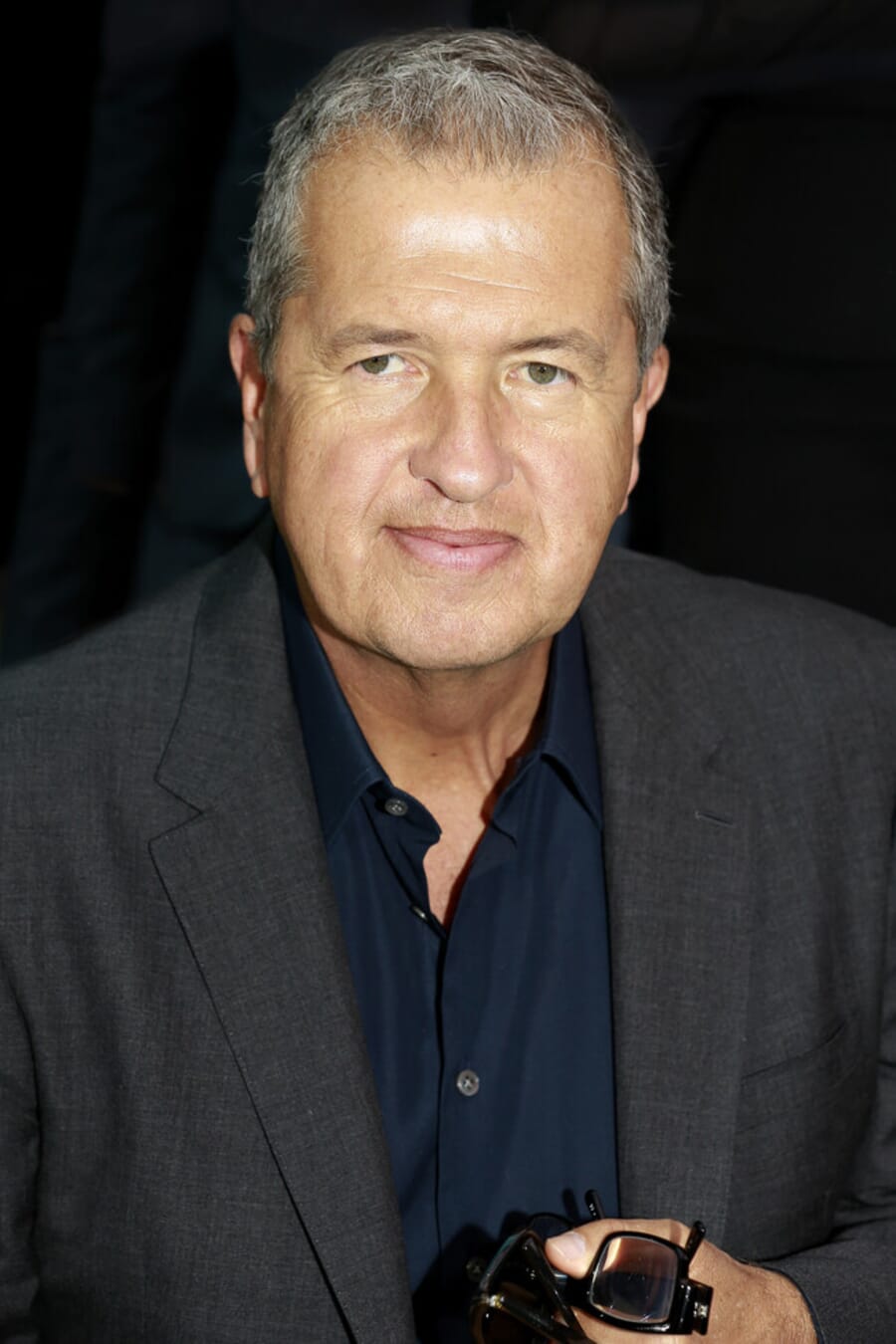
Mario Testino built his career on making people look their absolute best. The Peruvian-born photographer became one of fashion’s most sought-after image-makers by creating photographs that feel glamorous, spontaneous, and effortlessly luxurious.
Testino’s breakthrough came with his portraits of Princess Diana for Vanity Fair in 1997 – images that showed her relaxed, confident, and luminous. These became the defining portraits of Diana’s final year. He went on to become the unofficial royal photographer, shooting portraits of the Duke and Duchess of Cambridge and other members of the British Royal Family.
His fashion work for Gucci, Burberry, and Versace campaigns is characterized by sun-drenched warmth, natural-looking light, and a party atmosphere. His famous “Towel Series” – where he photographed models and celebrities wrapped only in towels – exemplifies his ability to find beauty in simplicity and spontaneity.
What you can learn: The best fashion photographs often feel unforced. Testino’s genius is making highly produced images look spontaneous. Create an atmosphere on set where your subjects feel relaxed and confident – play music, keep the conversation going, and be ready to capture those in-between moments when your subject drops their guard.
19. Bruce Weber (born 1946)
Bruce Weber redefined how men are photographed in fashion. Before Weber, menswear photography was stiff and uninspired. His athletic, sun-kissed, All-American aesthetic for Calvin Klein and Ralph Lauren campaigns in the 1980s created an entirely new visual vocabulary for male beauty.
Weber’s famous Calvin Klein underwear campaigns (featuring a young Mark Wahlberg, among others) and his Abercrombie & Fitch catalogs transformed menswear advertising from an afterthought into a cultural event. His images featured men running on beaches, wrestling in fields, and lounging shirtless – a relaxed, physical masculinity that was genuinely new.
Beyond commercial work, Weber has directed films and created deeply personal photographic books that explore themes of youth, Americana, and nostalgia. His black-and-white work has a documentary quality that elevates it beyond commercial photography into something more intimate and reflective.
What you can learn: Don’t limit yourself to shooting one gender the same way everyone else does. Weber proved there was enormous commercial and artistic potential in reimagining how men are photographed. Look for gaps in how certain subjects are typically portrayed and try offering a fresh perspective.
20. Juergen Teller (born 1964)
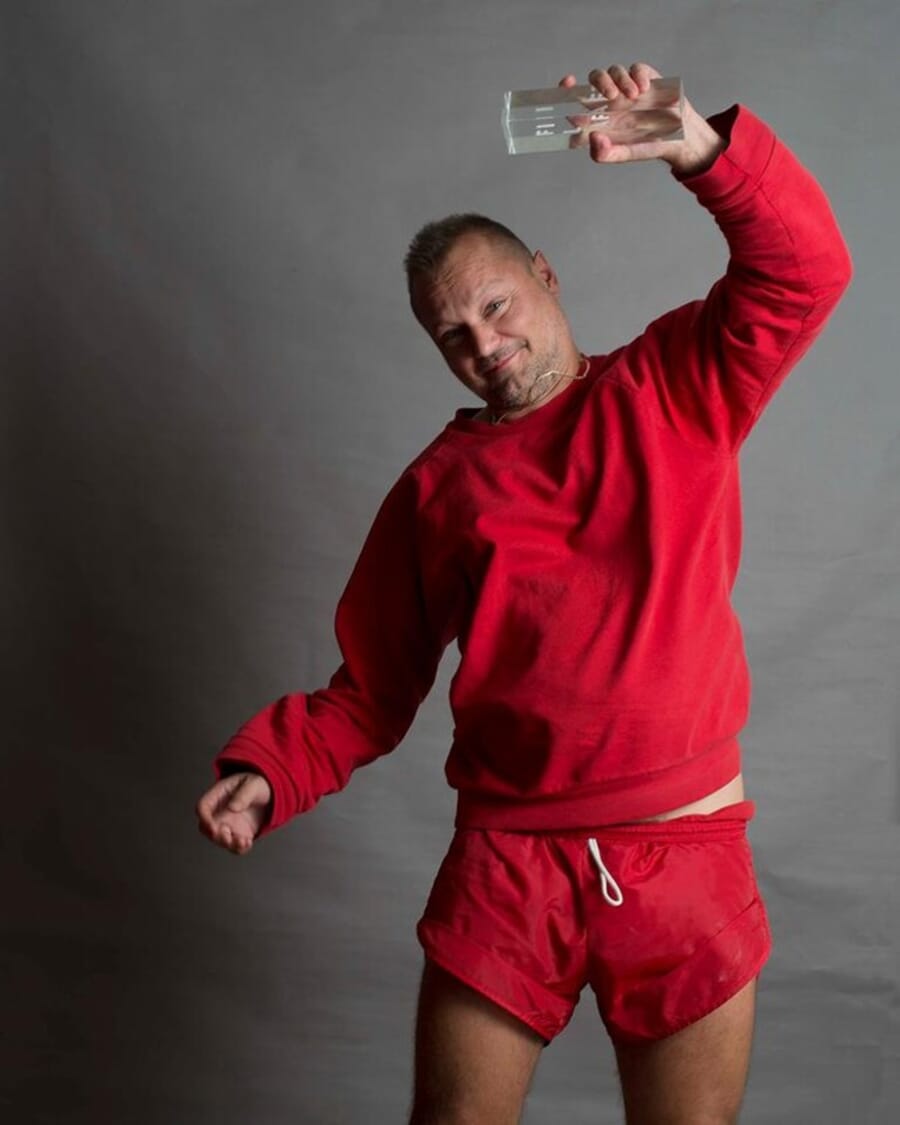
Juergen Teller represents the anti-glamour revolution in fashion photography. Where most photographers on this list create polished, idealized images, Teller deliberately embraces rawness, awkwardness, and unflattering light. His work looks like snapshots – until you realize how precisely calculated that casualness really is.
The German-born, London-based photographer has created campaigns for Marc Jacobs, Celine, and Vivienne Westwood using on-camera flash, harsh lighting, and compositions that seem deliberately clumsy. His long-running collaboration with Marc Jacobs produced some of fashion’s most memorable campaign images – including celebrities photographed in unglamorous settings with a directness that bordered on confrontational.
Teller’s influence on contemporary fashion photography is enormous. The “anti-fashion” aesthetic that dominates much of today’s editorial work – raw flash, unstaged compositions, visible flaws – traces directly back to Teller’s pioneering work in the 1990s.
What you can learn: Perfection isn’t the only path to compelling images. Teller proves that a direct flash, a messy composition, and an unflattering angle can be as powerful as a perfectly lit studio setup – if there’s genuine intention behind the choices. The key is understanding the rules before you break them. Study photography fundamentals thoroughly, then decide which conventions to subvert.
Frequently Asked Questions
Who is considered the greatest fashion photographer of all time?
There’s no single answer, but Richard Avedon and Irving Penn are most frequently cited as the greatest fashion photographers in history. Avedon revolutionized fashion photography by introducing movement and emotion, while Penn perfected the art of compositional simplicity. Both worked for Vogue for decades and influenced every fashion photographer who came after them.
How do I get started in fashion photography?
Start by mastering portrait photography fundamentals – lighting, composition, and directing subjects. Build a portfolio by collaborating with local models, makeup artists, and stylists on test shoots (TFP – time for prints). Study the work of the photographers on this list to develop your visual taste. Most fashion photographers working today started by assisting established photographers, which remains one of the best ways to learn the industry.
Do fashion photographers need expensive equipment?
Not necessarily. Herb Ritts created iconic images using only natural sunlight. Juergen Teller’s work relies on a simple on-camera flash. While professional fashion photographers typically use medium-format cameras and studio lighting for commercial work, the creative vision matters far more than the gear. Start with whatever camera you have and focus on developing your eye for light, composition, and styling.
What’s the difference between fashion photography and portrait photography?
Fashion photography is primarily about the clothing, styling, and a broader creative concept, while portrait photography focuses on revealing the personality or character of the subject. In practice, the two overlap significantly – many photographers on this list (Avedon, Leibovitz, Bailey) are celebrated for both. The main distinction is intent: in fashion photography, the overall aesthetic, mood, and commercial narrative typically drive the creative decisions.
Can you make a living as a fashion photographer?
Yes, though the path varies widely. Top fashion photographers earn millions per campaign, while emerging photographers often supplement editorial work with commercial, e-commerce, or portrait photography. The industry has expanded beyond traditional magazines – brands need content for social media, e-commerce, and digital advertising, creating more opportunities than ever. Check our guide to the highest-paying photography jobs for more on photography as a career.
What These Fashion Photographers Teach Us
Looking across these 20 photographers, a few themes emerge. The best fashion photographers aren’t just technically skilled – they have a clear point of view. Whether it’s Avedon’s emotional energy, Penn’s compositional precision, Newton’s provocative edge, or Teller’s deliberate anti-glamour, each photographer built their career on a distinctive creative vision.
They also teach us that fashion photography is never just about the clothes. It’s about culture, identity, beauty standards, and the stories we tell about ourselves through what we wear. The photographers who endure are the ones who use fashion as a vehicle for something larger.
Whether you’re just starting out with your camera or looking to push your work in new directions, studying these photographers offers more than inspiration. Each one demonstrates a specific approach – to light, to composition, to narrative, to risk-taking – that you can adapt and apply to your own photography practice.
Featured image: Photo by Metin Ozer on Unsplash.