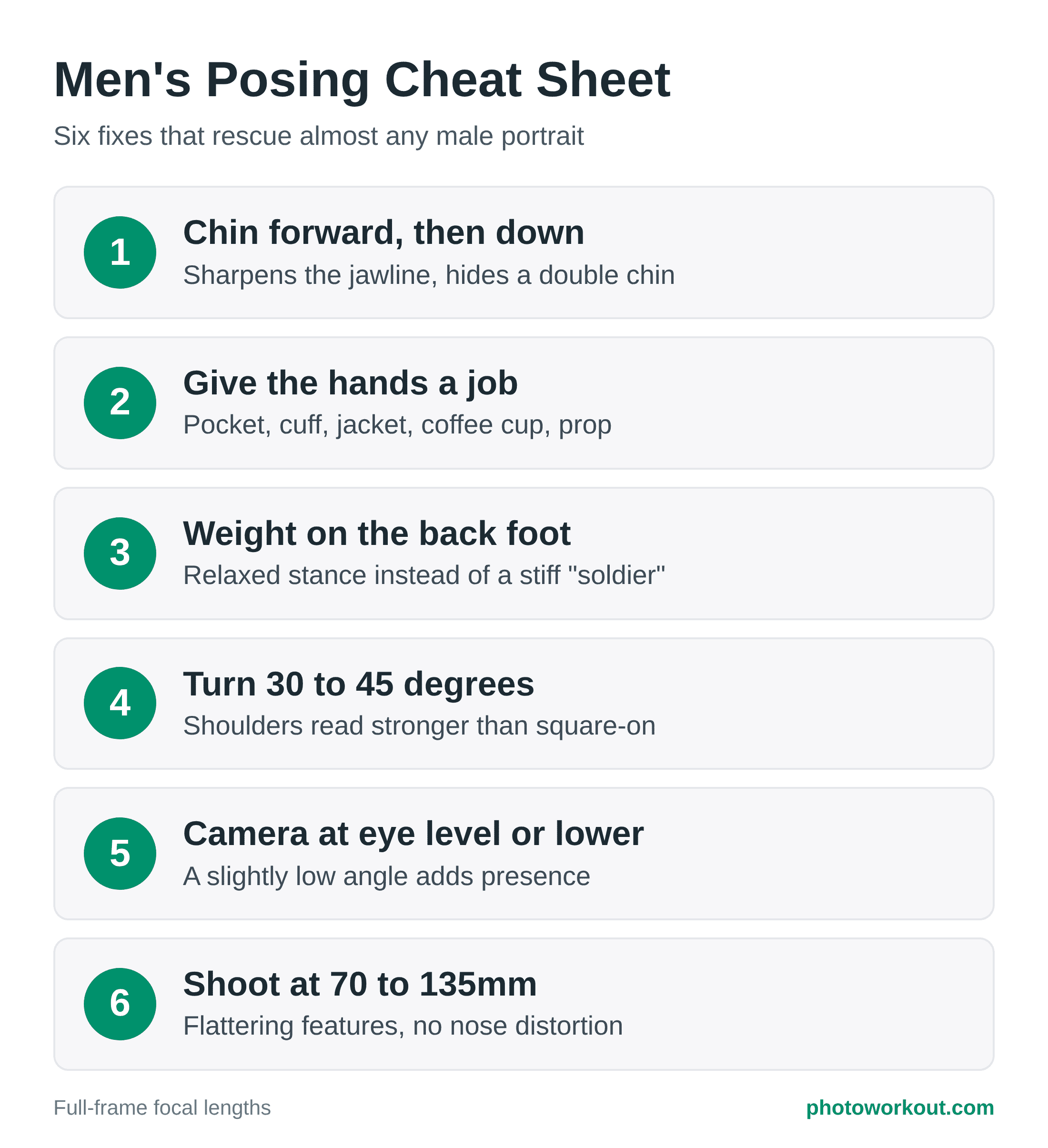


- Fix the basics first: chin forward and slightly down, hands with a job, weight on the back foot, body turned 30 to 45 degrees from the camera.
- 20 poses below, from leaning and crossed arms to walking shots and jawline angles, each with a one-line cue to say to the model.
- Indoor and studio ideas: one light on a dark backdrop, window light at home, a stool and seamless paper, or a high-fashion chair setup.
- Creative concepts: color gels, hard-light shadows, silhouettes, haze and slow-shutter motion.
- Settings that flatter: a 70 to 135mm lens, f/2.8 to f/4 for headshots, 1/200s or faster handheld. See the settings table.
Most men freeze the moment a lens points at them. The shoulders rise, the arms hang like spare parts and the smile turns into a grimace. The good news: men’s photos almost never fail because of looks. They fail because nobody gave the subject a pose, a place to put his hands, or a setting that suits him.
The short answer: the best photoshoot ideas for men combine a simple, relaxed pose (leaning, hands in pockets, walking, seated backward on a chair) with a location or lighting concept that tells a story, such as a single hard light on a dark backdrop, window light at home, a neon-gel portrait or a city street at golden hour. Get the chin, hands and weight right and almost any concept works.
This guide covers 20 proven poses, then the indoor, studio, creative, outdoor and occasion-specific ideas (birthdays, LinkedIn, dating profiles) that photographers actually search for, plus the camera settings, wardrobe tips and mistakes to avoid. It works whether you are behind the camera or in front of it.
In this guide
- 6 Posing Rules That Fix Most Men’s Photos
- 20 Photoshoot Ideas for Men
- Indoor and Studio Photoshoot Ideas for Men
- Creative Photoshoot Concepts for Men
- Outdoor Photoshoot Ideas for Men
- Photoshoot Ideas for Birthdays, LinkedIn and Dating Profiles
- Camera Settings for Men’s Portraits
- What to Wear to a Men’s Photoshoot
- Common Mistakes in Men’s Photoshoots
- Frequently Asked Questions
6 Posing Rules That Fix Most Men’s Photos
Before trying any specific idea, run through these six fundamentals. They are the difference between a pose that looks natural and one that looks like a passport photo.
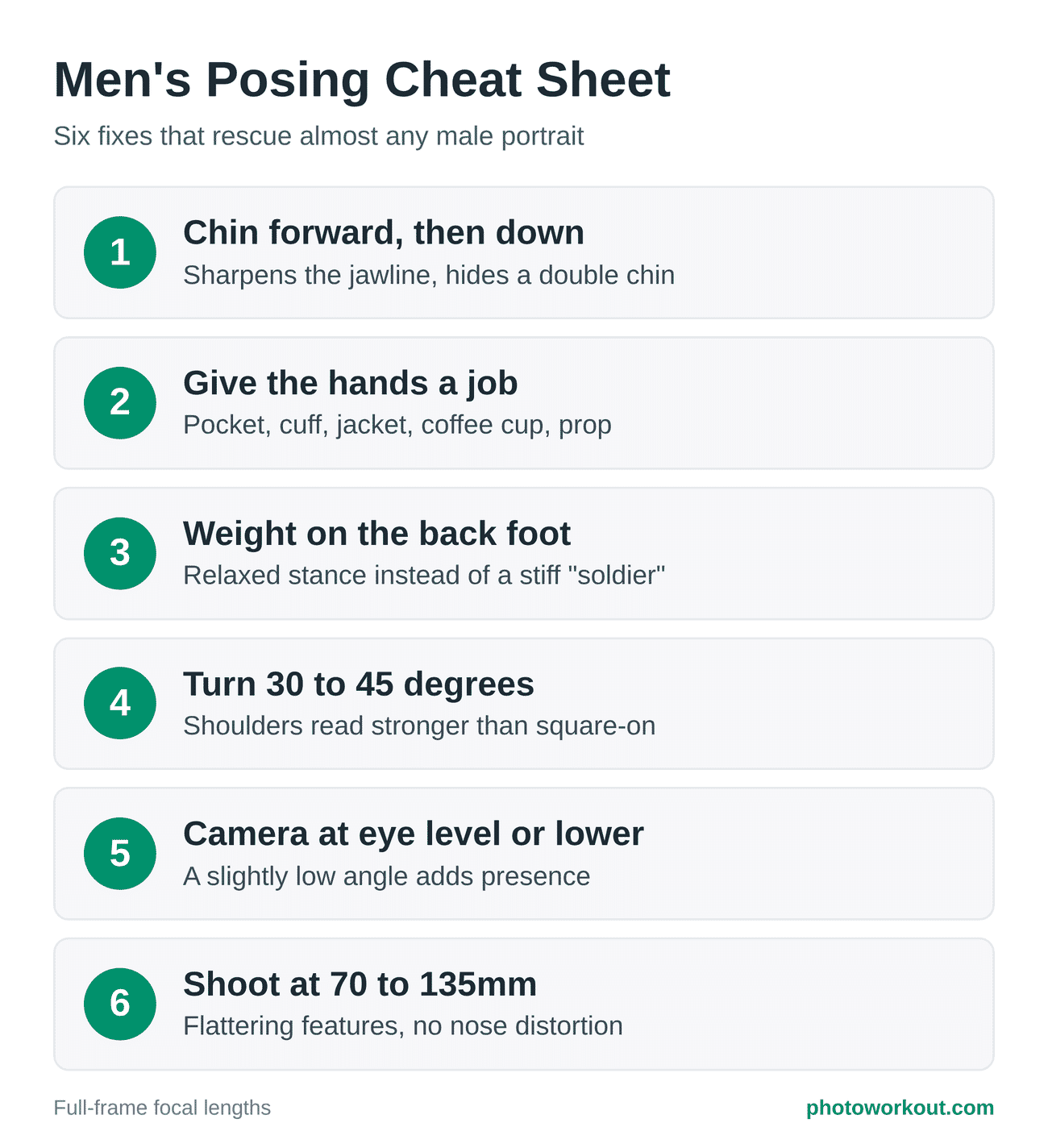
- Chin forward, then down. Pushing the forehead slightly toward the lens and tipping the chin down separates the jaw from the neck. Headshot photographer Peter Hurley built a whole teaching method around this one move because it reliably sharpens the jawline.
- Give the hands a job. Hands that hang do nothing. A thumb in a pocket, a sleeve cuff, a jacket collar, a coffee cup or a camera strap instantly reads as natural.
- Weight on the back foot. Shifting weight backward drops the front shoulder and breaks the stiff, square "soldier" stance.
- Turn 30 to 45 degrees. Angle the body away from the camera and turn the face back toward it. Shoulders look broader and the torso looks leaner than when standing square-on.
- Camera at eye level or slightly lower. A low angle adds height and presence. Shooting down from above makes the subject look smaller and less confident.
- Use a short telephoto. Focal lengths between 70 and 135mm on full frame (roughly 50 to 85mm on APS-C) keep facial proportions natural. A wide lens up close enlarges the nose. The focal length framing guide shows the difference side by side.
20 Photoshoot Ideas for Men
Each idea below comes with the cue a photographer can say out loud, plus the situations where it works best. Mix and match: most of the strongest frames combine two ideas, such as leaning plus hands in pockets, or walking plus looking back.
1. Leaning
Leaning is the fastest fix for a stiff subject. A wall, doorframe, railing or car takes the body weight, so the shoulders drop and the whole frame relaxes. It is simple to pull off and works in almost any location.

Cue: "Put your shoulder on the wall, cross the outside foot over and look past me." Shoot frames looking at the camera and away from it; comparing both quickly reveals the subject’s better side for the rest of the session.
Works best for: street portraits, casual social media shots and anyone who feels awkward on camera. Combine it with hands in pockets or folded arms for variety.
2. Crossed Arms
Crossed arms solve the "dangling hands" problem and project confidence. The trick is to keep it relaxed: arms loosely folded, hands resting on the biceps rather than gripping, and shoulders down.

Cue: "Fold your arms loosely, drop your shoulders, and turn slightly away from me." Rolling up the sleeves to show the forearms adds a relaxed, capable look. Try the camera slightly below chest height for a more commanding frame.
Works best for: business portraits, team pages and professional headshots. Pair it with a genuine smile, otherwise crossed arms can read as closed off.
3. Jacket over the Shoulder
A jacket hooked over one shoulder is a classic menswear pose. It gives one hand an obvious job, adds a second texture to the frame and creates a strong diagonal line from hand to elbow.

Cue: "Hook the collar on two fingers, rest it on your shoulder, other hand in your pocket." Stand tall here; slouching kills this pose. A denim, leather or suit jacket each tells a different story, so let the fabric be clearly visible.
Works best for: fashion-style shoots, urban locations and suit portraits where the subject wants to look polished but approachable.
4. Hands in Pockets
Hands in pockets is the default safe pose for a reason: it is natural, relaxed and needs no instructions. The common mistake is shoving the whole hand deep into the pocket, which makes the arms look short and the shoulders hunch.

Cue: "Just your fingers in, thumbs out, and let your shoulders drop." One hand in a pocket and the other doing something (holding a coffee, adjusting a cuff) looks even more natural.
Works best for: full-body and three-quarter shots, both indoors and out.
5. The Thinker
Borrowed from Rodin’s famous sculpture, the hand-to-chin pose suggests concentration and gives the face a frame. Keep the touch light: a hand that props up the head squashes the cheek.
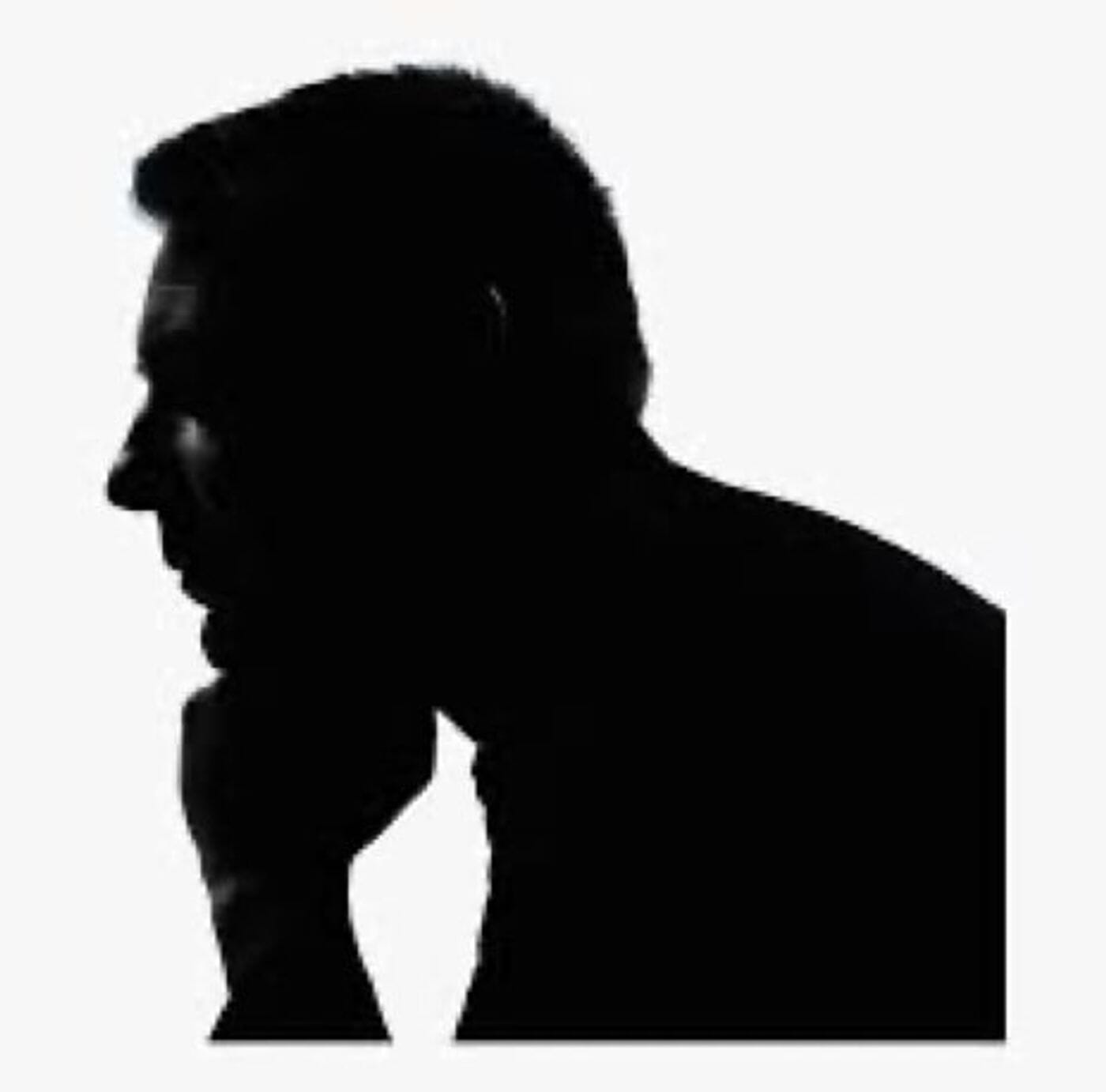
Cue: "Rest two fingers along your jaw, don’t lean on them, and look slightly off-camera." Variations: knuckles under the chin, a thumb along the jawline, or a closed fist touching the lips for a more serious look.
Works best for: author and creative-professional portraits, moody low-key shots and silhouettes against a bright window.
6. Crossed Legs
Crossed legs work standing or seated. Standing, one foot crossed in front of the other at the ankle shifts the hips and breaks up a rigid stance. Seated, an ankle resting on the opposite knee reads relaxed and self-assured.

Cue: "Sit toward the front edge of the chair, ankle on the knee, lean forward a touch." Sitting on the front edge keeps the posture tall; sinking back into the chair compresses the torso.
Works best for: editorial and studio portraits, especially with a suit or tailored trousers.
7. Backward Chair
Straddling a chair turned backward is a long-time favorite of magazine and celebrity portraits. The chair back becomes a frame and an armrest at the same time, so the subject has somewhere to put both hands.

Cue: "Arms folded on the backrest, chin just above your forearms, lean toward me." Variations: one hand running through the hair, chin resting on the forearms, or a slight turn so one shoulder leads.
This pose fills more of the frame than a standing pose, which makes it a good match for a dramatic lighting pattern such as Rembrandt or split light. For the female-focused version of this list, see the photoshoot poses for women guide.
8. Stairs
Stairs add levels, leading lines and a built-in seat. Sitting on a step with forearms on the knees is relaxed and casual; standing a few steps up and shooting from below adds height.

Cue: "Sit two steps up, forearms on your knees, hands loose." Shoot straight down the stairs for symmetry, or from the side to use the handrail as a diagonal. Stairs are also one of the best places to experiment with camera angles.
Works best for: urban and streetwear shoots, and indoor stairwells when the weather is bad.
9. One Leg against the Wall
Legs look as awkward as hands when they have nothing to do. Planting one foot flat against a wall behind you gives the leg a job and creates a strong, relaxed triangle shape.

Cue: "Lean back, put your right foot flat on the wall, and look down the street." Combine it with crossed arms, hands in pockets or a jacket over the shoulder. A doorway works just as well and adds a natural frame.
Planning to shoot it inside? These indoor photoshoot ideas help with location. Outside, the best camera settings for portraits keep the background soft.
10. Candid Poses
Candid shots look unposed because the subject is busy doing something real. That makes them the best option for camera-shy men: the attention goes to the action, not the lens.

Cue: give an action, not a pose. "Tie your shoe." "Tell me about your worst haircut." "Stir your coffee and look out the window." Shoot in burst mode during the action; the best frame is usually the one just after the laugh.
Works best for: lifestyle shoots, dating profiles and anyone who hates posing.
11. A Hair Swipe
Running a hand through the hair is one of the most natural male gestures, which is exactly why it photographs well. It also lifts the elbow and adds a dynamic angle to the frame.

Cue: "Push your hair back slowly, and look down as you do it." Shoot a burst through the whole movement. Mid-swipe frames look natural; frames with the hand frozen on top of the head usually don’t.
12. Hands on the Chest
A hand resting on the chest is a warmer, softer pose. It reads as open and genuine, especially paired with a real laugh, and works well for approachable personal-brand portraits.

Cue: "Hand flat on your chest, lean to the side and laugh like someone just told you a bad joke." Keep the fingers relaxed rather than splayed.
13. Hands on the Hips
Hands on hips is the "power pose": elbows out, chest open, chin up. Done right, it projects confidence. Done stiffly, it looks like a superhero costume test, so keep the hands low and loose.

Cue: "Hands on your belt, elbows back a little, chin up slightly." Shoot from slightly below for maximum presence. One hand on the hip with the other relaxed is a subtler version.
14. Gesture Using Your Hands
Hand gestures add energy and personality: pointing at the camera, mid-explanation hand movements, or rubbing the hands together as if about to get to work. They are particularly effective for speakers, coaches and anyone whose job involves talking.

Cue: "Explain your job to me in ten seconds." People gesture naturally when they talk. Shoot a burst and pick the frame where the hands are open and close to the body. Try different lighting patterns to match the mood.
15. Walking
Walking shots add movement and look effortlessly natural. They are also the easiest outdoor pose: the subject simply walks toward the camera, again and again.

Cue: "Walk toward me slowly, look at the ground, then look up at me." Use continuous autofocus (AF-C or AI Servo) with eye detection, and 1/320s or faster to freeze the stride. A wide aperture separates the subject from busy streets; the bokeh tutorial covers how to maximize the blur.
16. Looking Backward
A look back over the shoulder adds intrigue and shows off the jawline at the same time. The back-to-camera variation, with the subject facing a view, tells a story of travel or adventure.

Cue: "Walk away from me, then glance back over your left shoulder." Turning the head about 45 degrees (not all the way) keeps the neck from creasing. Golden-hour backlight adds rim light along the hair and shoulders; see the rim light guide for how to expose it.
17. Adjusting an Outfit
Adjusting a cuff, a watch, a tie or a jacket button is the classic menswear editorial pose. It looks candid, shows off details and gives both hands a job.

Cue: "Button your jacket slowly, look down at it, now look at me." Cufflinks, a watch strap or a tie knot work for tighter crops. This idea also works well in group shots for groomsmen and teams; the 100+ photoshoot ideas guide has more group concepts.
18. Posing with a Prop
A prop tells the viewer something about the subject: a guitar, a skateboard, a camera, a coffee cup, a tool from his trade. It also solves the hands problem completely.

Cue: "Hold it like you use it, not like you are presenting it." Props should feel lived-in. For more inspiration, see these photo prop ideas.
19. Making the Jawline Stand Out
A defined jawline is the single most requested feature in men’s portraits. Three moves do most of the work: push the forehead slightly toward the camera, drop the chin a touch, and turn the face so the light rakes along the jaw.

Cue: "Forehead toward me, chin down a little, now turn your nose to the light." Side profiles are the strongest jawline frames. A light from the side (split or Rembrandt) adds shadow under the jaw; a camera position slightly above eye level for headshots helps too.
20. Leaning on an Arm Rest
Leaning an elbow on an armrest, bar counter or table gives the upper body an anchor and brings the hand naturally toward the face. It looks comfortable and in control at the same time.

Cue: "Elbow on the armrest, lean into it, two fingers to your temple." A watch, ring or bracelet on the visible wrist adds a style detail.
Indoor and Studio Photoshoot Ideas for Men
Indoor shoots give full control over light and background, which is why they are the most searched category for men’s photoshoots. You don’t need a commercial studio: a spare room, one light and a plain wall cover most of these ideas. For general indoor exposure, see the indoor camera settings guide.
One-Light Low-Key Portrait
A single light placed to the side against a dark backdrop is the most masculine-looking studio setup there is. Shadows sculpt the cheekbones and jaw, and the black background makes the subject pop.
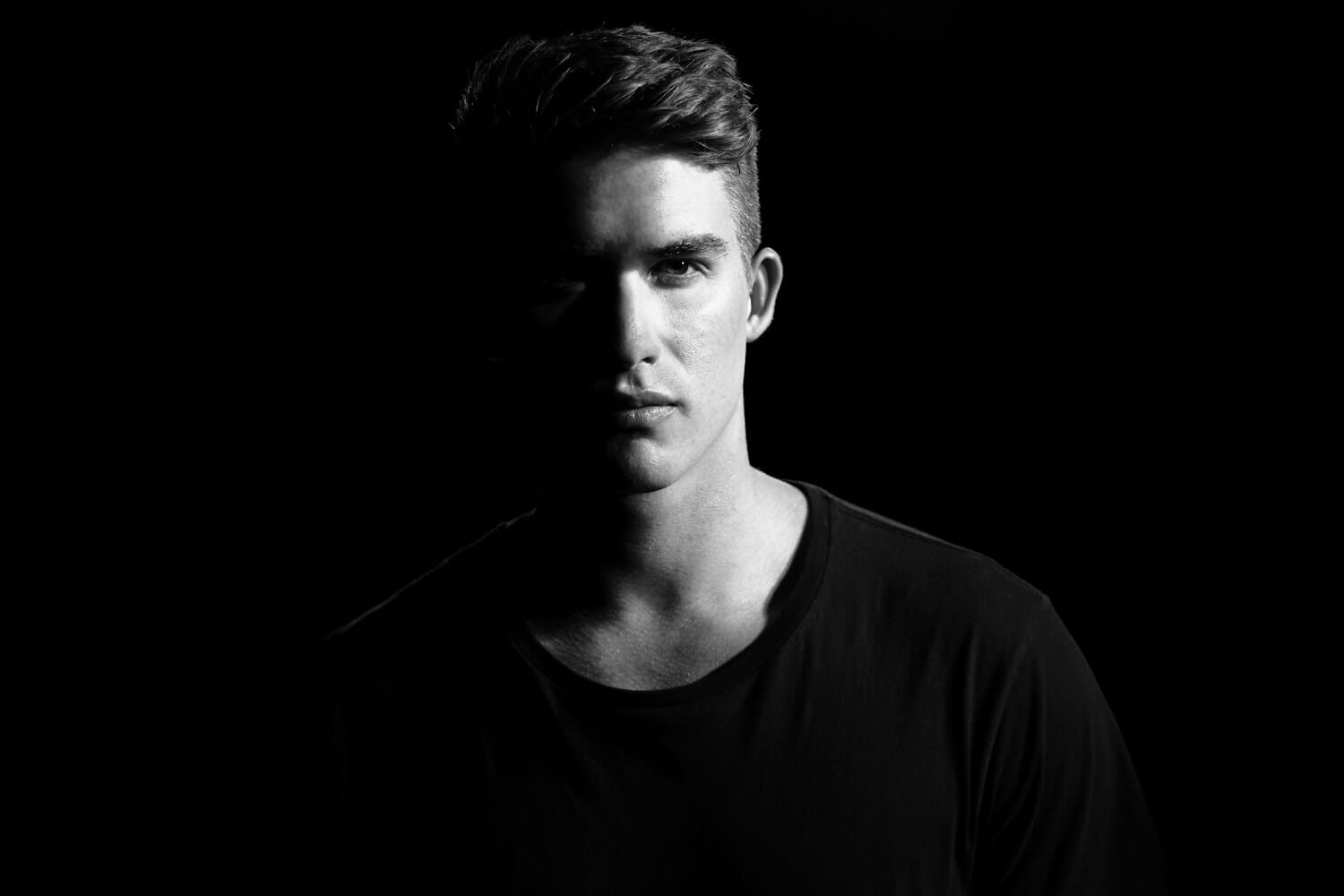
Setup: one strobe or LED with a small softbox at 45 to 90 degrees to the subject, 1 to 1.5 m away. Keep the subject at least 2 m in front of a dark wall so no light spills onto it. Expose for the highlights on the face and let the shadows fall to black. The high key vs low key lighting guide covers the full setup.
High-Fashion Chair and Backdrop
A stool or chair in front of seamless paper is the template behind most fashion editorials. A bold color backdrop (red, mustard, cobalt) and a wide-legged or slouched seated pose instantly look like a magazine spread.

High-fashion poses to try: sitting sideways on the chair with one arm draped over the backrest; leaning forward with elbows on the knees and hands clasped; a wide stance with the chair pushed away; or standing with one foot on the seat. Fashion poses exaggerate angles on purpose, so push the elbows and knees out further than feels natural.
Window Light at Home
A large window is a free softbox. Side-lit by a window, a man reading, playing guitar or drinking coffee looks natural and cinematic, and the session needs no gear beyond a camera.
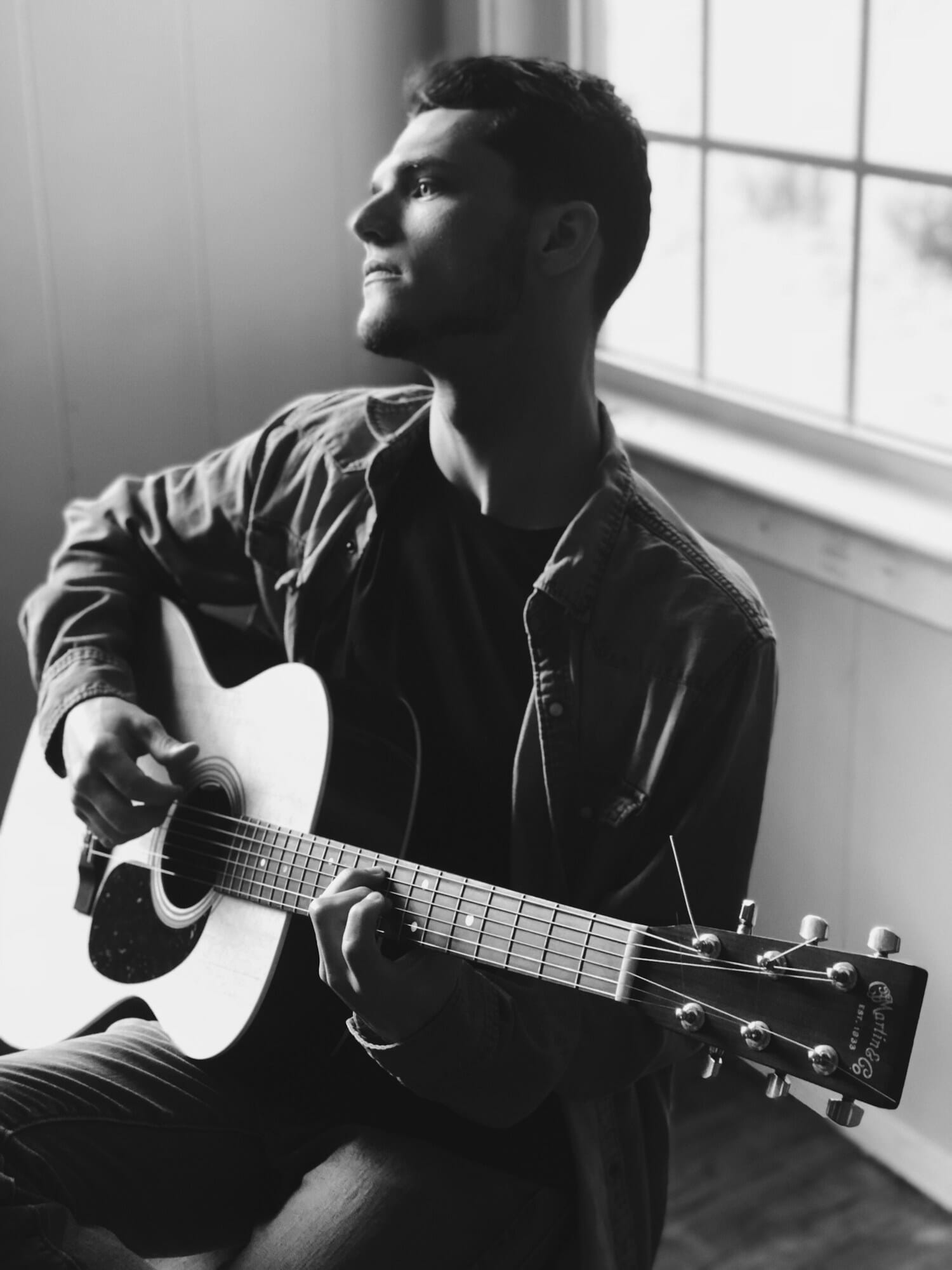
Setup: place the subject 1 to 2 m from a window, angled so the light falls across the face from the side. Turn off room lights to avoid mixed color. If the shadow side is too dark, a white sheet or reflector bounces some light back. The window light photography guide goes deeper.
The Lived-In Apartment
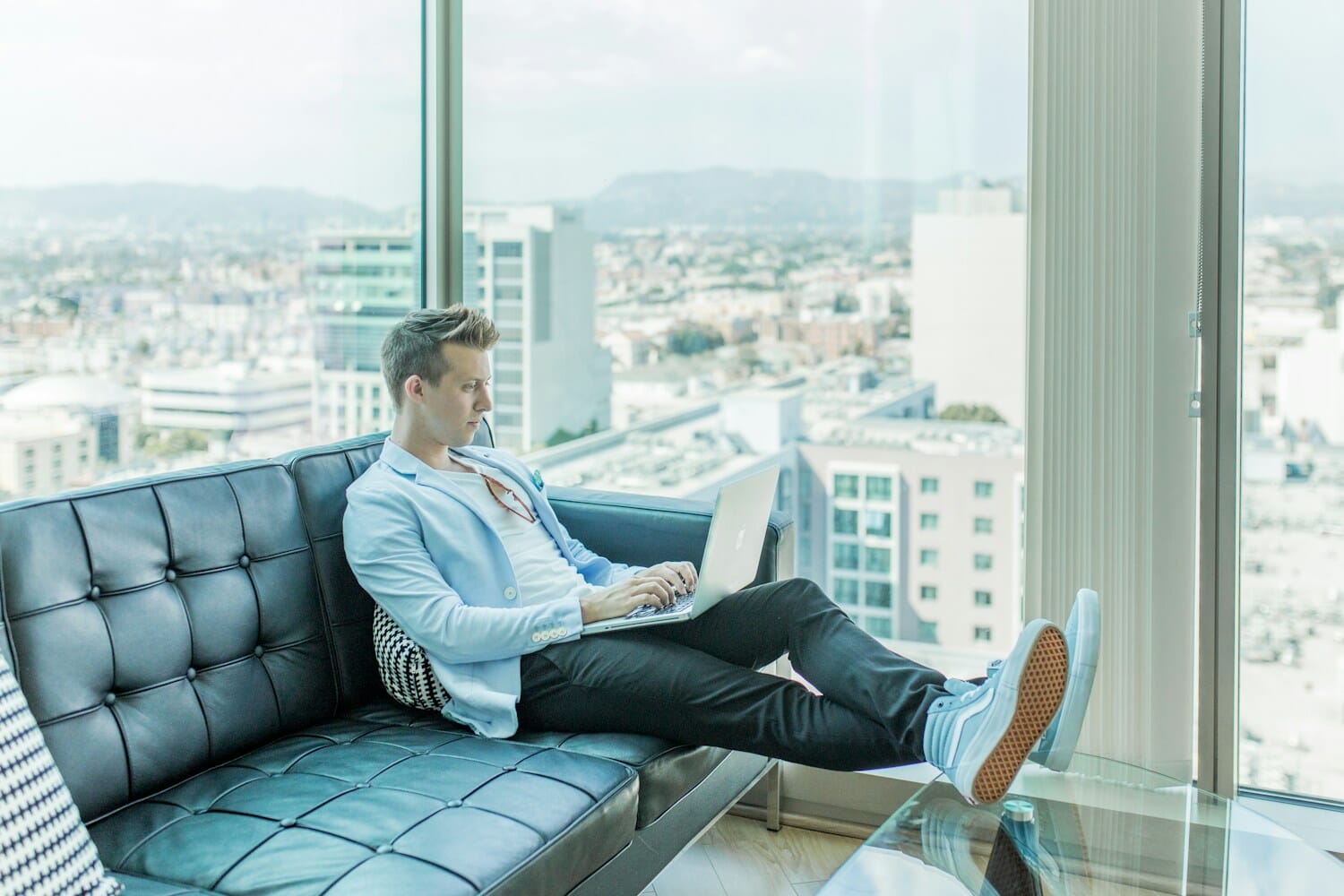
Home shoots work best when the space tells the story: the record player, the bookshelf, the kitchen, the desk with a laptop. Ask the subject to do what he actually does at home, then frame wide enough to include the environment.
- Kitchen: cooking, pouring coffee or plating food. Real action beats posing.
- Reading chair: a book, a lamp, a whisky glass. Shoot with the lamp as the main light for a warm, cinematic feel.
- Desk or workshop: working on a laptop, sketching, repairing a bike. Great for personal-brand shoots.
- Mirror: a getting-ready shot with the reflection, tie half-knotted.
- Doorway and hallway: a door frame creates a natural frame-within-a-frame for full-body shots.
Creative Photoshoot Concepts for Men
Once the basics are covered, these concepts produce images that stand out on social media and in a portfolio. Most need only one extra item: a gel, a fog machine or a patterned shadow. For more themes beyond men’s portraits, browse these photoshoot theme ideas.
Color Gels and Neon
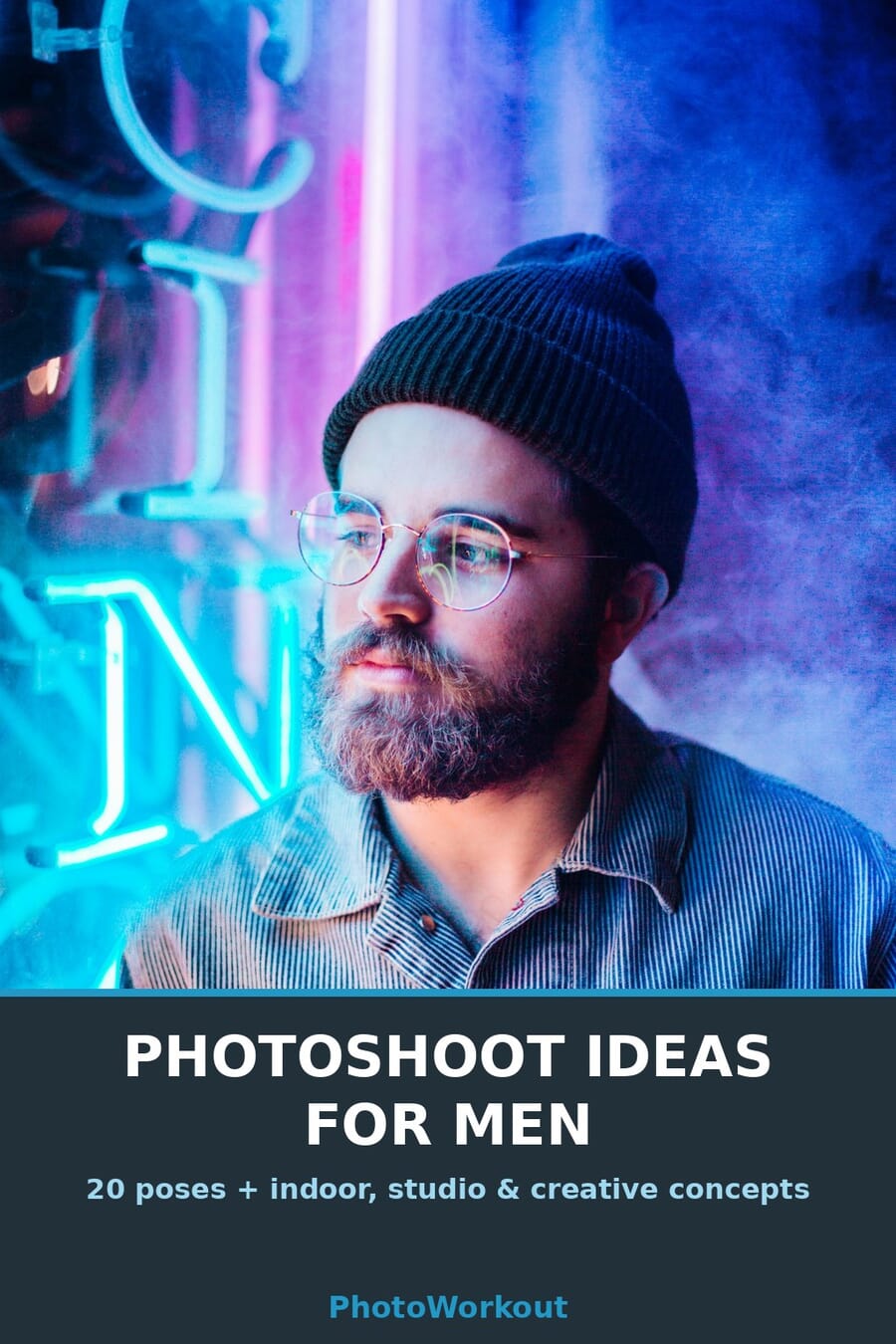
Two lights with contrasting gels (red and blue, teal and orange, magenta and cyan) turn a plain room into a cyberpunk set. Neon signs and city lights at night achieve a similar look outdoors.
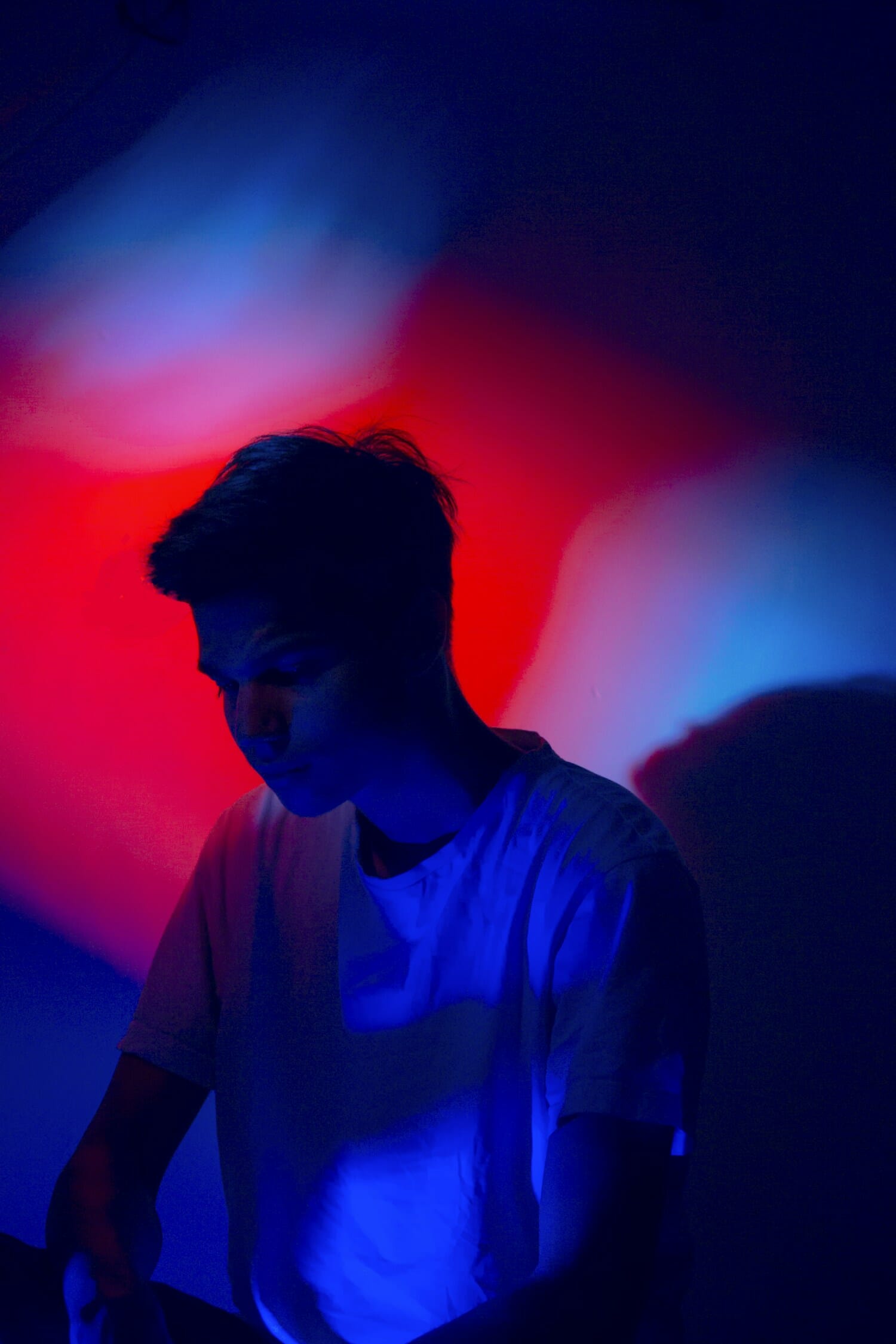
Setup: one gelled light on each side of the subject, slightly behind, in a dark room. Set a manual white balance around 5000K so the gel colors stay saturated rather than being neutralized by auto white balance. A touch of haze makes the colored beams visible.
Hard-Light Shadows
Hard sun or a bare flash creates crisp shadows that become part of the composition: window-blind stripes across the face, a profile shadow on the wall, or leaf patterns from a plant placed in front of the light.
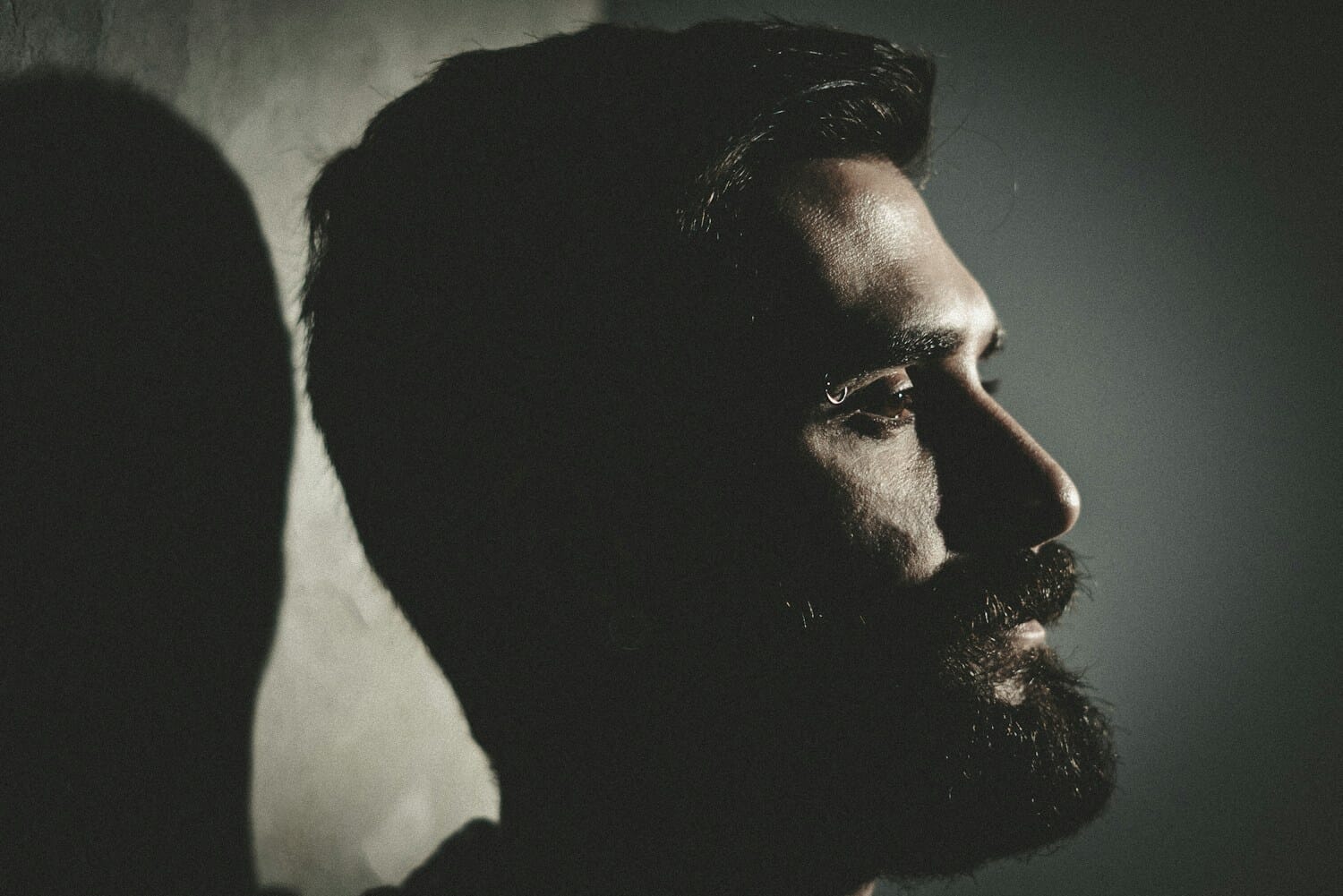
Window blinds in late-afternoon sun are the easiest version. Indoors, place a bare speedlight or a spotlight 3 to 4 m away for crisp edges. The shadow photography guide has more patterns to try.
Silhouette Against the Light
Place the subject in front of a bright window, a sunset or a lit backdrop and expose for the background. The body turns into a clean shape, so the pose has to read in outline: profile views, hats, a raised hand to the chin (see The Thinker above) or a jacket over the shoulder all work.
Haze, Smoke and Atmosphere
A small water-based haze or fog machine adds depth and makes light beams visible. It is one of the cheapest ways to make a home studio look cinematic. Avoid real smoke near faces, ventilate the room and check that the venue’s fire alarms will not trigger. Colored smoke bombs are an outdoor-only option.
Motion and Slow Shutter
For an energetic, artistic frame, drop the shutter speed to 1/15s or slower and fire a flash (rear-curtain sync) while the subject turns his head or walks. The flash freezes a sharp version of the subject and the slow shutter adds a ghosted trail.
Film Noir in Black and White
A fedora or flat cap, a trench coat, one hard light from above and a monochrome edit produce a classic detective-movie look. Shoot it in a stairwell, an alley at night or against venetian blinds. Split and Rembrandt light work especially well; the split lighting guide shows the setup.
Outdoor Photoshoot Ideas for Men
Outdoors, the location does half the work. Pick a setting that matches the subject’s style, then use the poses above to fill the frame.
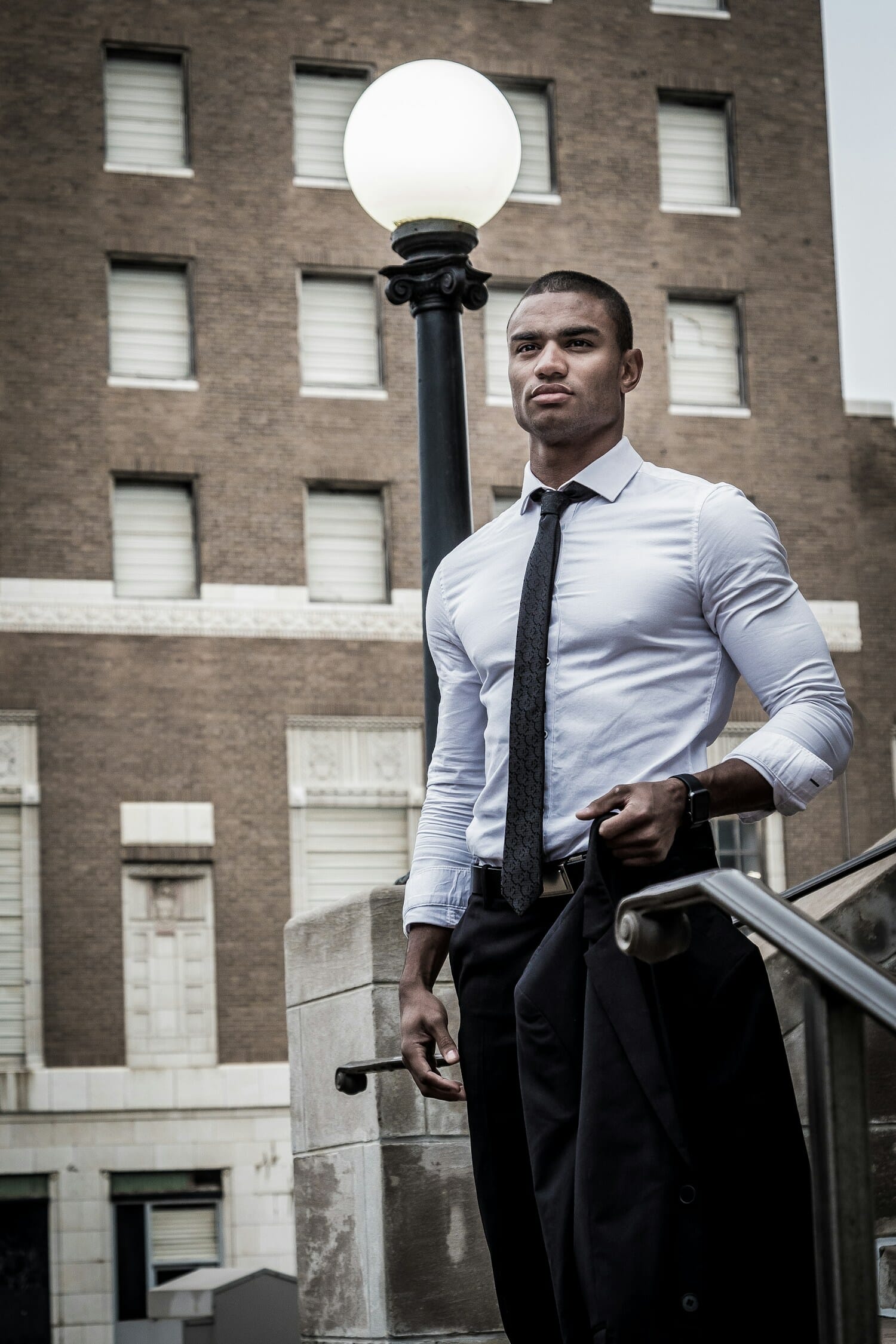
- Urban street: alleys, brick walls, crosswalks and shopfronts. Leaning, walking and the jacket-over-shoulder pose all shine here.
- Golden hour: the hour after sunrise and before sunset gives warm, flattering side light and easy rim light.
- Rooftop or parking deck: city skyline backgrounds, strong lines and fewer people.
- With a car or motorbike: leaning on the hood, sitting in the driver’s seat with the door open, or kneeling by the wheel.
- Rain and wet streets: reflections, umbrellas and moody color. Protect the camera and shoot from under an awning.
- Nature and trails: the back-to-camera view shot, a hike with a backpack, or a seated rock pose by a lake.
- Sports and fitness: a basketball court, a running track or a gym. Use 1/1000s or faster for action.
Harsh midday sun? Move the subject into open shade (under a tree or in the shadow of a building) and the light softens immediately. The portrait settings guide covers exposure outdoors.
Photoshoot Ideas for Birthdays, LinkedIn and Dating Profiles
Birthday Photoshoot Ideas for Men
Birthday shoots work best when they feel like a party, not a portrait session. A cake with candles lit in a dark room, balloons with the age in big numbers, a direct on-camera flash for a candid party look, or a shot popping a bottle of champagne all fit.
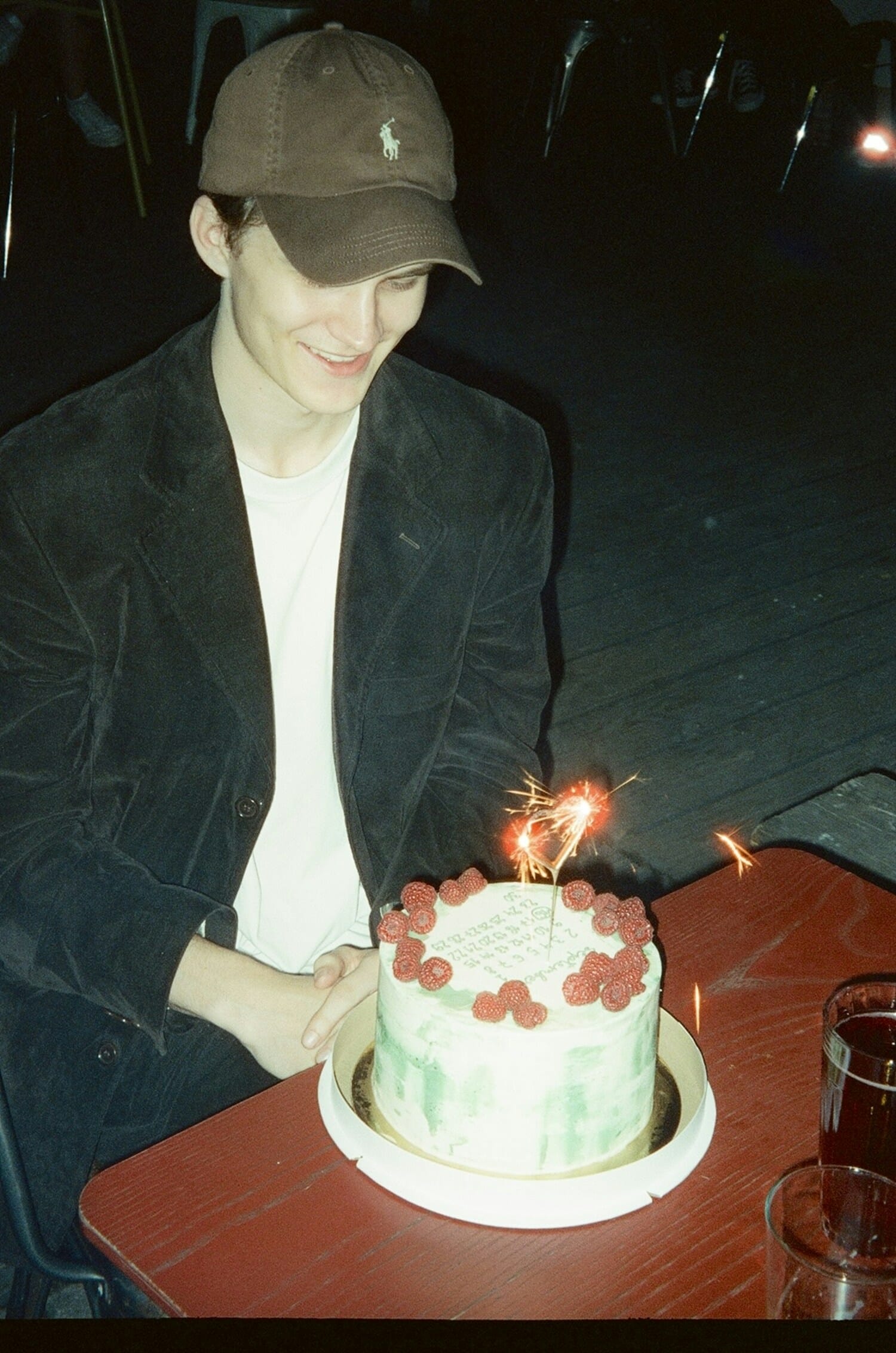
For milestone birthdays (30, 40, 50), a more styled concept works: a suit, a cigar-lounge or bar setting, or a then-and-now shot recreating a childhood photo.
Professional and LinkedIn Photos
For LinkedIn and company pages, keep it simple: a solid or softly blurred background, a jacket or collared shirt, chest-up framing and eyes on the camera. Crossed arms, the jacket button adjustment and a slight lean toward the lens all work. Shoot at 85mm or longer at f/4 so both eyes and ears stay sharp. The DIY headshot guide covers the full process.
Dating Profile and Social Media Photos
A strong set mixes three frames: a clear head-and-shoulders shot with a genuine smile, a full-body shot in a good location, and one candid photo doing a hobby. Avoid sunglasses in the main photo and skip group shots where it is hard to tell who the subject is.
Camera Settings for Men’s Portraits
These are starting points for full-frame cameras. On APS-C, divide the focal length by 1.5 (1.6 for Canon) to get the same framing. Adjust ISO to reach the exposure.
| Shot type | Focal length | Aperture | Shutter | ISO |
|---|---|---|---|---|
| Headshot / LinkedIn | 85 to 135mm | f/2.8 to f/4 | 1/200s | 100 to 400 |
| Half-body studio (strobe) | 50 to 85mm | f/5.6 to f/8 | 1/160s (sync) | 100 |
| Low-key one light | 85mm | f/4 to f/5.6 | 1/200s | 100 |
| Window light at home | 35 to 85mm | f/1.8 to f/2.8 | 1/125s+ | 400 to 1600 |
| Walking / street | 50 to 85mm | f/2 to f/2.8 | 1/320s+ | Auto |
| Environmental / full body | 35 to 50mm | f/2.8 to f/4 | 1/250s | 100 to 800 |
Why f/2.8 to f/4 for headshots instead of wide open? At 85mm and head-and-shoulders distance, f/1.4 leaves so little depth of field that the ears and even the far eye go soft. Stop down a little for a sharp face and still-blurred background. For flash shoots, stay at or below the camera’s flash sync speed (often 1/200s or 1/250s) unless using high-speed sync.
What to Wear to a Men’s Photoshoot
- Fit beats brand. A well-fitting plain T-shirt photographs better than an expensive shirt that bunches at the waist.
- Solid colors and texture. Navy, grey, olive, white and black are safe; denim, knit and leather add texture. Small checks and thin stripes can create moiré on camera sensors.
- Bring layers. A jacket or overshirt gives you instant extra looks and enables the jacket-over-shoulder and adjusting-outfit poses.
- Two to three outfits for a one-hour session: one smart, one casual, one that reflects a hobby or personality.
- Grooming: trim the beard two or three days before, not the morning of, so the line settles. Bring blotting paper for shiny foreheads under lights.
- Accessories: a watch, glasses, a hat or a ring give the hands something to interact with.
Common Mistakes in Men’s Photoshoots
- Shooting square-on to the camera. It widens the body and looks like an ID photo. Turn 30 to 45 degrees.
- Shooting from above. A high camera makes men look shorter and less confident. Drop to eye level or below for full-body shots.
- Wide lens up close. A 24mm or phone main camera at arm’s length enlarges the nose. Step back and zoom in.
- Forced smile on command. Make the subject laugh with a question or a bad joke instead of saying "smile."
- Hands with no job. If the hands look awkward, give them an object or a pocket.
- Too much tension. Clenched jaws and raised shoulders show up immediately. Ask the subject to breathe out and drop the shoulders before every series.
- Stopping too early. The first 50 frames are a warm-up. The relaxed, natural shots usually come in the second half of the session.
Frequently Asked Questions
How should a man pose for photos if he feels awkward?
Start with leaning against a wall with hands in the pockets, then move to candid actions such as walking or laughing at a question. Giving the hands a job and shifting weight to the back foot removes most of the stiffness. Shoot continuously; people relax after the first few minutes.
What are good indoor photoshoot ideas for men?
The strongest indoor ideas are a one-light low-key portrait against a dark wall, window light at home while reading or playing an instrument, a stool in front of a colored seamless backdrop, and a gelled neon setup. All of them work in a normal room with one or two lights.
What should men do with their hands in photos?
Put the thumbs or fingers in a pocket, hold a jacket collar, adjust a cuff or watch, cross the arms loosely, rest an elbow on something or hold a prop such as a coffee cup. The rule is simple: every hand needs a job.
What is the best lens for male portraits?
An 85mm prime is the classic choice on full frame because it keeps facial proportions natural and blurs the background. Anything between 70 and 135mm works well. On APS-C cameras, a 50mm or 56mm prime gives similar framing.
How do you make a man look taller in photos?
Shoot from slightly below eye level, have him stand with weight on the back foot and the front leg extended toward the camera, and frame with a little space above the head. Avoid shooting from above.
How many outfits should a man bring to a photoshoot?
Two to three outfits are enough for a one-hour session: one smart look (blazer or shirt), one casual look and one that reflects a hobby or personality. Layers such as a jacket add variety without a full change.
The Bottom Line
Great men’s photos come from a few fundamentals done well: the chin forward, hands with a job, body turned slightly, and a lens long enough to flatter. Start every session with an easy pose such as leaning or hands in pockets, move to walking and candid actions once the subject relaxes, and save the creative concepts (gels, shadows, haze) for the end when everyone is warmed up.
Pick three poses and one concept from this list before the shoot, and the session will never stall on "what do I do now?" again.
Technique references and image credits for this guide.
Technique References:
- Peter Hurley Photography – NYC headshot photographer behind the forehead-forward jawline cue referenced in the posing rules
Image Sources:
- Christopher Campbell via Unsplash – Low-key studio portrait of a man, curated on SampleShots
- Hailey Reed via Unsplash – Window-light portrait with guitar, curated on SampleShots
- Austin Distel via Unsplash – Man on a sofa at home, curated on SampleShots
- Ali Jouyandeh via Unsplash – Red and blue gel portrait, curated on SampleShots
- Vinicius "amnx" Amano via Unsplash – Hard-light shadow profile, curated on SampleShots
- Taylor Grote via Unsplash – Man holding a suit jacket in the city, curated on SampleShots
- Krišjānis Kazaks via Unsplash – Birthday cake flash portrait, curated on SampleShots
- Lucas Sankey via Unsplash – Neon-lit portrait (used in the Pinterest graphic), curated on SampleShots
- PhotoWorkout editorial archive – Pose examples for the 20 ideas and the studio backdrop setup
- PhotoWorkout – Men's posing cheat sheet infographic and Pinterest graphic design