


- Acrylic prints deliver unmatched color depth and a 3D glass-like effect — ideal for vibrant photos and gallery displays.
- Metal prints are lighter, tougher, and more affordable — the better pick for high-traffic areas, humidity, and outdoor-adjacent spaces.
- The printing method matters hugely: dye-sublimation on ChromaLuxe panels produces far better results than budget UV direct-to-substrate printing.
- Acrylic costs 30–100% more than metal for equivalent sizes, though pricing has become more competitive as both formats mature.
- Both formats last decades with proper care, but they have very different strengths in scratch resistance, UV protection, and weight.
- Take the quiz to test what you’ve learned about acrylic and metal prints.
When you buy through links on our site, we may earn a commission at no cost to you. We evaluate products independently. Commissions do not affect our evaluations.
Acrylic and Metal: Two Premium Print Formats
If you’ve moved past basic paper prints and canvas, acrylic and metal are the next step up — and the two formats photographers argue about most. Both look sleek, modern, and undeniably impressive on a wall. Both will outlast you. And both cost more than you probably expect.
But they’re not interchangeable. Acrylic prints trap your image behind thick plexiglass, creating a luminous depth effect that stops people in their tracks. Metal prints fuse ink directly into coated aluminum, producing a tough, lightweight panel with a distinctive metallic sheen. Same photo, completely different presence in a room.
This guide breaks down everything that actually matters when choosing between the two: print quality, durability, pricing, environmental impact, and which subjects work best on each surface. No fluff — just the information you need to spend your money wisely.
What Are Acrylic Prints?
An acrylic print (sometimes called a plexiglass print) places your photograph behind a sheet of transparent acrylic, typically 1/8″ to 1/4″ thick. The most common production method is face-mounting: a high-resolution print on photo paper or film is bonded to the back of the acrylic using optically clear adhesive. A backing panel (usually Dibond or foam board) provides rigidity.
Some labs also offer direct-to-acrylic printing, where UV-cured inks are applied straight to the acrylic surface. This is cheaper but generally produces less vivid results than face-mounting — the adhesive bond in face-mounted prints creates that signature depth effect.
The acrylic acts as both a protective layer and an optical enhancer. Light refracts through the transparent sheet, making colors appear richer and giving the image an almost three-dimensional quality. Premium options like TruLife acrylic add anti-reflective and UV-filtering coatings, extending archival life to 100+ years.
What Are Metal Prints?
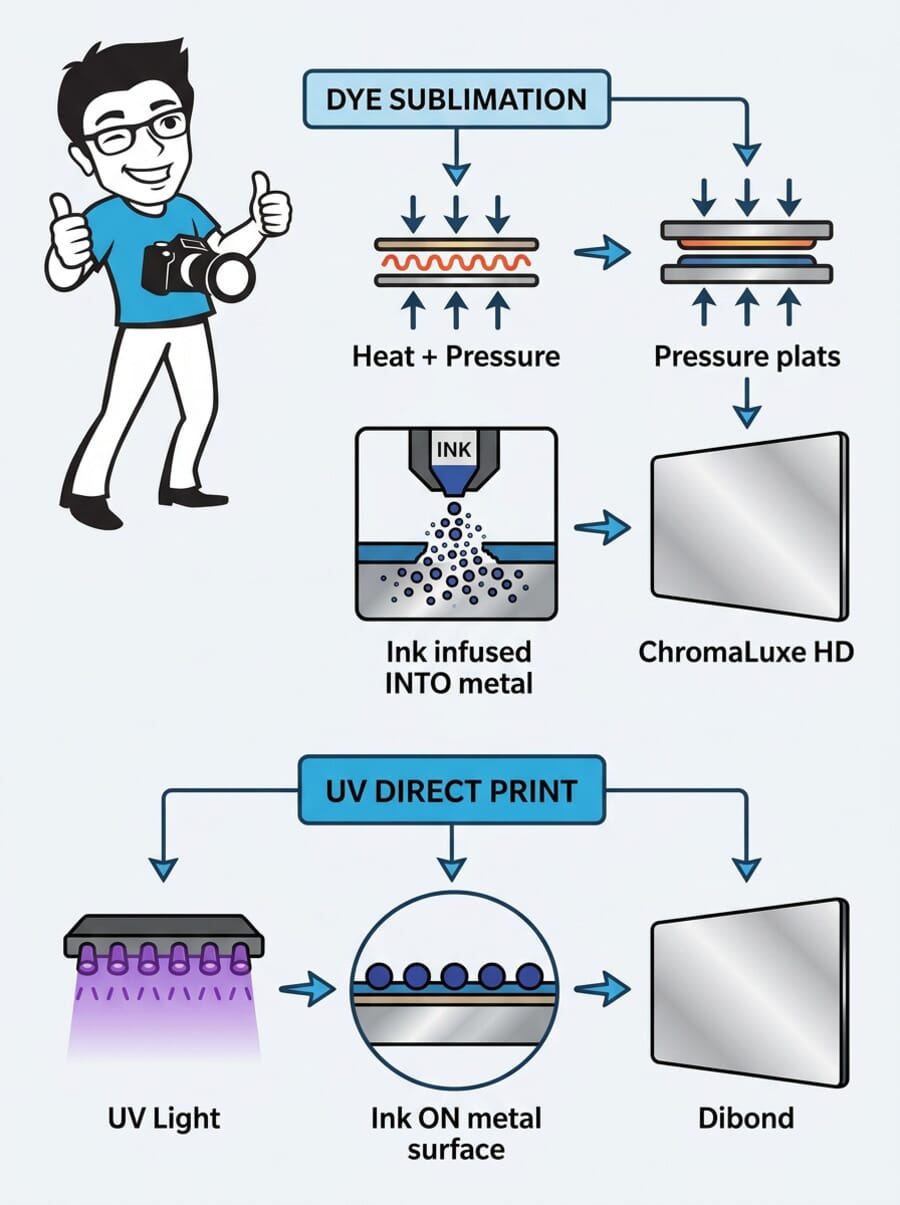
A metal print (also called an aluminum print) transfers your image onto a coated aluminum panel. The dominant production method is dye sublimation: the image is first printed on transfer paper with special sublimation inks, then heat and pressure (around 400°F) cause the inks to vaporize and bond permanently with the polyester coating on the aluminum surface.
The result is remarkably durable — the image isn’t sitting on the surface, it’s embedded within it. This makes metal prints virtually scratch-proof, waterproof, and resistant to most physical damage.
Printing Technology: Dye Sublimation vs. UV Direct Print
Not all metal prints are created equal, and the printing method makes a massive difference in quality. Understanding the two main approaches helps you avoid overpaying for a budget product.
Dye Sublimation (ChromaLuxe HD)
Dye sublimation is the gold standard for metal prints. The process uses heat and pressure to transform sublimation inks into a gas that permanently bonds with the specially coated aluminum panel. ChromaLuxe is the best-known brand of these coated panels, and most premium metal print labs use them.
Because the dye is infused into the coating rather than sitting on top, dye-sub prints are exceptionally durable and produce vivid, high-definition results. ChromaLuxe HD panels are tested by Wilhelm Imaging Research and rated for 65+ years of archival quality. Available finishes include high-gloss, satin-matte, white base, and clear (silver) base.
UV Direct-to-Substrate (Dibond)
UV direct printing sprays UV-cured ink directly onto an aluminum composite panel (commonly Dibond). The ink sits on top of the metal surface rather than being infused into it. UV curing makes the print durable, but color vibrancy and detail resolution are generally a step below dye sublimation.
The key visual difference: with Dibond, the brushed aluminum texture shows through the image, especially in lighter areas. This creates a unique metallic, almost three-dimensional effect that works beautifully for abstracts, black-and-white photography, and bold graphic images. With ChromaLuxe dye-sub on a white base, white areas appear true white and colors are more accurate.
Bottom line: If color accuracy and maximum vibrancy matter to you, insist on dye-sublimation (ChromaLuxe or equivalent). If you want the raw brushed-metal aesthetic and are working with high-contrast or monochrome images, UV-printed Dibond is a legitimate artistic choice — just know what you’re getting.
Visual Quality and Appearance
This is where the two formats diverge most dramatically. Even with the same source photo, an acrylic print and a metal print create very different viewing experiences.
The Acrylic Look
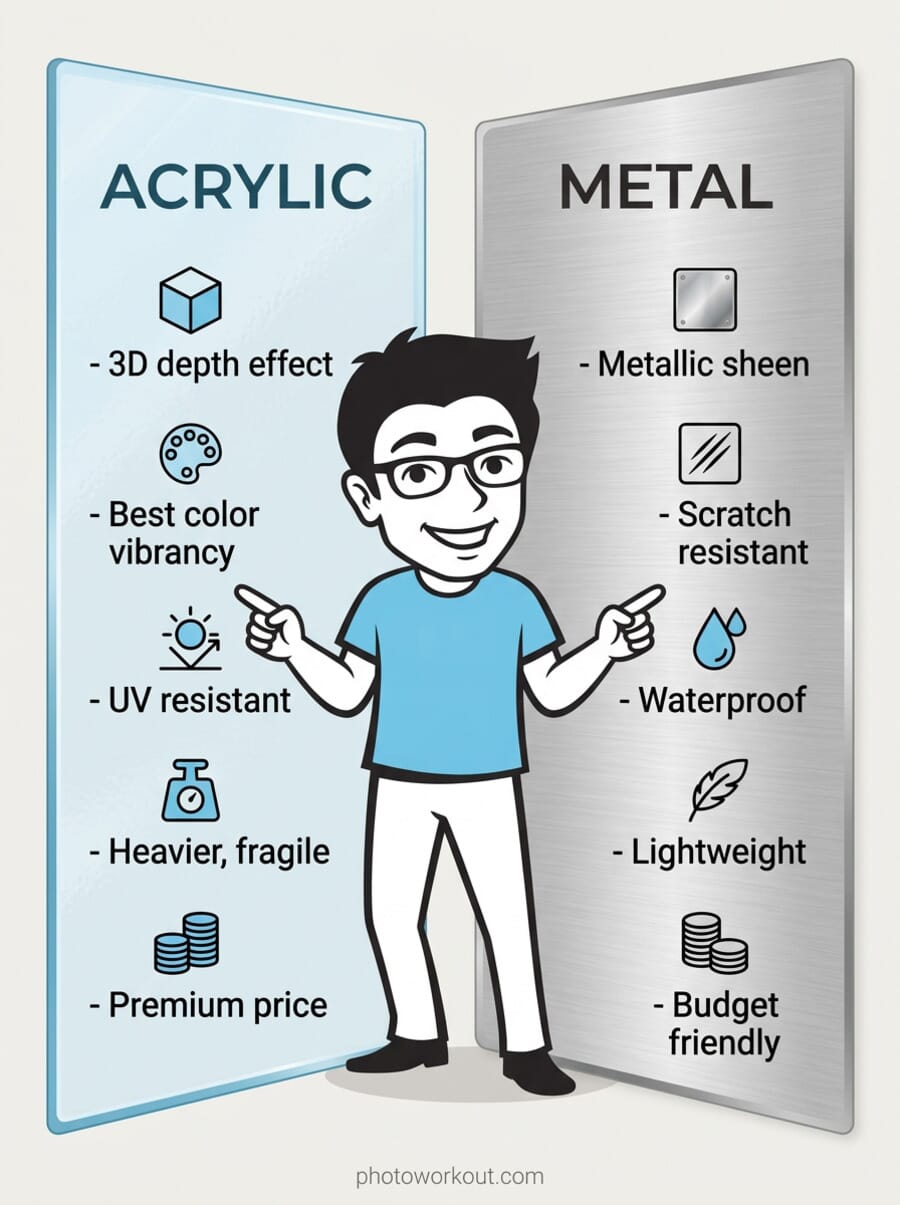
Acrylic prints are defined by their depth effect. Because you’re viewing the image through a thick transparent layer, colors appear to glow from within. Blacks are deeper, saturated colors look richer, and the overall impression is luminous and almost three-dimensional. The polished edges of the acrylic sheet catch light, adding to the premium gallery feel.
The trade-off is glare. Standard glossy acrylic acts like a mirror in bright rooms, which can be distracting. Anti-glare (museum-grade) acrylic like TruLife helps, but it adds significant cost. Acrylic prints also show fingerprints easily, requiring regular cleaning with a soft microfiber cloth.

The Metal Look
Metal prints have a completely different character. The aluminum base gives images a subtle metallic luminosity — whites appear to glow, and the overall effect is sharp, clean, and modern. On a glossy metal surface, colors are vivid but with a different quality than acrylic: brighter and more reflective rather than deep and saturated.
Metal prints also handle viewing angles better than acrylic. Where an acrylic print can look washed out from a sharp angle due to surface reflections, metal prints maintain their appearance from multiple viewing positions. Matte or satin metal finishes virtually eliminate glare, making them ideal for brightly lit rooms.
Durability and Longevity
Both acrylic and metal prints are built to last decades. But they have different vulnerabilities, and understanding these helps you pick the right format for your space.
Scratch and Impact Resistance
Metal wins decisively here. Because the image is fused into the aluminum coating, dye-sublimation metal prints are virtually scratch-proof. You can wipe them clean with almost anything. They’re also dent-resistant (though very thin panels can bend if mishandled) and flame-retardant.
Acrylic is more delicate. The surface scratches more easily than glass (despite being shatter-resistant), and requires careful cleaning with soft cloths. Dropped acrylic prints can chip at the edges. That said, premium acrylic is extremely tough overall — it’s mainly the surface that demands care.
UV and Light Exposure
Acrylic has the edge for sunny spots. Acrylic sheets naturally filter UV radiation, and premium options like TruLife add additional UV coatings. This makes acrylic prints more resistant to fading in direct sunlight over time.
Standard metal prints can fade with prolonged direct sun exposure — they lack the built-in UV barrier that acrylic provides. However, in normal indoor lighting conditions (which is where most prints hang), this difference is negligible. Both formats will look great for decades indoors.
Moisture and Humidity
Metal dominates in wet environments. Aluminum panels are naturally waterproof and won’t degrade in humidity. This makes metal prints the go-to choice for bathrooms, kitchens, basements, covered porches, and even pool areas.
Acrylic prints handle some moisture, but prolonged humidity can compromise the adhesive bond between the print layer and the acrylic sheet. They’re not recommended for bathrooms or any consistently damp environment.
Archival Longevity
Premium acrylic prints (TruLife acrylic glass) are rated for 100+ years of archival quality. ChromaLuxe HD metal prints are rated for 65+ years by Wilhelm Imaging Research. Both are extraordinary compared to standard photo prints, which can fade in as little as 5–15 years without UV protection.
Weight and Mounting
This is a practical difference that catches many first-time buyers off guard.
Acrylic prints are heavy. A 12×18″ acrylic print weighs around 4.4 lbs — nearly three times heavier than an equivalent metal print at roughly 1.6 lbs. For large prints (24×36″ and above), the weight difference becomes significant. Acrylic prints typically require sturdy mounting hardware like French cleats, and some wall types (drywall without studs) may need reinforcement.
Metal prints are feather-light by comparison. Most come with a simple float mount or standoff system that creates an attractive gap between the print and the wall. They’re easy to hang on any wall type and straightforward to transport — a real consideration if you sell prints at art fairs or rotate your gallery displays.
If you’re planning a large-format display (3+ feet on any side), metal’s weight advantage becomes a practical necessity. For standard sizes in a permanent home installation, either format works fine.
Pricing: What to Expect
Neither format is cheap — these are premium print products. But there’s a clear cost hierarchy.
Metal prints are the more affordable option. A quality dye-sublimation metal print (ChromaLuxe) from a reputable lab typically runs:
- 8×10″: $30–$65
- 16×20″: $70–$140
- 24×36″: $150–$280
- 40×60″: $350–$600
Acrylic prints run 30–100% more than metal for equivalent sizes, depending on acrylic thickness and whether you choose face-mounting (more expensive but better quality) or direct printing:
- 8×10″: $50–$100
- 16×20″: $120–$250
- 24×36″: $250–$500
- 40×60″: $600–$1,200+
These ranges reflect mid-to-premium labs. Budget vendors (Costco, Walgreens, etc.) offer lower prices but typically use UV direct printing rather than dye sublimation, and thinner acrylic — the results are noticeably inferior. If you’re comparing quotes, always ask about the specific printing method and materials used.
For a complete cost comparison and vendor analysis, our guides to the best acrylic print services and best metal print services break down pricing from 10+ labs each.
Best Subjects for Acrylic Prints
Acrylic’s depth effect and color amplification make it ideal for specific types of photography:
- Vibrant landscapes and seascapes — sunsets, tropical scenes, autumn foliage. The acrylic deepens saturated colors dramatically.
- Portraits with rich color — studio portraits with dramatic lighting or colorful backdrops benefit from acrylic’s depth.
- Macro and detail shots — flowers, textures, and abstract close-ups gain a three-dimensional quality behind acrylic.
- Night photography — cityscapes, astrophotography, and neon scenes where deep blacks and light contrast are key.
- Gallery and formal display pieces — when you want a print that signals “premium art,” acrylic is the format that impresses.

Best Subjects for Metal Prints
Metal prints shine (literally) with different kinds of images:
- Black-and-white photography — the aluminum base adds a subtle luminosity to grayscale tones that paper can’t match.
- Architecture and urban scenes — the metallic quality complements industrial subjects, steel structures, and modern design.
- High-contrast and bold graphic images — the metallic sheen amplifies tonal range and makes strong compositions pop.
- Sports and action photography — the sharpness and durability of metal suits dynamic subjects displayed in gyms, offices, or fan rooms.
- Any high-traffic or functional space — restaurants, hospitals, offices, bathrooms, children’s rooms. Metal handles what acrylic can’t.
Both formats handle large-format printing well, but metal’s weight advantage makes it the practical choice for very large pieces (4+ feet on a side).
Sustainability and Environmental Impact
If environmental considerations factor into your purchasing decisions, here’s what to know:
Aluminum (metal prints) is one of the most recyclable materials on earth. Roughly 75% of all aluminum ever produced is still in use. Metal print panels can be recycled through standard aluminum recycling streams, and the energy required to recycle aluminum is about 95% less than producing it from raw ore. The dye-sublimation process itself uses relatively low-VOC inks and no liquid waste.
Acrylic (PMMA) is technically recyclable but requires specialized facilities. Most municipal recycling programs don’t accept acrylic, so end-of-life disposal typically means landfill. However, the industry is changing: companies like Recrylic now offer sheets made from 100% recycled acrylic content, cutting carbon emissions by up to 90% compared to virgin PMMA. If sustainability matters to you, ask your print lab whether they use recycled acrylic.
Both formats score well on longevity — the greenest product is one you never replace. A metal or acrylic print that lasts 50+ years has a far lower lifetime environmental impact than a framed paper print you replace every decade.
Choosing a Vendor
The quality gap between vendors is enormous — a budget metal print from a pharmacy kiosk looks nothing like a ChromaLuxe dye-sub print from a professional lab. Here’s what to look for:
- For metal prints: Ask whether the lab uses ChromaLuxe (or equivalent dye-sublimation) panels. Avoid vendors who only offer UV direct printing unless you specifically want the brushed aluminum aesthetic. Our guide to the best metal print services ranks labs by quality, pricing, and finish options.
- For acrylic prints: Ask about acrylic thickness (1/4″ is standard premium; 1/8″ is budget), mounting method (face-mount vs. direct print), and whether they offer anti-glare options. Our guide to the best acrylic print services covers the top labs in detail.
- For either format: Request a sample or small test print before committing to a large order. Color accuracy varies between labs, and seeing a physical sample eliminates surprises.
If you’re exploring other print formats as well, our complete guide to photo print types covers canvas, glass, wood, and more.
Quick Decision Guide
| Factor | Acrylic Prints | Metal Prints |
|---|---|---|
| Visual Effect | 3D depth, luminous glow | Metallic sheen, sharp and clean |
| Color Depth | Exceptional — deep, saturated | Very good — bright, reflective |
| Scratch Resistance | Moderate — surface scratches | Excellent — virtually scratch-proof |
| UV/Fade Resistance | Excellent — built-in UV filtering | Moderate — needs indirect light |
| Water/Humidity | Fair — not for wet areas | Excellent — fully waterproof |
| Weight (12×18″) | ~4.4 lbs (heavy) | ~1.6 lbs (lightweight) |
| Archival Rating | 100+ years (TruLife) | 65+ years (ChromaLuxe) |
| Price | $$$ — 30–100% more than metal | $$ — more affordable |
| Glare | High (anti-glare options cost more) | Low (matte/satin options available) |
| Best For | Galleries, formal displays, vibrant photos | High-traffic areas, outdoor-adjacent, B&W |
Preparing Your Files for Printing
Regardless of which format you choose, file preparation matters. Both acrylic and metal prints are unforgiving of low-resolution source images — the high-gloss surfaces magnify any softness or compression artifacts.
- Resolution: Aim for 150–300 DPI at your target print size. Most labs recommend 200 DPI minimum for metal and acrylic. Our guide to print resolution explains how to calculate this for any image.
- Color space: Submit in sRGB unless your lab specifically requests Adobe RGB. Most consumer displays and print workflows are optimized for sRGB.
- File format: TIFF or maximum-quality JPEG. Avoid PNG for photo prints — the file sizes are unnecessarily large without quality benefits.
- Sharpening: Apply modest output sharpening for the final print size. Both formats reward crisp, well-sharpened files.
- Smartphone photos: Modern flagship phones (iPhone, Pixel, Samsung Galaxy) produce files that print well up to about 16×20″ on either format. For larger prints, a dedicated camera is recommended.
For a detailed breakdown of standard and custom sizes, see our photo print sizes guide.
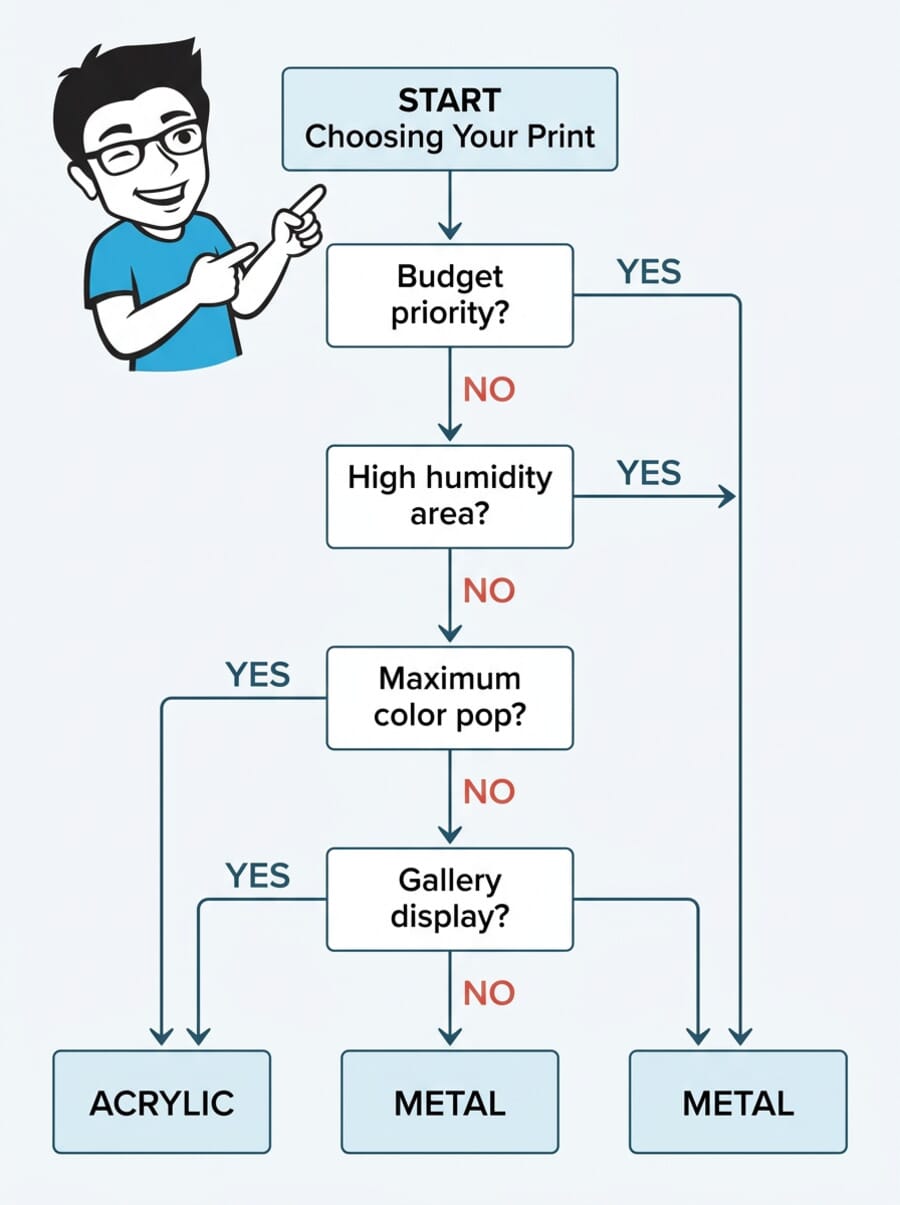
The Verdict: Which Should You Choose?
There’s no universal winner here — the right choice depends on your specific situation.
Choose acrylic prints if:
- You want maximum visual impact with gallery-quality depth and color
- The print will hang in a controlled environment (no humidity, indirect light)
- You’re displaying vibrant, colorful photographs
- Budget is secondary to the “wow factor”
Choose metal prints if:
- You need durability — kids, pets, humidity, transport
- You want lightweight, easy-to-hang prints
- You’re working with black-and-white or high-contrast images
- You want excellent quality at a lower price point
- The print will be in a bathroom, kitchen, or outdoor-adjacent area
And if you’re still undecided? Order one small test print in each format from a quality lab. Nothing replaces seeing and touching the actual product — photos on a screen can’t capture the tactile difference between acrylic’s glass-like depth and metal’s luminous sheen.
For other wall art options beyond acrylic and metal, explore our guides to canvas prints, glass photo prints, and photo tiles for walls.
Test Your Knowledge: Acrylic vs Metal Prints
Think you’ve got a handle on the key differences? Take this quick quiz to find out.
Acrylic vs Metal Prints: FAQ
Are acrylic or metal prints better?
Neither is universally better — they serve different purposes. Acrylic prints offer superior color depth, a 3D visual effect, and a premium gallery look. Metal prints are more durable, lighter, more affordable, and handle moisture and scratches better. Choose based on your display environment and priorities.
Do metal prints fade in sunlight?
Standard metal prints can fade with prolonged direct sunlight exposure, as they lack built-in UV protection. For prints in sunny spots, choose acrylic (which naturally filters UV) or request a UV-laminated metal print. In normal indoor lighting, metal prints stay vibrant for decades.
Can I use phone photos for acrylic or metal prints?
Yes. Modern smartphones produce images sharp enough for prints up to about 16×20 inches. For best results, shoot at maximum resolution, ensure good lighting, and avoid heavy cropping. Both formats will expose any softness in the source image, so use the best quality file you have.
Is ChromaLuxe worth the extra cost over budget metal prints?
Absolutely. ChromaLuxe dye-sublimation panels produce noticeably sharper, more vivid, and more durable prints than UV-printed alternatives. The color accuracy, scratch resistance, and 65+ year archival rating justify the premium. Budget metal prints from pharmacy kiosks are a completely different product.
How long do acrylic and metal prints last?
Premium acrylic prints (with TruLife acrylic glass) are rated for 100+ years. ChromaLuxe HD metal prints are rated for 65+ years by Wilhelm Imaging Research. Both far outlast standard framed paper prints, which can fade in 5–15 years without UV protection.
Which is more environmentally friendly — acrylic or metal?
Metal prints have a sustainability edge. Aluminum is highly recyclable through standard streams, with recycling using 95% less energy than virgin production. Acrylic (PMMA) requires specialized recycling facilities and usually ends up in landfill. However, both formats’ extreme longevity reduces their lifetime environmental impact compared to products you’d replace more often.
Featured image: AI-generated illustration.