


- A kit zoom lens is the first lens every beginner needs — it covers everyday focal lengths (roughly 16-50mm) and comes at a reasonable price.
- A wide-angle prime (16-28mm) is essential for landscape, architecture, and street photography, and many options cost under $300.
- A telephoto zoom (70-350mm range) opens the door to wildlife, sports, and any subject that requires reach.
- A 50mm portrait prime with a fast f/1.8 aperture delivers beautiful background blur and performs well in low light — often for under $300.
- All 12 lenses below use modern mirrorless mounts (Canon RF, Nikon Z, Sony E) so they work with current beginner camera bodies.
When you buy through links on our site, we may earn a commission at no cost to you. We evaluate products independently. Commissions do not affect our evaluations. As an Amazon Associate, we earn from qualifying purchases.
Introduction
Choosing a first camera is exciting, but deciding which lenses to pair with it can feel overwhelming. There are hundreds of options across Canon, Nikon, and Sony — different focal lengths, aperture ratings, and price points — and the jargon alone can scare off newcomers.
The good news: most beginners only need four types of lenses to cover the vast majority of shooting situations. A versatile kit zoom for everyday use, a wide-angle prime for landscapes and architecture, a telephoto zoom for wildlife and sports, and a fast 50mm prime for portraits and low-light work. With those four covered, a beginner can explore nearly every genre of photography without breaking the bank.
This guide breaks down each lens type, explains when and why it matters, and recommends one lens per category for each of the three major mirrorless camera systems: Canon RF, Nikon Z, and Sony E-mount. Every pick is currently available, well-reviewed, and priced with beginners in mind.
Best Beginner Lenses at a Glance




How to Choose Your First Lenses
Before diving into specific products, it helps to understand a few basics about lens selection. The two most important specs for beginners are focal length (how wide or zoomed-in the lens sees) and maximum aperture (how much light the lens lets in, and how blurry the background can get).
Focal length is measured in millimeters. Lower numbers (16-35mm) capture wide scenes — ideal for landscapes, interiors, and street photography. Mid-range numbers (35-70mm) are versatile and natural-looking. Higher numbers (70-400mm) zoom in on distant subjects, making them essential for wildlife, sports, and birding.
Maximum aperture is expressed as an f-number (like f/1.8 or f/4). A lower f-number means the lens can open wider, letting in more light and creating a shallower depth of field (more background blur). Lenses with wide maximum apertures such as f/1.8 or f/2.8 excel in low-light situations and portrait work.
Also consider lens mount compatibility. Modern mirrorless cameras use specific mounts: Canon uses RF (and RF-S for APS-C), Nikon uses Z, and Sony uses E-mount. Older DSLR-era lenses (Canon EF, Nikon F) can often be adapted, but native mirrorless lenses deliver the best autofocus performance and tend to be more compact.
Kit Lenses: The Essential Starter Zoom
A kit zoom lens is the first lens every beginner should own. It covers a useful range of focal lengths — typically around 16-50mm — so it can handle landscapes, street scenes, group photos, and casual portraits without swapping glass. Kit zooms are designed to be lightweight, affordable, and easy to use, making them the ideal everyday companion while learning the ropes.
Many camera bodies ship with a kit lens included, but these bundled optics vary in quality. The three lenses below are the standard kit zooms for each system, and each offers solid image stabilization, smooth autofocus, and a compact form factor that keeps the overall camera setup portable.

A lightweight 18-45mm zoom designed for Canon EOS R-series APS-C cameras like the R50, R10, and R100. Features optical image stabilization and near-silent STM autofocus.
The Canon RF-S 18-45mm f/4.5-6.3 IS STM is Canon’s standard kit zoom for its APS-C mirrorless lineup, including popular beginner bodies like the EOS R50 and R10. At just 130 grams, it barely adds any bulk to the camera, which makes it a natural choice for travel and everyday shooting.
The 18-45mm focal range (roughly 29-72mm equivalent on APS-C) covers wide-angle to short telephoto, handling everything from cityscapes to casual portraits. The built-in IS helps compensate for hand shake when shooting in dimmer conditions, and the STM motor keeps autofocus quiet — a real plus for video shooters. The main trade-off is the variable f/4.5-6.3 aperture, which limits background blur and low-light performance compared to faster primes, but that is expected at this price.
Pricing & Where to Buy
The Canon RF-S 18-45mm is priced at around $349 as a standalone purchase (as of March 2026), though it is frequently bundled with camera bodies at a discount.
- Buy on Amazon — Prime shipping available
- Check price at B&H Photo
- Check price at Adorama

The standard kit zoom for Nikon Z-series APS-C cameras (Z50 II, Z30, Zfc). Features VR image stabilization and a retractable design for maximum portability.
The Nikon Z DX 16-50mm f/3.5-6.3 VR is Nikon’s go-to kit zoom for its APS-C Z-mount cameras. Bodies like the Z50 II and Zfc are among the most popular beginner mirrorless cameras, and this lens pairs naturally with all of them.
Its retractable barrel design collapses the lens down to a remarkably slim profile when powered off, making it easy to slip into a jacket pocket or small bag. The 16-50mm range (24-75mm equivalent) is slightly wider than a traditional 18-55mm, which is handy for landscape and architecture shots. Nikon’s VR stabilization helps keep handheld shots sharp, and the autofocus is fast and near-silent. Like most kit zooms, the f/3.5-6.3 variable aperture is not ideal for low-light shooting, but it handles daylight and well-lit indoor scenes without issue.
Pricing & Where to Buy
The Nikon Z DX 16-50mm retails for approximately $327 standalone (as of March 2026). It is also available in kit bundles with Nikon Z-series camera bodies at a reduced price.
- Buy on Amazon — Prime shipping available
- Check price at B&H Photo
- Check price at Adorama

The updated Mark II kit zoom for Sony APS-C cameras (a6700, ZV-E10 II, a6400). Features improved optics, power zoom, and Optical SteadyShot stabilization.
The Sony E PZ 16-50mm f/3.5-5.6 OSS II is the latest iteration of Sony’s APS-C kit zoom. It is the natural companion for popular beginner bodies like the a6700, ZV-E10 II, and a6400.
The Mark II version brings improved optical performance over its predecessor, with better corner sharpness and reduced chromatic aberration. The power zoom ring enables smooth, consistent zooming during video recording — a welcome feature for content creators. Like the other kit zooms on this list, it retracts to a compact profile when not in use, and the built-in OSS stabilization keeps handheld footage and photos looking steady. The 16-50mm range (24-75mm equivalent) is versatile enough for most everyday situations.
Pricing & Where to Buy
The Sony E PZ 16-50mm f/3.5-5.6 OSS II is priced at approximately $348 (as of March 2026). The original Mark I version (B07T1MQMFF) is also available for around $200 if budget is the top priority.
- Buy on Amazon — Prime shipping available
- Check price at B&H Photo
- Check price at Adorama
Wide-Angle Prime Lenses: For Landscapes and Street Photography
Once the kit zoom is covered, a wide-angle prime is an excellent second lens. Prime lenses have a fixed focal length, which means they tend to be sharper, lighter, and faster (larger maximum aperture) than zoom lenses at a similar price. A wide-angle prime in the 16-28mm range opens up landscape, architecture, astrophotography, and street photography in ways a kit zoom simply cannot match.
The lenses below all offer maximum apertures of f/2.8 or wider, making them significantly better than kit zooms in low-light conditions. They are also compact enough to carry as an everyday walk-around lens alongside the kit zoom.

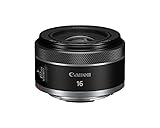
An ultra-wide 16mm prime lens compatible with both Canon full-frame and APS-C RF-mount cameras. Remarkably affordable and lightweight for its class.
The Canon RF 16mm f/2.8 STM is one of the best values in the Canon lens lineup. At 16mm on a full-frame body (25.6mm equivalent on APS-C), it captures sweeping landscape scenes, dramatic architecture shots, and expansive night skies. The f/2.8 maximum aperture is fast enough for astrophotography and general low-light use.
At just $259 (as of March 2026), this lens costs less than many kit zooms while delivering a specialist capability. It weighs only 165 grams, so pairing it with a Canon R50 or R10 creates an extremely portable setup for travel and landscape photography. The STM autofocus motor is quick and quiet. The main compromise is the lack of optical stabilization, though most modern Canon bodies have in-body or electronic stabilization that compensates.
Pricing & Where to Buy
The Canon RF 16mm f/2.8 STM is priced at $259 (as of March 2026).
- Buy on Amazon — Prime shipping available
- Check price at B&H Photo
- Check price at Adorama

A pancake-style 28mm prime for Nikon Z cameras. Works with both full-frame and DX (APS-C) bodies, delivering sharp images with a fast f/2.8 aperture.
The Nikon Z 28mm f/2.8 is Nikon’s most affordable and compact Z-mount prime lens. On a full-frame Nikon Z body, 28mm is a classic wide-angle focal length — perfect for street photography, environmental portraits, and travel. On a DX (APS-C) body like the Z50 II, the 42mm equivalent field of view is versatile and natural-looking.
Its pancake form factor is a standout feature: the lens is barely thicker than the camera’s lens mount, creating an ultra-compact setup that feels more like a large-sensor compact camera than an interchangeable-lens system. At approximately $227 (as of March 2026), it is a low-risk investment for beginners who want to explore prime lens shooting. The f/2.8 aperture is more than adequate for street scenes, casual portraits with background blur, and general low-light use.
Pricing & Where to Buy
The Nikon Z 28mm f/2.8 is priced at approximately $227 (as of March 2026).

Part of Sony’s compact G-series prime lineup. A 24mm wide-angle with f/2.8 aperture, excellent optics, and weather sealing — on both full-frame and APS-C Sony bodies.
The Sony FE 24mm f/2.8 G is the premium pick in this category. At 24mm, it is a true wide-angle on full-frame bodies and provides a 36mm equivalent field of view on APS-C cameras like the a6700. The G-series designation signals higher-tier optics, and this lens delivers: images are sharp across the frame, even wide open at f/2.8.
Dust and moisture resistance make it well-suited for outdoor landscape and street work, and the linear response manual focus ring gives precise control for video and manual focus photography. The $798 price tag (as of March 2026) is the highest among the wide-angle picks here, but the build quality and optical performance justify the investment for photographers who plan to use it for years. On Sony’s APS-C bodies, it also pairs well with the wider E-mount options for landscape work.
Pricing & Where to Buy
The Sony FE 24mm f/2.8 G is priced at approximately $798 (as of March 2026).
Telephoto Zoom Lenses: For Wildlife, Sports, and Reach
A telephoto zoom is the lens that lets beginners reach subjects they cannot physically approach: birds in a tree, players on a sports field, or wildlife at a safe distance. These lenses cover focal lengths from about 50mm or 70mm up to 350mm or even 400mm, providing serious magnification that transforms distant scenes into frame-filling compositions.
Telephoto zooms for beginners prioritize value, weight, and reach. The three options below all include image stabilization — critical at long focal lengths where even small hand movements create blur — and offer enough zoom range to cover everything from wildlife photography to school sporting events.

A remarkably compact and affordable 100-400mm telephoto zoom for Canon RF-mount cameras. Features image stabilization and fast USM autofocus in a lightweight body.
The Canon RF 100-400mm f/5.6-8 IS USM delivers impressive 400mm reach in a package that weighs just 635 grams — roughly a third of what older Canon telephoto zooms weighed. On an APS-C Canon body like the R10 or R7, the effective focal length extends to 640mm equivalent, which is outstanding for bird photography.
The Nano USM autofocus system is fast and reliable at tracking moving subjects, and the 5.5-stop image stabilization helps keep shots sharp even when handholding at long focal lengths. The trade-off is the f/5.6-8 variable aperture, which is narrower than professional telephoto zooms, but for daytime wildlife and sports shooting, it performs well. At $699 (as of March 2026), it is one of the most accessible super-telephoto options on the market.
Pricing & Where to Buy
The Canon RF 100-400mm f/5.6-8 IS USM is priced at $699 (as of March 2026).
- Buy on Amazon — Prime shipping available
- Check price at B&H Photo
- Check price at Adorama
- Check used prices at KEH Camera

Nikon’s compact telephoto zoom designed for Z-mount APS-C cameras. Covers 50-250mm (75-375mm equiv.) with VR stabilization and fast stepping motor autofocus.
The Nikon Z DX 50-250mm f/4.5-6.3 VR is the natural telephoto companion to the Nikon Z DX 16-50mm kit zoom. Together, the two lenses cover 16mm to 250mm (24-375mm equivalent) for under $700 total — an excellent value for beginners exploring Nikon’s DX lens ecosystem.
At 405 grams, the lens is easy to carry for extended outdoor sessions. The VR stabilization compensates for hand shake at longer focal lengths, and the stepping motor autofocus is fast enough for basic sports and action shooting. While the variable aperture means it is best used in good lighting conditions, 250mm on an APS-C sensor translates to 375mm of equivalent reach — more than enough for most beginner wildlife and sports scenarios.
Pricing & Where to Buy
The Nikon Z DX 50-250mm f/4.5-6.3 VR is priced at approximately $322 (as of March 2026).
- Buy on Amazon — Prime shipping available
- Check price at B&H Photo
- Check price at Adorama
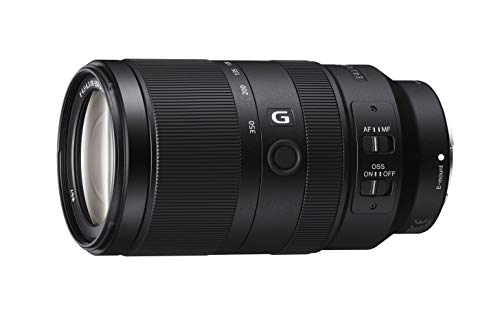
A G-series telephoto zoom offering 70-350mm (105-525mm equiv.) with Optical SteadyShot and fast linear motor autofocus. Built for Sony E-mount APS-C cameras.
The Sony E 70-350mm f/4.5-6.3 G OSS is the most powerful telephoto zoom on this list, delivering a 525mm equivalent field of view on Sony APS-C bodies. For beginners interested in bird photography or distant wildlife, that extra reach compared to 250mm or 300mm alternatives makes a meaningful difference.
The G-series optics produce noticeably sharper images than budget telephoto zooms, and the linear motor autofocus tracks moving subjects reliably. Sony’s OSS stabilization handles the shake that inevitably comes with handheld shooting at extreme focal lengths. At approximately $1,098 (as of March 2026), it is the most expensive telephoto pick here, but the optical quality and reach justify the investment for those who plan to pursue wildlife or sports photography seriously. It pairs naturally with the Sony ZV-E10 and a6700 lens ecosystem.
Pricing & Where to Buy
The Sony E 70-350mm f/4.5-6.3 G OSS is priced at approximately $1,098 (as of March 2026).
Portrait Prime Lenses: For Portraits and Low Light
A fast 50mm prime lens is arguably the most important single lens a beginner can own after a kit zoom. The 50mm focal length produces a natural-looking perspective that closely matches how the human eye sees the world, making it ideal for portraits, street photography, food photography, and everyday snapshots. The wide f/1.8 aperture found on all three picks below lets in far more light than any kit zoom, enabling two key advantages: beautiful background bokeh and reliable performance in dimly lit environments.
50mm primes are also some of the most affordable lenses on the market. All three options below cost under $470, and two of them are under $230. For beginners who want to understand how aperture, depth of field, and subject isolation work, a fast 50mm prime is the best teacher.

Canon’s affordable 50mm prime for RF-mount mirrorless cameras. Features a fast f/1.8 aperture, smooth STM autofocus, and a 7-blade diaphragm for pleasing bokeh.
The Canon RF 50mm f/1.8 STM is the modern successor to Canon’s legendary “nifty fifty” and is an essential lens for any Canon RF-mount shooter. At $219 (as of March 2026), it delivers a fast f/1.8 aperture that produces gorgeous portrait-quality background blur and handles indoor and evening shooting with ease.
On a full-frame Canon body, the 50mm focal length is perfect for portraits, street, and general photography. On an APS-C body like the R50 or R10, the 80mm equivalent is even better suited for tighter headshot-style portraits. The 7-blade diaphragm produces smooth, circular bokeh highlights, and the STM motor keeps autofocus quiet for both stills and video. For Canon shooters looking to explore the best 50mm lenses Canon offers, this is the starting point.
Pricing & Where to Buy
The Canon RF 50mm f/1.8 STM is priced at $219 (as of March 2026).
- Buy on Amazon — Prime shipping available
- Check price at B&H Photo
- Check price at Adorama
- Check used prices at KEH Camera
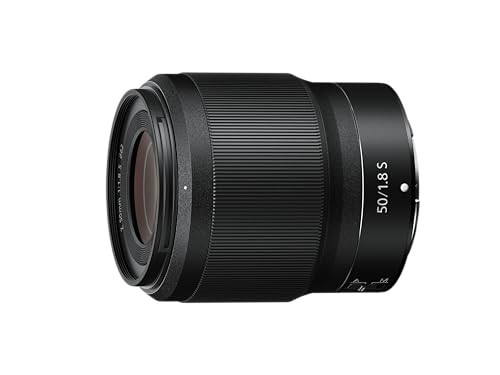
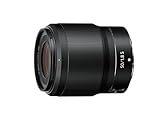
Nikon’s S-line 50mm prime with outstanding optical performance, fast f/1.8 aperture, and weather sealing. Designed for Nikon Z full-frame and DX cameras.
The Nikon Z 50mm f/1.8 S is the premium option in this group, and the quality difference is noticeable. The S-line designation means Nikon applied its highest optical standards, including extra-low dispersion (ED) glass elements that reduce color fringing. The result is a lens that is sharp right across the frame even wide open at f/1.8 — a rare quality at this price point.
The 9-blade diaphragm creates smooth, rounded bokeh highlights that look beautiful in portrait and bokeh-focused compositions. Weather sealing adds confidence when shooting outdoors in light rain or dusty conditions. At $467 (as of March 2026), it costs more than the Canon and Sony 50mm alternatives, but for Nikon 50mm lens options, this is the best modern choice for Z-mount users who want a lens they will never outgrow.
Pricing & Where to Buy
The Nikon Z 50mm f/1.8 S is priced at approximately $467 (as of March 2026).
- Buy on Amazon — Prime shipping available
- Check price at B&H Photo
- Check price at Adorama
- Check used prices at KEH Camera
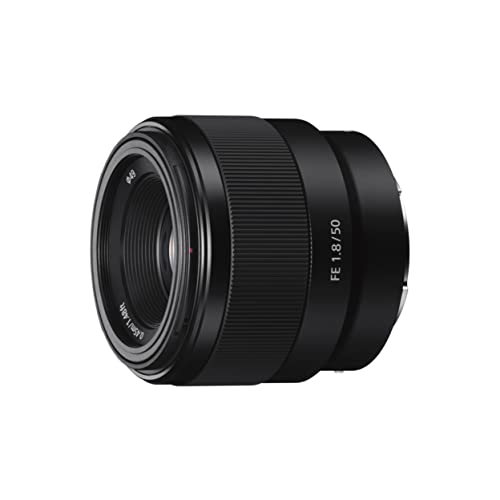
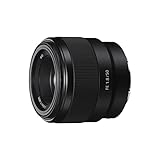
Sony’s affordable 50mm full-frame prime with f/1.8 aperture. Compatible with all Sony E-mount cameras (full-frame and APS-C). A straightforward, no-frills nifty fifty.
The Sony FE 50mm f/1.8 is one of the most popular lenses in the entire Sony E-mount system, with nearly 7,000 reviews on Amazon and a strong 4.6-star rating. At $228 (as of March 2026), it is an extremely low-risk way to explore prime lens photography and portrait shooting on a Sony camera.
The full-frame f/1.8 aperture creates smooth, pleasing background blur for portraits, and the 50mm focal length works naturally for environmental portraits and street scenes on a full-frame body (75mm equivalent on APS-C — excellent for headshots). The autofocus is functional but not as snappy as Sony’s more expensive G-series or GM-series lenses, and the build feels plasticky compared to premium options. But for a beginner learning to shoot with a fast prime, the image quality is genuinely impressive for the price. Beginners who want to explore buying used lenses will also find this model readily available secondhand.
Pricing & Where to Buy
The Sony FE 50mm f/1.8 is priced at approximately $228 (as of March 2026).
Build Your Beginner Lens Kit
Building a versatile lens collection does not require spending thousands of dollars upfront. With four well-chosen lenses — a kit zoom, a wide-angle prime, a telephoto zoom, and a 50mm portrait prime — a beginner photographer can cover landscapes, street scenes, wildlife, sports, portraits, and low-light situations. That is the vast majority of photography genres handled with a manageable, portable set of glass.
For Canon RF-mount shooters, the RF-S 18-45mm, RF 16mm f/2.8, RF 100-400mm, and RF 50mm f/1.8 form a complete starter kit for around $1,526 total. Nikon Z-mount users can build a comparable set for approximately $1,343, and Sony E-mount shooters for around $2,372 (or less with the original Mark I kit zoom).
The best approach is to start with a kit zoom and one prime lens, then add the remaining two lenses as specific interests develop. A beginner who gravitates toward landscapes should prioritize the wide-angle prime early, while someone drawn to wildlife or sports should invest in the telephoto zoom first. The 50mm portrait prime is an excellent second purchase regardless of specialization — it teaches aperture control, depth of field, and low-light technique in ways that zoom lenses simply cannot. For more guidance on setting up a complete photography equipment list for beginners, check the linked guide.
Related Articles
Our Top Beginner Lens Picks
Canon RF-S 18-45mm f/4.5-6.3 IS STM
Canon RF 16mm f/2.8 STM
Canon RF 100-400mm f/5.6-8 IS USM
Nikon Z 50mm f/1.8 S
Disclosure/Disclaimer: As an Amazon Associate, we earn from qualifying purchases. Certain content was provided "as is" from Amazon and is subject to change or removal at any time. Product prices and availability: Amazon prices are updated daily or are accurate as of the date/time indicated and are subject to change. Any price and availability information displayed on Amazon.com at the time of purchase will apply to the purchase of this product.