


- Minolta made cameras from 1928 to 2003 — a 75-year legacy of innovation from Osaka, Japan.
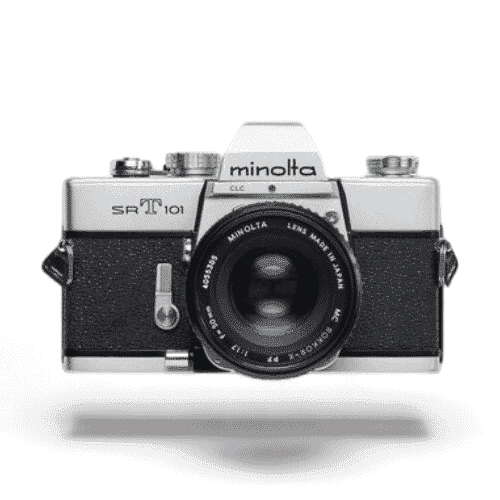
- The SR-T 101 revolutionized metering in 1966 with its CLC (Contrast Light Compensator) system.
- The Maxxum 7000 (1985) was the world’s first integrated autofocus SLR — changing photography forever.
- Minolta’s Rokkor lenses remain highly sought after by film photographers for their sharp, characterful rendering.
- Sony Alpha cameras are the direct descendants of Minolta — the legacy lives on in every A-mount and E-mount body.
There’s something special about holding a Minolta camera. Maybe it’s the satisfying click of a Rokkor lens locking into place, or the smooth wind of the film advance lever. Founded in 1928 in Osaka, Japan, Minolta spent 75 years pushing the boundaries of what cameras could do — from pioneering metering systems in the 1960s to building the world’s first integrated autofocus SLR in 1985.
Today, Minolta film cameras are experiencing a genuine renaissance. As the film photography revival continues to grow, shooters are rediscovering the beautiful image quality and tactile joy these cameras deliver. The brand may have merged with Konica in 2003 (and later been absorbed by Sony), but Minolta’s DNA lives on — in every Sony Alpha body and in the hands of film photographers worldwide.
This post celebrates eight iconic Minolta film cameras through real sample photos from our SampleShots database. No spec sheets. No sales pitches. Just the cameras and the images they create.
When you buy through links on our site, we may earn a commission at no cost to you. We evaluate products independently. Commissions do not affect our evaluations.
Minolta SR-T 101 (1966)
Minolta
Minolta SR-T 101


The Minolta SR-T 101 is where the Minolta legend truly begins. Released in 1966, it introduced the world to CLC (Contrast Light Compensator) metering — a dual-cell system that weighted exposure differently across the frame, handling tricky backlit scenes far better than anything else available at the time. It was revolutionary.
This was a fully mechanical camera with a cloth focal-plane shutter, built like a small tank. No batteries needed to fire the shutter — they only powered the meter. Photography students and professionals alike loved the SR-T 101 for its reliability and the incredible Rokkor lens ecosystem. If you find one today, there’s a good chance it still works perfectly after nearly 60 years.
The SR-T 101 remained in production for over a decade with various updates, a testament to how right Minolta got it on the first try. It’s the camera that made Minolta a household name among serious photographers.


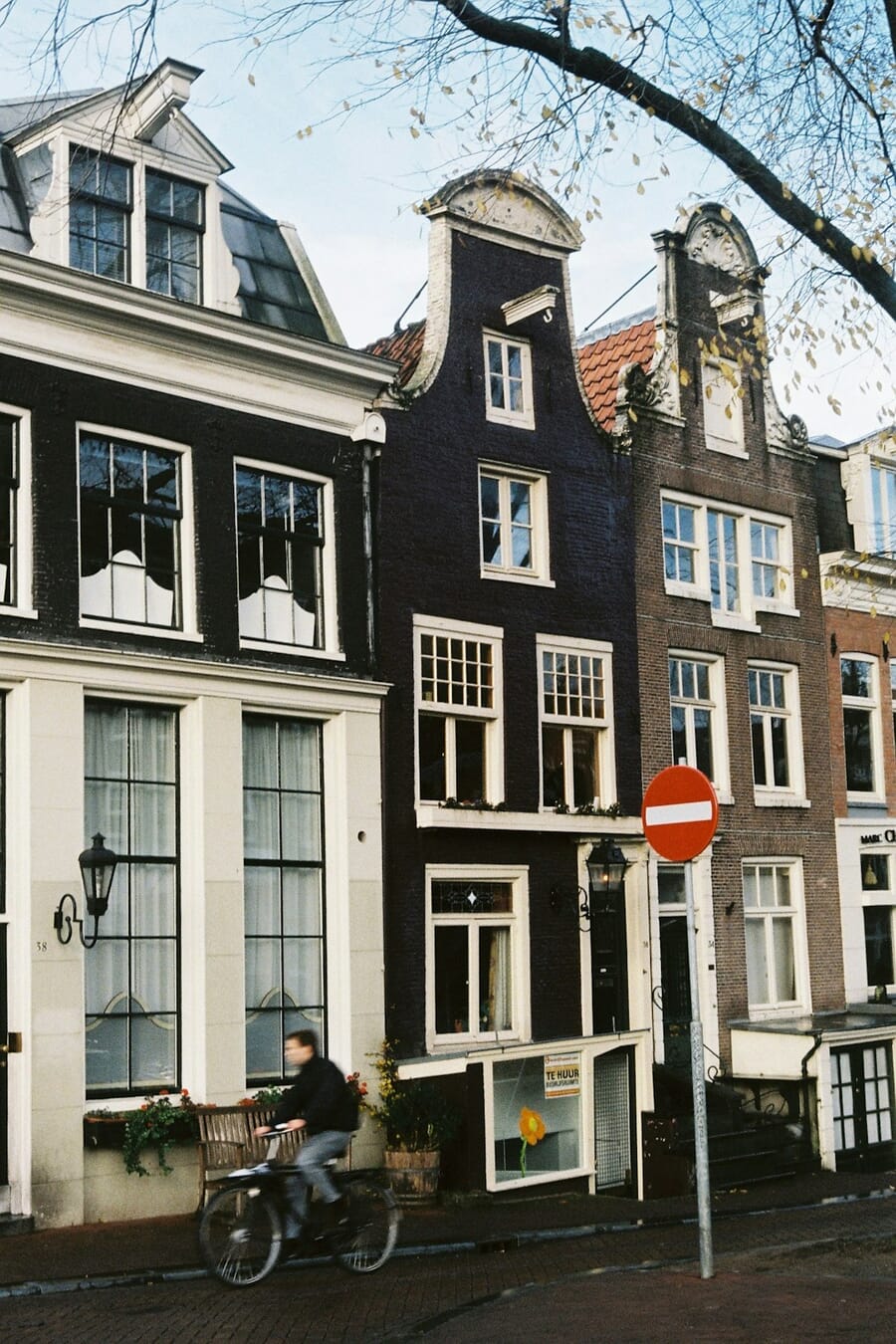
Minolta X-700 (1981)
Minolta
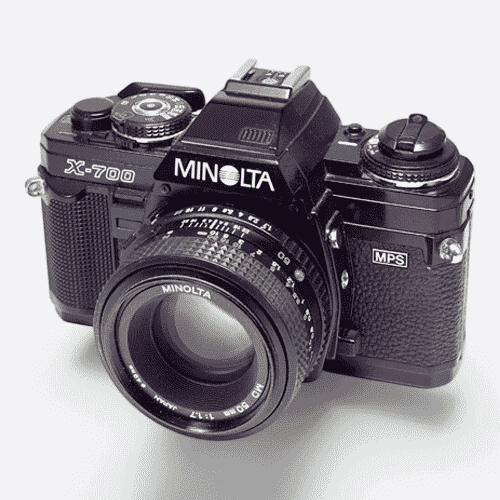
Minolta X-700


If there’s one Minolta camera that defined a generation of photographers, it’s the X-700. Launched in 1981, it was one of the first cameras to offer a true Program mode — letting the camera choose both aperture and shutter speed automatically. For photography students, this was a game-changer: you could learn in manual mode, then switch to Program when you needed to shoot fast.
The X-700 earned European Camera of the Year in 1981, and it’s easy to see why. It combined aperture-priority, manual, and program auto exposure in a compact, well-built body. Paired with Minolta’s legendary MD Rokkor lenses — especially the 50mm f/1.4 — it produced images with a warmth and character that digital cameras still struggle to replicate.
More X-700s were sold to photography students than perhaps any other film SLR. If you took a photo class in the 1980s or 1990s, chances are you learned on one of these. That emotional connection is a big reason they remain so popular today.



Minolta CLE (1981)
Minolta
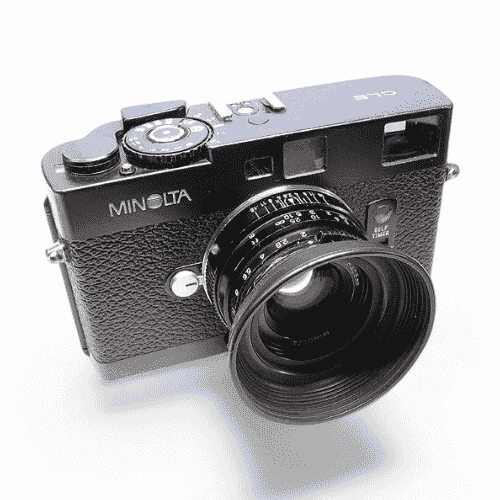
Minolta CLE


The Minolta CLE is the stuff of rangefinder dreams. Born from Minolta’s collaboration with Leica (yes, that Leica), the CLE is a compact rangefinder that accepts Leica M-mount lenses. It was essentially Minolta’s answer to the Leica CL — but better in almost every way, with aperture-priority auto exposure, TTL flash metering, and a brighter viewfinder.
What makes the CLE so special is the combination of Leica optics in a body that’s significantly more affordable (and arguably more practical) than a Leica M. Paired with the dedicated Minolta M-Rokkor 40mm f/2, 28mm f/2.8, or 90mm f/4, the CLE produces images with that unmistakable rangefinder rendering — smooth tones, beautiful bokeh, and razor-sharp focus where it counts.
The CLE was only produced for a few years, making it relatively rare and highly collectible. For street photography enthusiasts who want the Leica experience without the Leica price, it remains one of the best-kept secrets in film photography.

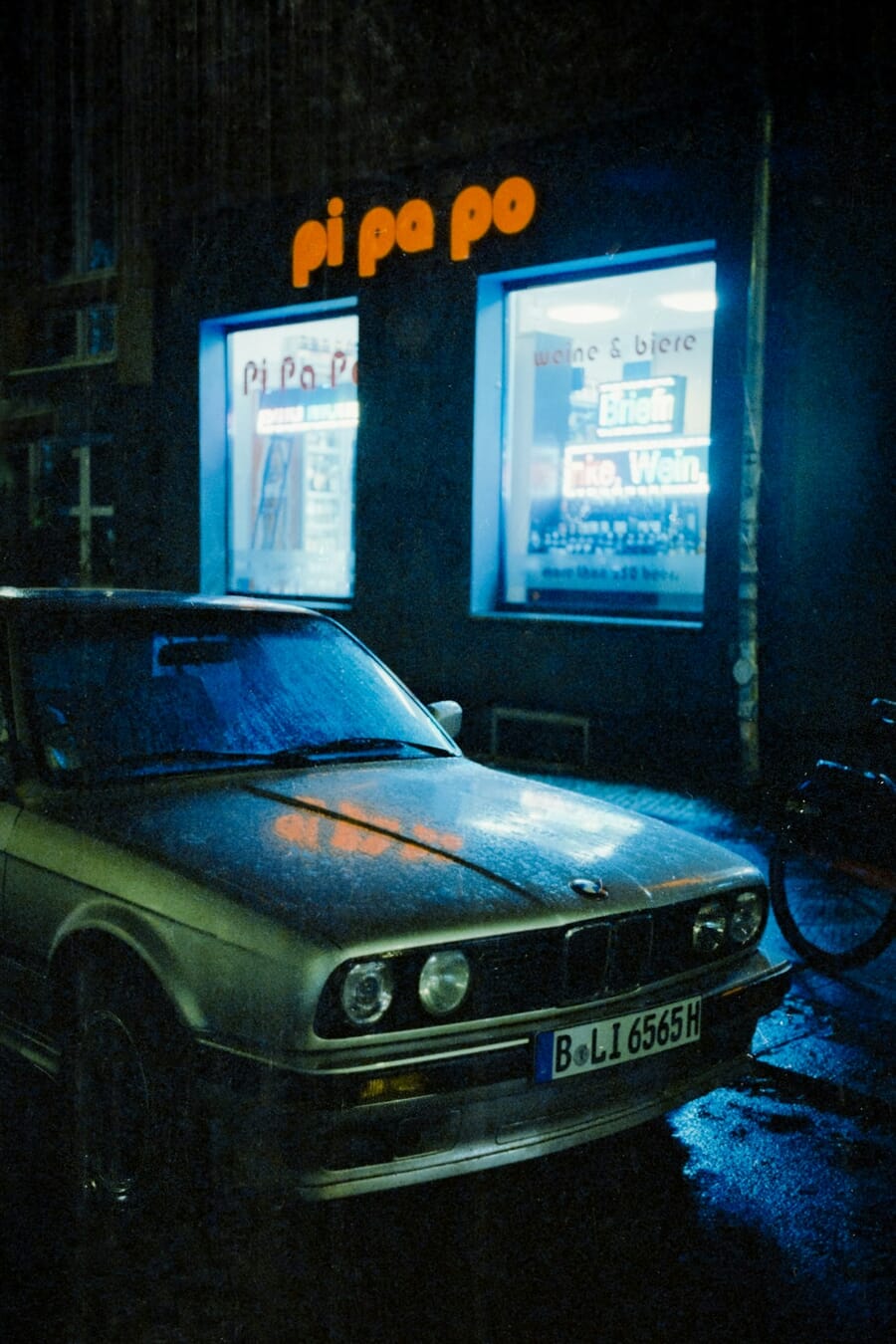

Minolta TC-1 (1996)
Minolta
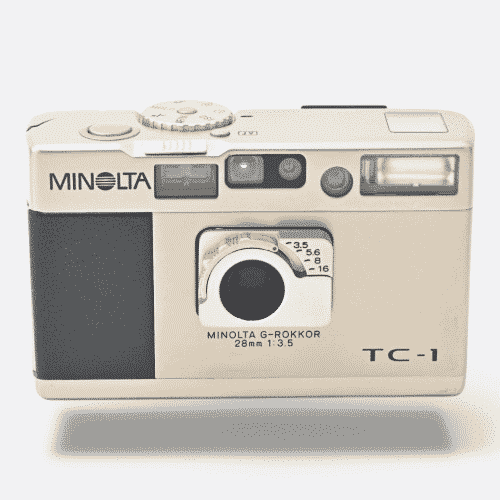
Minolta TC-1


The Minolta TC-1 is perhaps the most exquisite compact camera ever made. Released in 1996, this pocket-sized marvel features a titanium body and a stunning G-Rokkor 28mm f/3.5 lens — the same G-series designation Minolta reserved for its absolute finest glass. The result? Images that rival those from cameras many times its size.
Everything about the TC-1 screams precision. The circular aperture creates perfectly round bokeh. The lens is incredibly sharp across the frame. And the whole package slips into a coat pocket. It was Minolta’s statement piece — proof that they could build something to rival the Contax T2 or the Ricoh GR1.
Today, the TC-1 has become a collector’s item, with prices reflecting its cult status. But the images it produces — crisp, contrasty, with beautiful color rendering — explain why photographers still seek it out decades later.



Minolta Autocord (1965)
Minolta
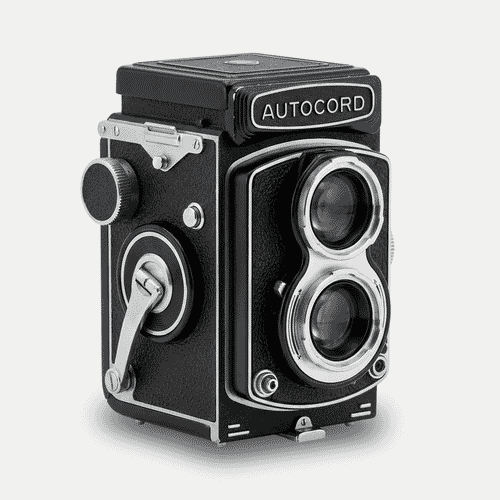
Minolta Autocord


Step into the world of medium format with the Minolta Autocord. This twin-lens reflex (TLR) camera shoots gorgeous 6×6 square images on 120 film — and it does so with a build quality and optical performance that punches well above its price point, especially compared to the legendary Rolleiflex.
The Autocord went through several versions from the 1950s through the mid-1960s, each refining the design. The later models feature a Rokkor 75mm f/3.5 taking lens that delivers remarkable sharpness and lovely tonal graduation. There’s something magical about looking down into that waist-level finder and composing a square image — it changes the way you see the world.
For anyone curious about medium format film photography without breaking the bank, the Autocord remains one of the best entry points. The larger negatives deliver a depth and richness that 35mm simply can’t match.
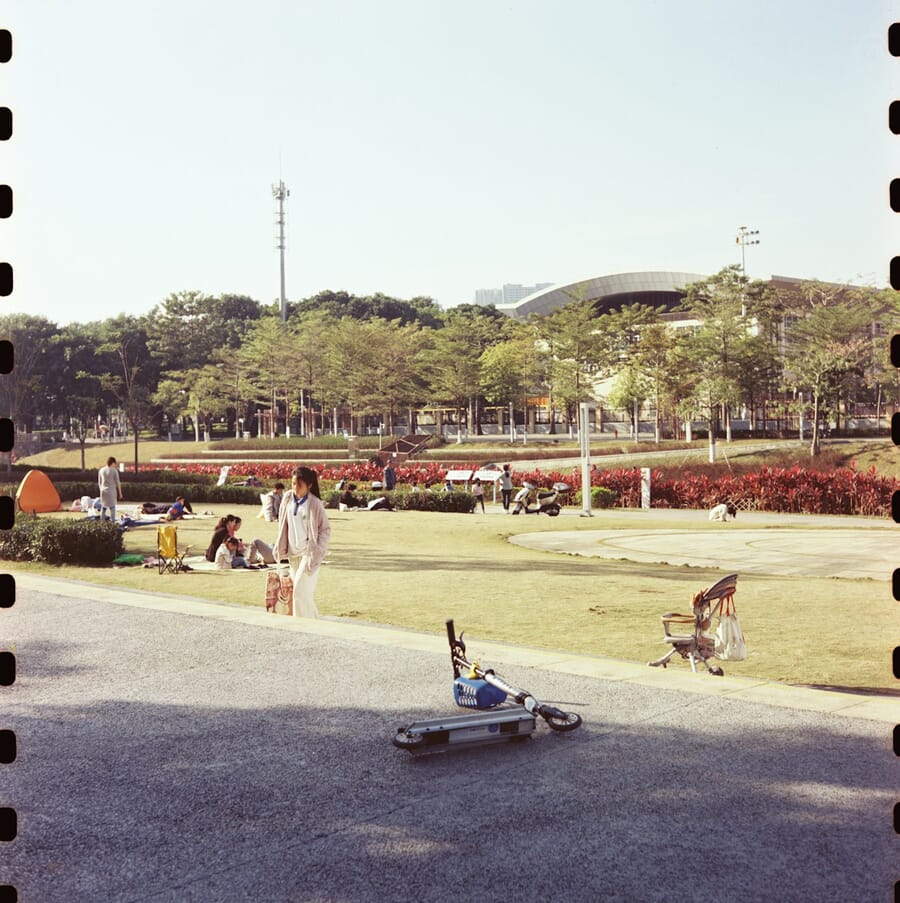
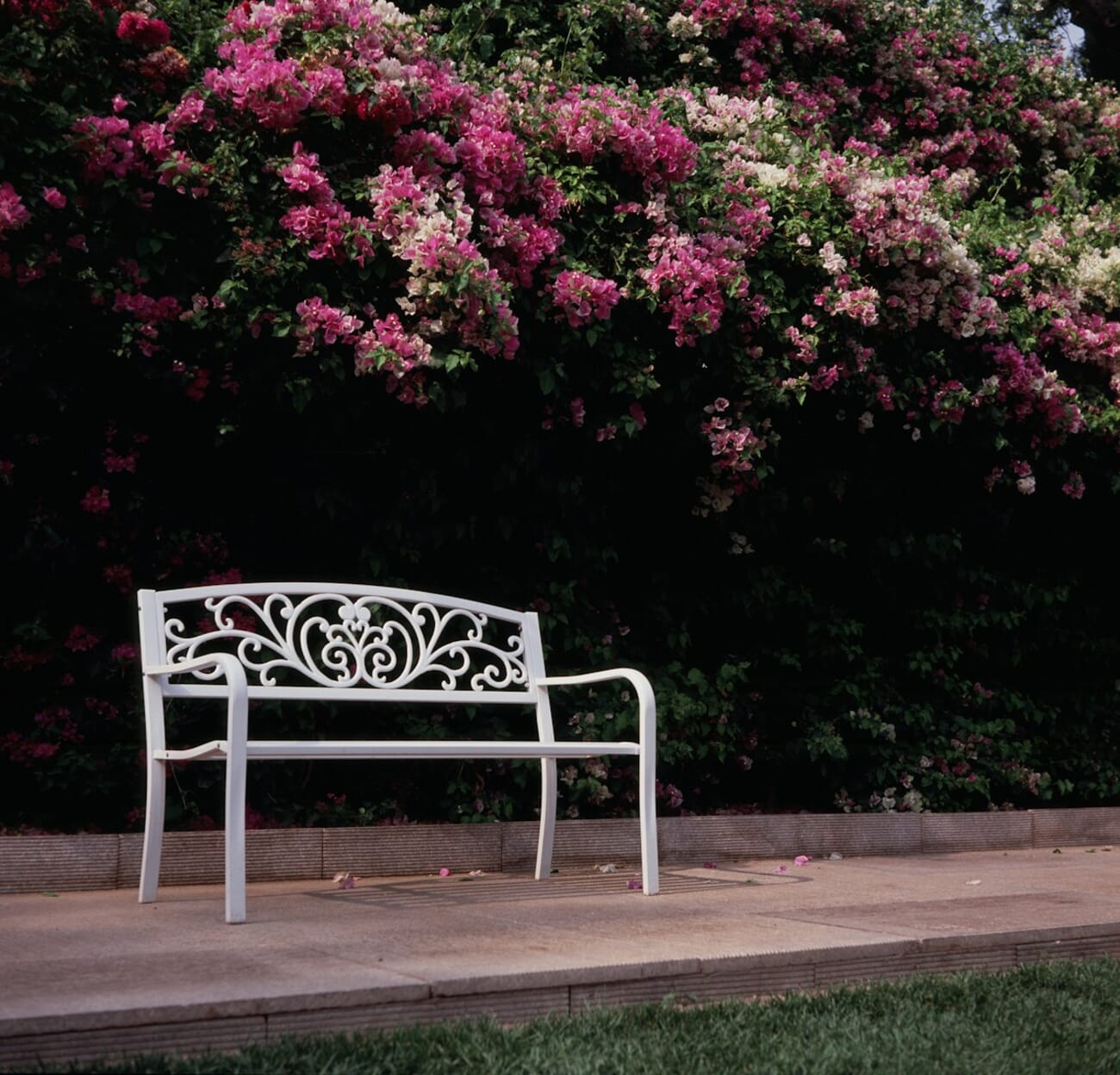
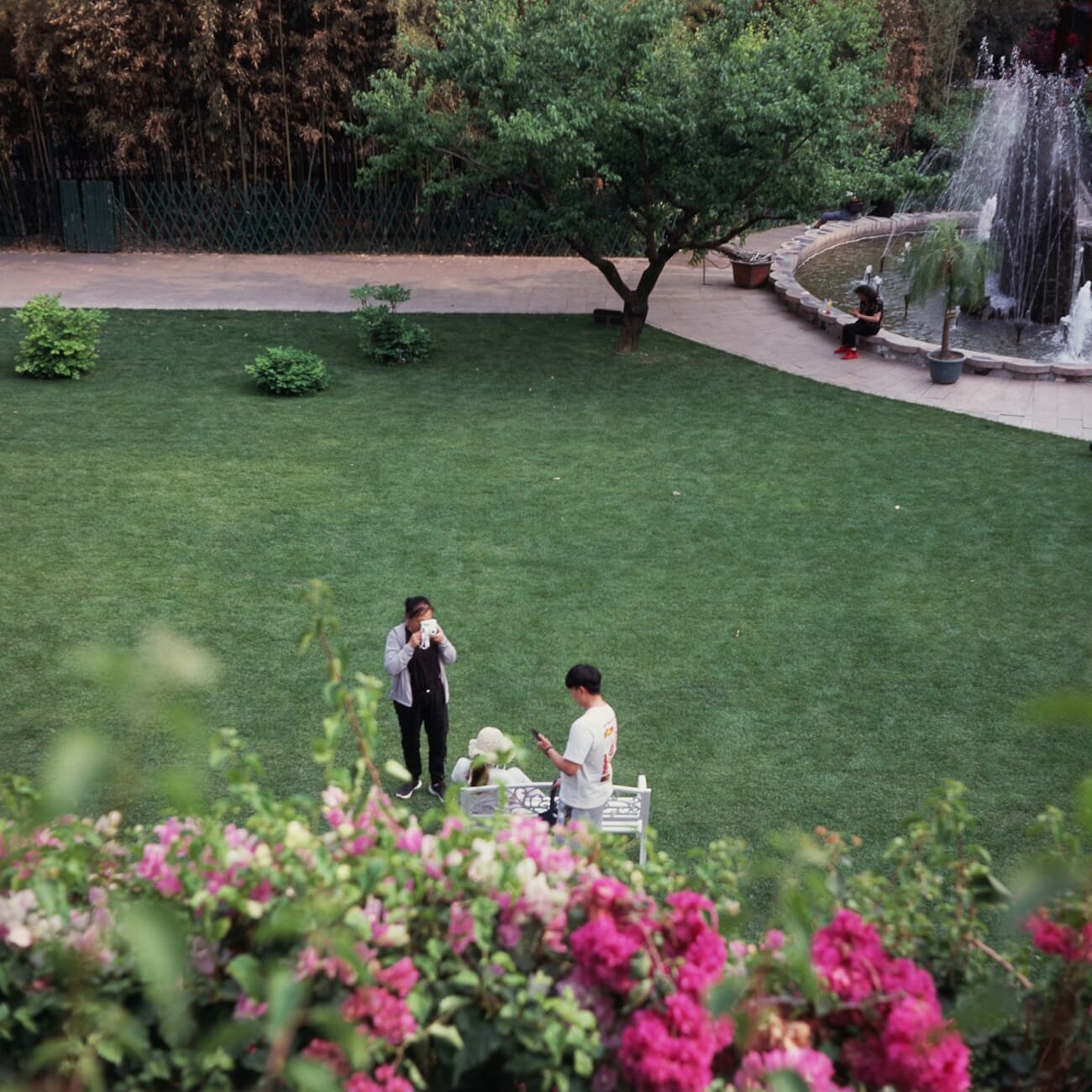
Minolta XE-5 (1975)
Minolta
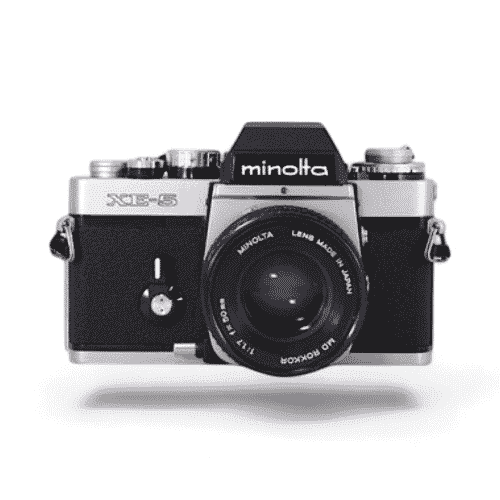
Minolta XE-5


The Minolta XE-5 represents one of the most fascinating chapters in camera history — the Minolta-Leica partnership. In the early 1970s, Minolta and Leica co-developed a camera platform that became the Leica R3 and the Minolta XE series. The XE-5 shares its core with one of the most prestigious camera brands in the world.
What sets the XE-5 apart is its Copal Square electronically-controlled shutter, which delivers one of the smoothest, quietest shutter actuations of any SLR from this era. It’s an aperture-priority camera with a beautifully dampened mirror mechanism — you feel the quality every time you press the button.
The XE-5 is often overlooked in favor of its flashier siblings, but photographers who discover it tend to fall in love with its buttery-smooth operation and outstanding image quality through the MC/MD Rokkor lens lineup.



Minolta X-370 (1984)
Minolta
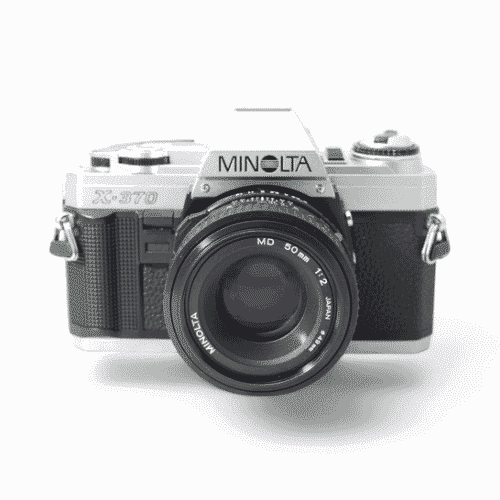
Minolta X-370


Not every great camera needs to be expensive. The Minolta X-370 was Minolta’s affordable entry into the MD-mount system — and it became the gateway camera for countless photographers throughout the 1980s and 1990s. Simple, reliable, and compatible with the entire Rokkor lens catalog.
The X-370 offers aperture-priority auto exposure and full manual control, which is really all you need to learn photography properly. Its light, compact body made it an ideal travel companion, and the price point meant you could spend more on quality glass — where it really matters.
Today, the X-370 is one of the best budget film cameras you can find. They’re plentiful, affordable, and the image quality through a good MD Rokkor lens is identical to what you’d get from the pricier X-700. If you’re looking to start shooting Minolta film, this is the smart choice.



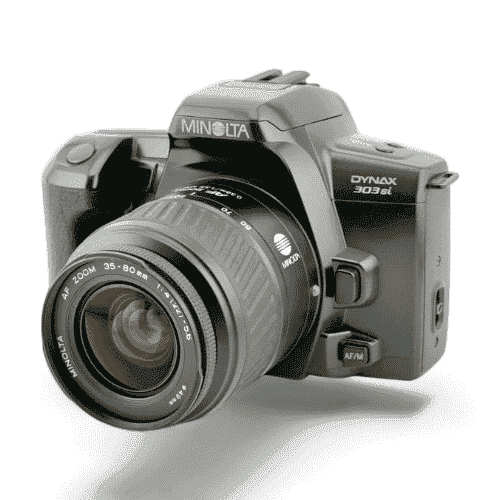
Minolta Dynax 303si (1995)
Minolta
Minolta Dynax 303si


The Minolta Dynax 303si represents the end of an era — and the beginning of another. By 1995, Minolta had fully transitioned to autofocus with the Alpha/Dynax/Maxxum mount system (the same mount that would eventually become Sony A-mount). The 303si was an affordable, entry-level autofocus SLR that brought modern convenience to film photography.
While it lacks the romantic appeal of the all-mechanical SR-T 101 or the rangefinder elegance of the CLE, the Dynax 303si tells an important part of the Minolta story. It was cameras like this — affordable, capable autofocus bodies — that kept film photography accessible through the 1990s before the digital revolution took hold.
For film shooters today, the Dynax 303si offers a unique proposition: autofocus convenience with a huge selection of affordable A-mount lenses. It’s arguably the most practical Minolta film camera for everyday shooting.



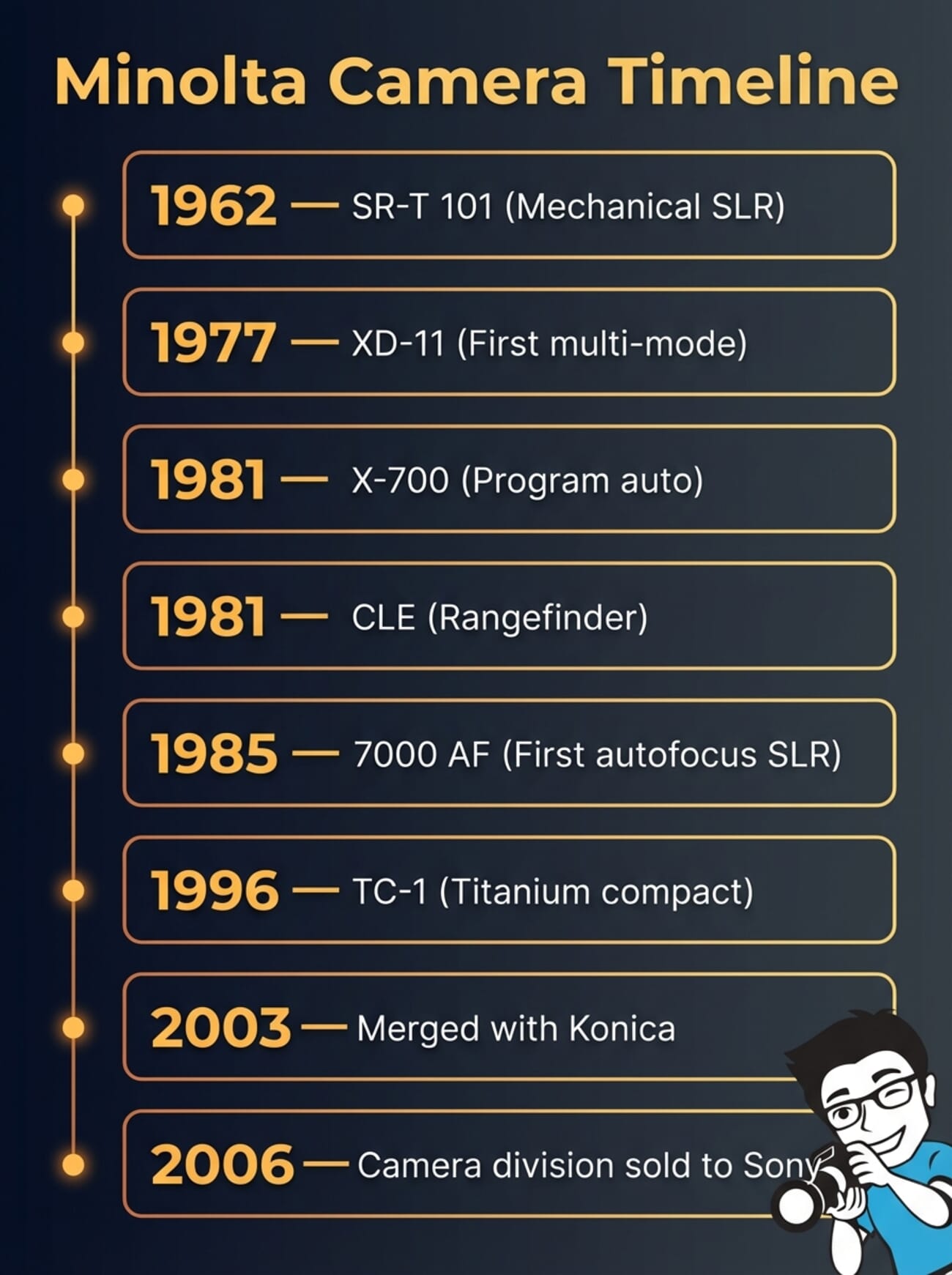
Minolta Camera Timeline
From the mechanical perfection of the 1960s through the autofocus revolution of the 1980s, Minolta’s journey is one of relentless innovation. Here’s a visual overview of the key milestones:
Minolta’s Legacy Lives On
When Konica Minolta exited the camera business in 2006, Sony acquired their camera division — and with it, decades of optical engineering expertise. Every Sony Alpha camera traces its lineage directly back to the Maxxum 7000. The A-mount lenses that Minolta developed in 1985 could still be mounted on Sony bodies for decades.
But Minolta’s real legacy isn’t just in the technology that Sony inherited. It’s in the millions of photographs taken on Rokkor glass, the photography students who learned their craft on an X-700, and the street photographers who still carry a CLE in their jacket pocket.
If you’ve never shot film, there’s no better time to start. Grab a Minolta, load a roll of Kodak Gold or Fuji Superia, and rediscover the joy of waiting for your images to come back from the lab. Some things are worth slowing down for.
If you’re thinking about buying or selling used cameras, Minolta bodies and Rokkor lenses remain excellent value. And if you want to explore more film cameras beyond Minolta, check out our guide to the best film cameras still worth shooting today.
Featured image: Photo by Moritz Karst on Unsplash — shot on Minolta CLE.
Does Minolta still make cameras?
No. Minolta merged with Konica in 2003 to form Konica Minolta, which then exited the camera business in 2006. Sony acquired their camera and lens technology, and the Minolta legacy continues through the Sony Alpha line.
Are Minolta Rokkor lenses still good?
Absolutely. Minolta’s MC and MD Rokkor lenses are known for their sharp, contrasty rendering with beautiful color and bokeh. They can be adapted to modern mirrorless cameras (Sony E-mount, Fuji X, etc.) and remain popular with both film and digital shooters.
What’s the best Minolta film camera for beginners?
The Minolta X-370 or X-700 are both excellent choices. The X-370 is more affordable while offering the same lens compatibility. The X-700 adds program auto mode and is slightly more versatile. Both accept the full range of MD-mount Rokkor lenses.
Can Minolta CLE use Leica lenses?
Yes. The Minolta CLE uses the Leica M-mount, making it compatible with Leica M-mount lenses as well as its own dedicated M-Rokkor lenses. It’s one of the most affordable ways to shoot with Leica glass on film.
Are Minolta film cameras worth buying in 2026?
Yes. Minolta film cameras offer excellent value in the current film photography market. Models like the X-700 and SR-T 101 are well-built, reliable, and produce beautiful images. Combined with affordable, high-quality Rokkor lenses, they’re some of the best film cameras you can buy for the money.